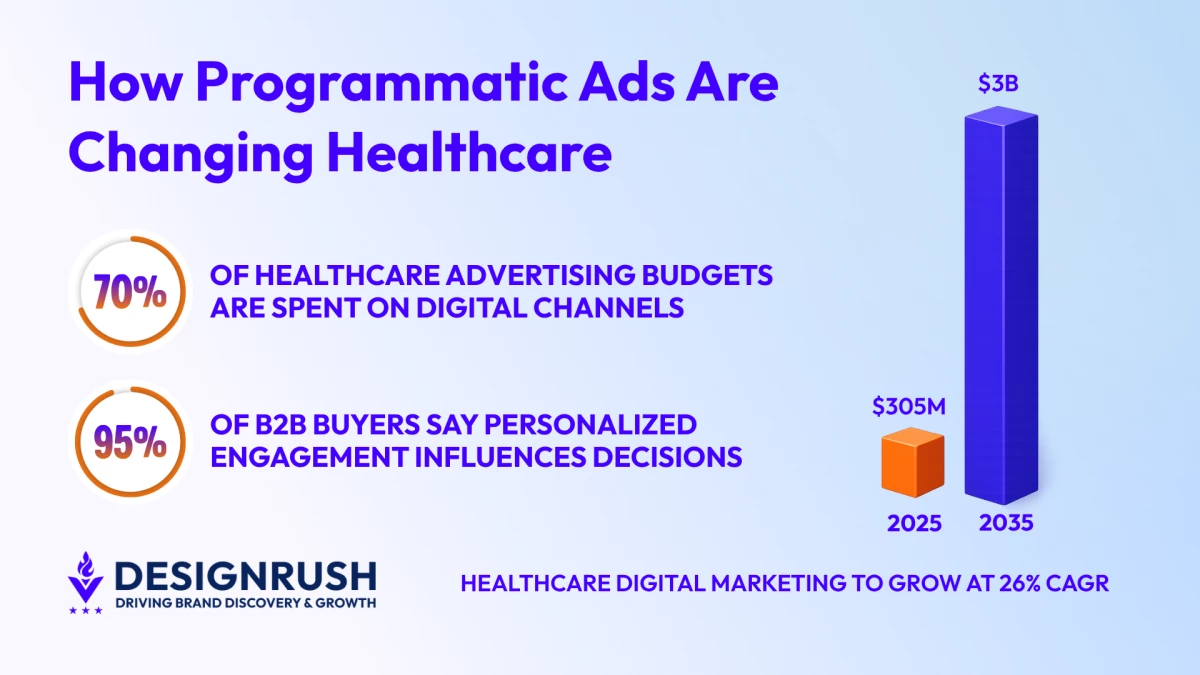

More than 70% of healthcare ad budgets are now spent on digital channels, according to Martal Group.
It makes sense. Healthcare's continued move toward digital means bigger investment by marketers in programmatic advertising, automated media buying, and AI-powered targeting.
What’s behind this transition and the increased spend? Primarily, it’s speed.
Marketing teams want to see better results faster, while managing campaigns across multiple channels and with lean teams.
But as programmatic spending increases, so do concerns around audience accuracy and targeting quality.
When marketing healthcare, teams now run campaigns simultaneously across digital channels, such as LinkedIn, connected TV, digital publications, webinars, and niche healthcare platforms. While the technology behind those platforms has evolved quickly, audience quality hasn’t always kept pace.
That’s part of the reason why companies like MCH Strategic Data are becoming more relevant, as marketers take a closer look at audience quality and targeting accuracy.
MCH Strategic Data CEO Peter Long says more brands are starting to question whether their campaigns are reaching verified healthcare professionals and decision-makers.
It’s a valid concern since healthcare marketing requires a much higher level of precision.
“Marketers need confidence that they’re reaching actual healthcare professionals and verified decision-makers because broad demographic targeting simply doesn’t work the same way in healthcare,” Long says.
As a leader in the collection of healthcare data since 1958, Long explains why companies choose MCH Strategic Data in the video below:
Why Healthcare Programmatic Ads Miss
Programmatic advertising works well in industries where scale can make up for inefficiency.
In industries such as retail, ecommerce, and SaaS, companies can afford to cast a wider net because their audiences are often easier to identify and far less specialized.
Unfortunately, healthcare isn’t one of those industries, as pressure to reach the right audiences continues growing alongside digital marketing spend.
This pressure often leads to both inefficient tactics and results.
In fact, the same Martal Group study suggests that healthcare leads can cost $377, which equates up to 5 times more than the average B2B lead.
Meanwhile, sales cycles regularly end up stretching between 6 and 12 months.
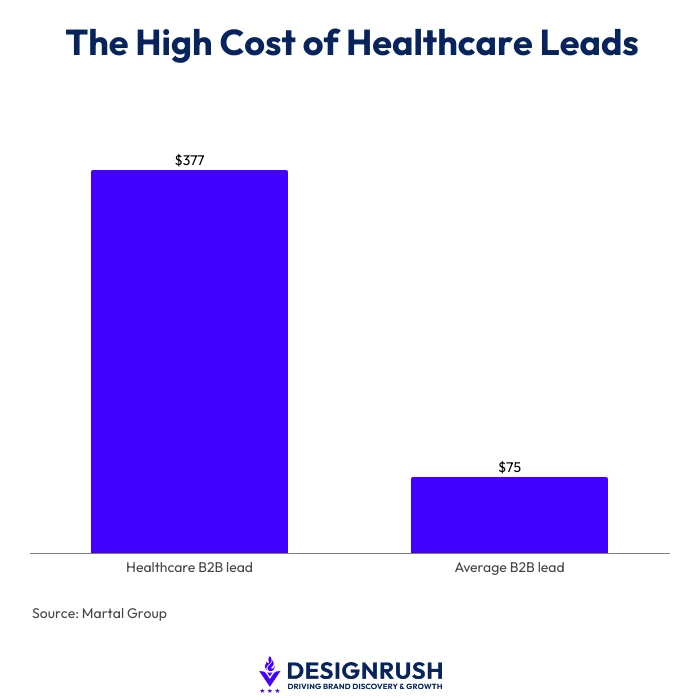
This means that one poorly targeted campaign can burn through budget long before marketers realize the audience was wrong from the start.
“A lot of marketers still approach healthcare programmatic campaigns the same way they approach broader B2B advertising, but healthcare audiences are significantly more nuanced and much harder to verify accurately,” Long says.
It’s also why more marketers are reevaluating the data behind their campaigns.
A surprising number of campaigns still rely on broad behavioral targeting, outdated contact databases, or generalized firmographic data that doesn’t accurately reflect active healthcare professionals.
That can lead to a campaign focused on targeting physicians to land on the screens of administrators, inactive contacts, or people with little purchasing influence.
As leaders in both the healthcare and education data collection space, MCH Strategic Data emphasizes the importance of marketing campaigns reaching the right person:
Why Audience Precision Matters More in Healthcare
There’s growing urgency to prove that campaigns are reaching the right people rather than simply generating more impressions.
“Healthcare brands are becoming much more selective about the audience data they rely on because poor targeting creates wasted spend almost immediately in this category,” Long says.
Personalization is adding another layer of complexity, with Martal adding that 95% of B2B buyers say that personalized engagement influences purchasing decisions.
However, personalization becomes difficult when marketers aren’t fully confident in the data driving campaigns. And that’s why verified healthcare professional datasets are becoming more valuable.
These datasets are often built around verified physician credentials, specialties, healthcare affiliations, and active professional records rather than broad behavioral assumptions.
Marketers want to know exactly who they’re targeting, whether that be physicians, specialists, procurement leaders, healthcare executives, or administrators of facilities or health systems.
MCH Strategic Data was featured by Medium.com for its work in unlocking precision in healthcare marketing:
Why Trusted Channels Matter More in Healthcare
That growing demand for accuracy is also influencing where marketers choose to engage healthcare audiences.
LinkedIn continues to play a major role in B2B lead generation, with 89% of B2B marketers using the platform and 62% saying it generates leads for their business.
This is more than twice as many as the next-highest social channel.
Webinars are still proving valuable too, with 73% of marketers saying they generate the highest-quality leads, according to Cvent.
This is particularly relevant in industries where credibility and expertise play a major role in buyer decision-making.
“That matters in healthcare, where buyers tend to care far more about relevance and credibility than sheer reach,” Long says.
“Generic marketing is usually easy to spot, and once trust starts slipping, it can be difficult for brands to win attention back.”
YouTube channel, Tamarind, delves into a LinkedIn ad strategy to drive more B2B leads in the video below:
Why Trust Still Drives Healthcare Marketing
For all the excitement surrounding AI-driven advertising and automation, healthcare still runs heavily on trust and professional credibility.
“Despite automation helping marketers move faster and improve efficiency, healthcare buyers still respond to relevance, expertise, and trust more than sheer volume,” Long says.
That balance between automation and trust is becoming one of the defining realities in healthcare marketing.
Healthcare professionals are often far more selective about the brands they engage with, particularly in industries where credibility directly affects decision-making and patient outcomes.
While technology can improve delivery and efficiency, it can’t compensate for weak audience data or messaging that feels disconnected from the people it’s trying to reach.
That’s becoming one of the defining lessons behind healthcare’s programmatic push.
YouTuber, Joel Harrison, explains why one of the biggest challenges in B2B marketing today is trust:
What Healthcare Marketers Need to Prioritize Next
As digital spending continues to climb, targeting platforms keep evolving, and marketers are expected to do more with fewer resources, healthcare advertising will become more automated over the next several years.
“This means that understanding exactly who you’re speaking to may become even more valuable than the technology itself,” Long says.
Automation will play a big part in healthcare advertising over the next several years.
But success will still be determined by investing in cleaner audience data, more selective channel strategies, tighter targeting, and campaigns built around verified healthcare professionals instead of broad assumptions.
Because in healthcare marketing, fewer, but better, impressions usually matter far more than scale alone.
In many ways, the more automated healthcare advertising becomes, the more valuable genuine audience understanding may be.