
Carlsberg just turned a blank city wall into a football pitch.
The brewer is bringing back its long-running "If Carlsberg did..." line for a summer campaign.
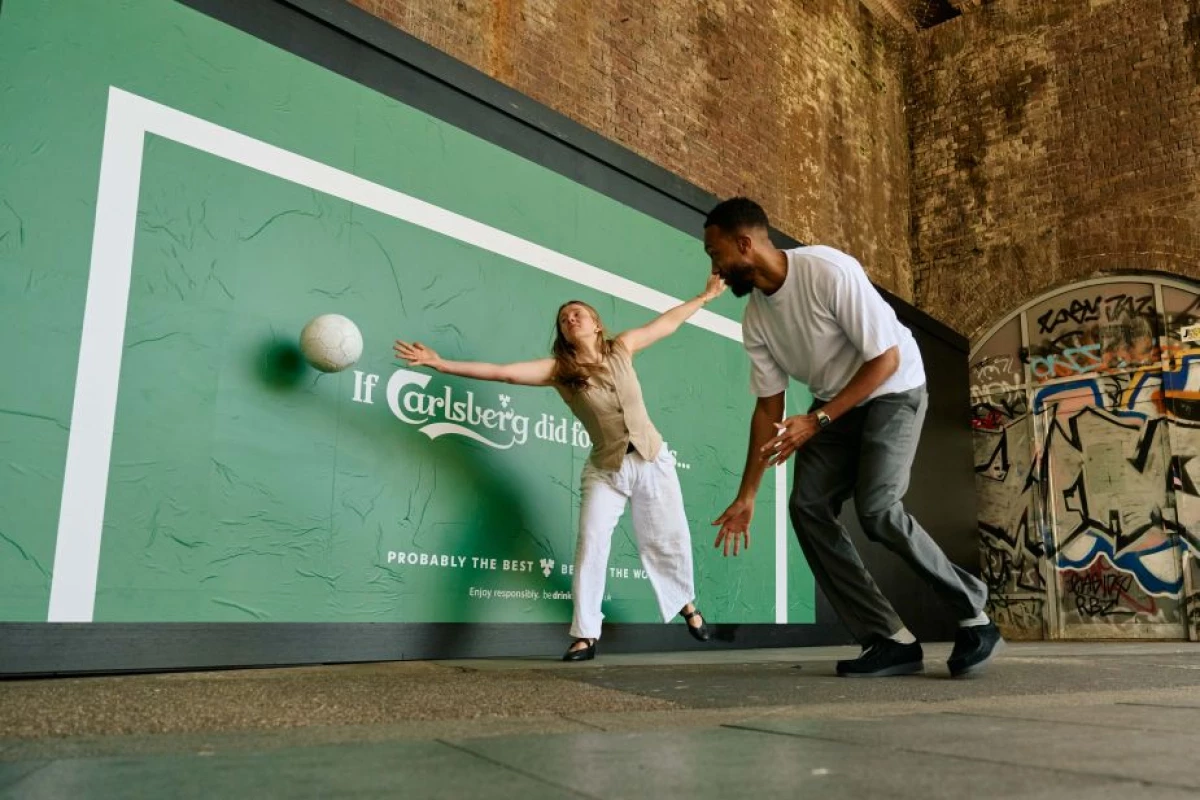
The centerpiece is a series of "Goal Posters," street-level OOH installations created with creative advertising agency Fold7.
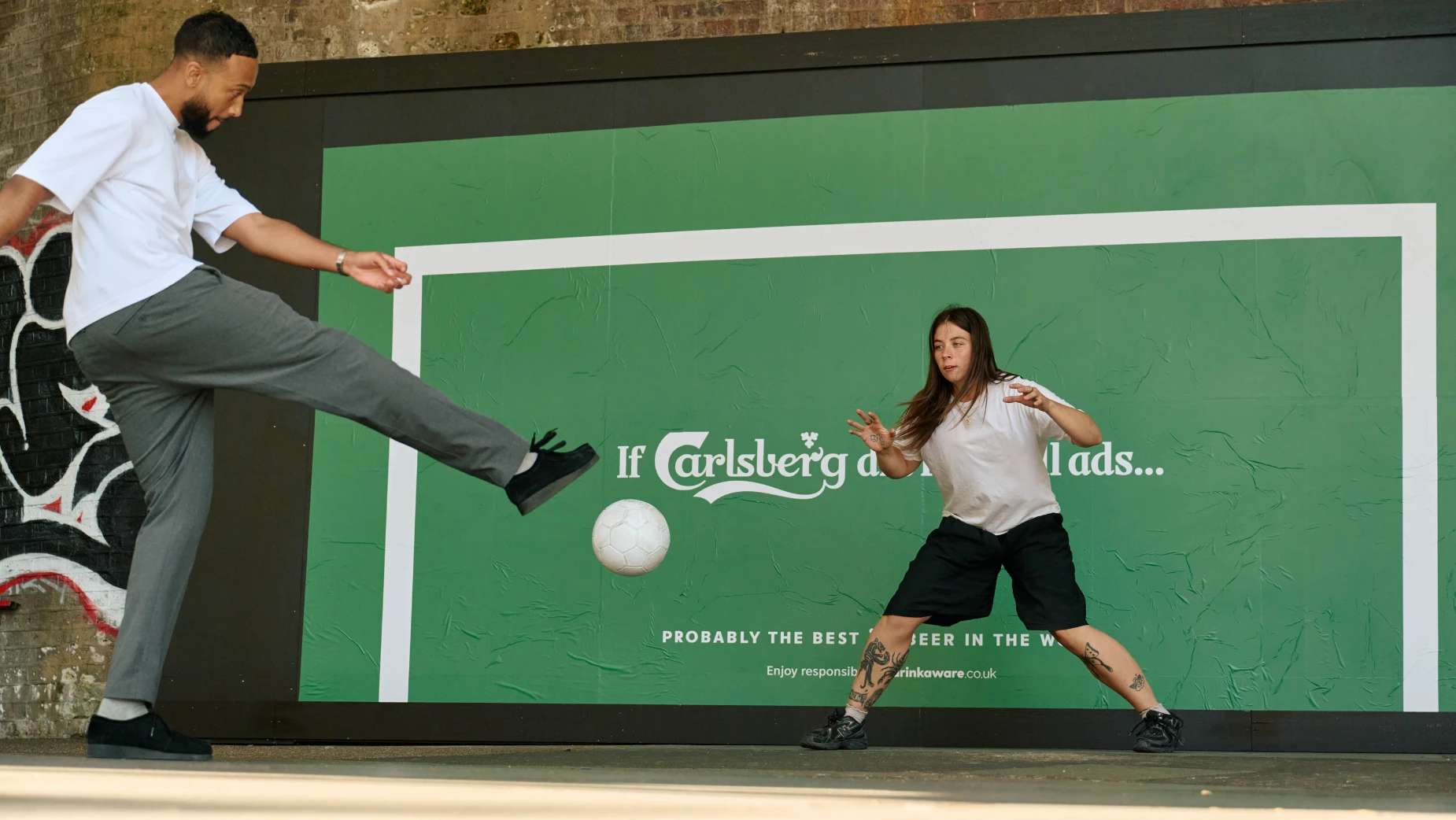
These eye-catching posters double as makeshift goals, planted in cities for anyone to walk up to and start playing.
As other brands chase big-name talent for their football ads, the effort sees Carlsberg handing the game back to ordinary fans.
The work sits inside Carlsberg's five-year partnership with UEFA National Team Football, and it puts the sponsorship toward getting fans playing.
The effort is an investment in access, giving people a reason to play and not just watch from the sidelines.
"Football can sometimes feel like something to admire from a distance," said Lynsey Woods, Carlsberg's Global Brand Director.
"If Carlsberg did football ads, we'd bring it back within reach."
Carlsberg's own research found that 31% of adults have not had a kickabout in six months, while 75% plan to watch a match this summer.
Closing this gap between watching and playing is a sharper branding strategy than another logo on a stadium board.
How Street Posters Become Playable
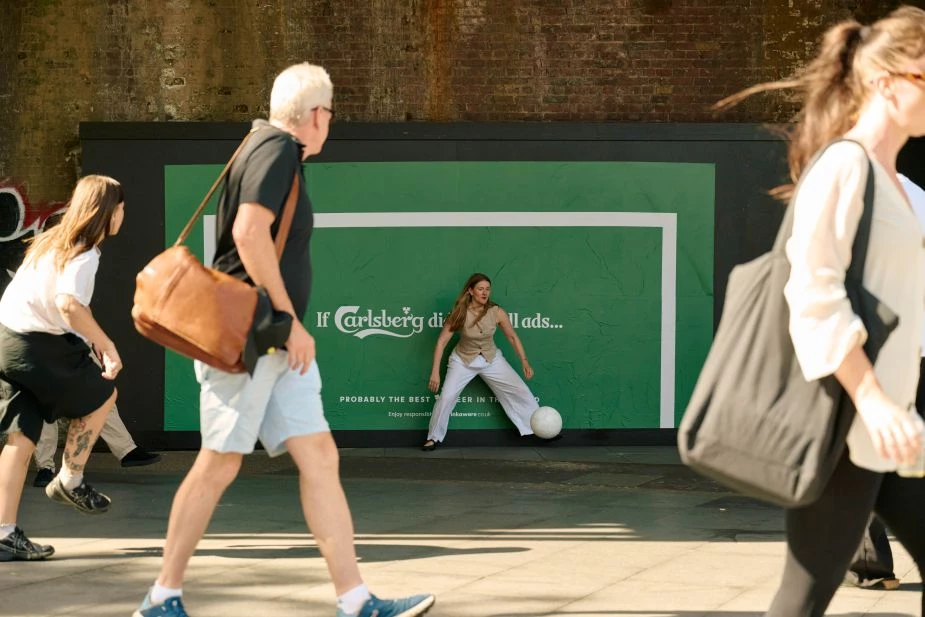
Each "Goal Poster" keeps the same look, a simple white-outlined goal set against Carlsberg's green.
It reads as a normal outdoor ad until someone notices it's playable.
Content creators and PR teams have been hosting impromptu kickabouts in front of the posters.
The experiential activation is meant to get people talking as much as playing.
The accompanying film opens in empty, unwelcoming urban spaces.
Then a green poster goes up, reveals itself as a goal, and sparks a spontaneous match.
It closes on the posters in use across different cities, viewing overlooked corners of the town as places to play.
The first wave of ads landed at Sutton Walk and Shoreditch Tunnels in London and Bridge Street in Manchester.
Two more UK campaigns from Carlsberg are set to run through the rest of the summer as part of the same experiential marketing push.
Carlsberg is just one of many brands using the football summer to rethink what a tournament activation looks like.
Lego took a different approach, building a nearly 27-foot World Cup trophy out of 1.36 million bricks at Rockefeller Plaza.
Additionally, the landmark stunt was paired with a free fan zone and a retail lineup fans could buy into.
Lego drew crowds with something too big to ignore.
Carlsberg is doing the opposite, hiding its activation in plain sight until someone notices that it's interactive.
An Access-Over-Endorsement Strategy
The campaign reflects how brands are showing up around major tournaments this summer, even without an official Cup sponsorship.
Carlsberg casts itself as the brand that removes friction between fans and the sport.
It also worked with Liverpool FC to create four signs so Deaf and hard-of-hearing fans could join the "You'll Never Walk Alone" chant.
The "Goal Posters" carry the same access-first thinking onto the street, opening the game to anyone walking past.
The barrier to play is a ball and five free minutes, and this strategy holds three lessons worth stealing:
- Compete on access, not budget: Carlsberg didn't try to outspend rival sponsors on talent. It found a cheaper, more personal way into the same global sporting event.
- Design for spontaneity: The posters work because they meet people where they already are, making use of high-traffic areas to get passers-by to come and play.
- Let real behavior be the proof: Carlsberg documented actual kickabouts happening in front of the posters as they occurred.
A goal poster isn't as expensive as celebrity endorsements, so Carlsberg can easily repeat this brand activation city after city.
Our Take: What's the Real Product Here?
Carlsberg's logo already does one job perfectly, because you can't see that green label without thinking of its beer.
So we think the real product here is the feeling, that sweaty, laughing high right after you score past your mate with a jacket for a post.
Psychologists call it affect transfer, when a good experience rubs off on whatever brand is standing next to it.
A good mood also sharpens brand awareness and recall, so people remember the name better than a billboard could.
And we think this is why Carlsberg can fade into the background of a goal poster and still come out ahead.
Nobody walks off that pitch thinking they saw an ad, yet the next time they're at the bar, the green label already feels like an old friend.
Looking to turn cultural IP and fandom into product ecosystems?
Find top experiential marketing agencies specializing in experiential and product storytelling to compare execution models across industries.