
Google changed the unit of competition in Shopping ads, and many advertisers haven’t caught up yet.
The company’s new AI-powered Shopping ads use Gemini to generate an independent explainer next to a sponsored listing.
Unveiled at Google Marketing Live 2026, it’s a short rationale for why that specific product fits what someone searched for.
It’s paired with two other formats in testing, namely Conversational Discovery ads, which build creative around a shopper's actual question, and Highlighted Answers, which surface ads inside AI Mode’s own recommendation lists.
Google is backing the shift with its own research showing that 75% of people report making faster, more confident purchase decisions using AI Mode.
Bid strategy and feed relevance still matter, but they’re no longer the whole game. Gemini is writing its own assessment of your product, separate from your ad copy, and it can only write a confident one if the underlying information gives it something to work with.
So the question isn’t “How do I write a better ad?”
It’s “How do I make sure an AI model has enough to work with that it doesn't have to guess or skip my product entirely?”
Google Marketing Live 2026 explored how AI is changing ads, shopping, and product discovery:
4 Ways to Prepare Google Shopping Ads for AI Search
For paid media teams planning to dominate AI search, here’s how I’d recommend going after that this quarter:
1. Treat Your Product Feed Like a Knowledge Base
Price and availability alone aren’t enough. Now, details like specifications, use cases, materials, compatibility, and what sets your product apart are all training material for AI.
Alchemer’s 2026 Retail Report found that 48.5% of U.S. shoppers used AI to research a retail purchase in the past year.
Another 17.4% said an AI tool or LLM led them to their most recent purchase, putting AI ahead of in-store browsing at 14.4%.
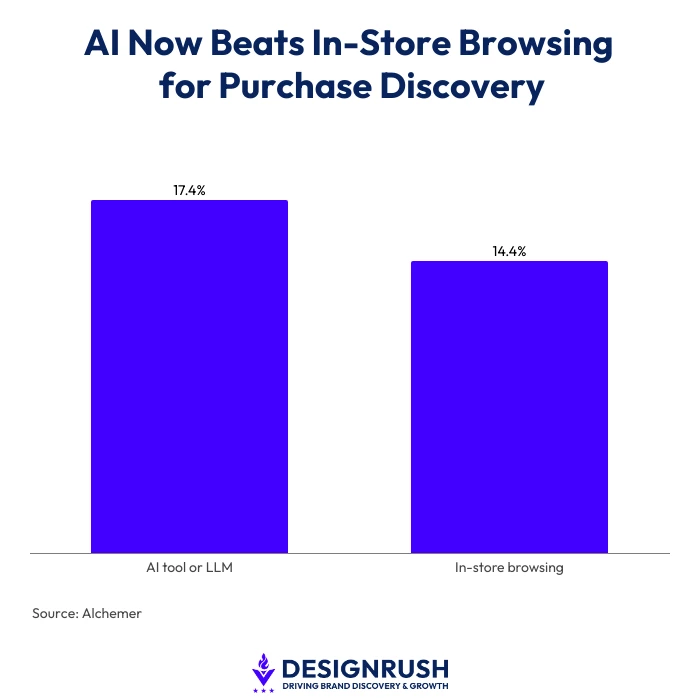
This means your product feed now helps with research, not just transactions. If your feed lacks detail, Gemini will either generalize or skip your product.
2. Reconcile Product Claims With Third-Party Reality
Review management is now a part of your ad strategy.
Alchemer’s latest retail report also found that Google reviews are the most influential research input for shoppers, ahead of Amazon reviews and even a brand’s own product page.
It also found that trust in AI-generated recommendations is still catching up to trust in reviews.
An AI explainer synthesizing “why this product is right for you” is more convincing, and more likely to get generated with confidence, when it can point to consistent signals across your site and independent reviews.
If your product page says one thing and your reviews say another, don’t expect the model to pick a side in your favor. It’s more likely to flatten the claim or avoid it.
3. Change What You’re Measuring
If a customer reads Gemini's explainer, trusts it, and makes a purchase without visiting your site, your dashboards won't flag this.
The click-through rate looks normal, and on-site engagement looks normal, but the exact moment that won the sale happened somewhere your analytics can't see.
This quarter, start watching for some additional metrics, including how often you show up in AI answers and whether or not the description is consistent every time someone finds you.
4. Stop Treating SEO and Paid Media Separately
Google’s own product road map is a tell here. At GML 2026, the company also introduced Ask Advisor, a consolidated agent meant to move across Merchant Center, Analytics, and Ads without a marketer switching tools.
If Google is unifying the backend, agencies and in-house teams running paid, content, and structured data out of separate lanes are already behind.
Your Shopping ad’s fate now depends partly on how well-documented your product is across the entire web.
That’s not something a paid media team can fix alone, and it’s not something an SEO team owns exclusively either.
Why AI Shopping Ads Need More Than Strong Ad Copy
Google's been upfront that these explainers are independent. Gemini writes them, not you. So no, you don't get to write the explanation anymore. But you never really got the last word on that anyway.
Shoppers were always going to read reviews, compare tabs, and form their own opinion before they bought anything from you.
What's changed is that there's now a model doing that comparison in real time, out loud, right next to your ad.
The only real lever left is making sure it has something true and specific to work with. Give it that, and it'll make your case better than any ad copy you could write. Don't, and it'll just talk around you.