
Google's "More Possible" Campaign: Key Points
- Google Australia and R/GA debut two short films on how AI helps detect diabetic eye disease and improve hearing devices.
- The initiative is part of Google’s $1 billion Digital Future Initiative, supporting healthcare and environmental research across Australia.
- Google AI was used not just in the stories but also in production, from creating backgrounds to refining post-production details.
Quick listen: Google’s "More’s Possible" shows AI tackling vision loss and hearing challenges, making innovation feel like everyday care.
Google is showing Australians that AI’s real power is found in everyday care.
Its "More’s Possible" campaign with R/GA shares two stories showing how the technology is helping doctors and researchers address major health issues in Australia.
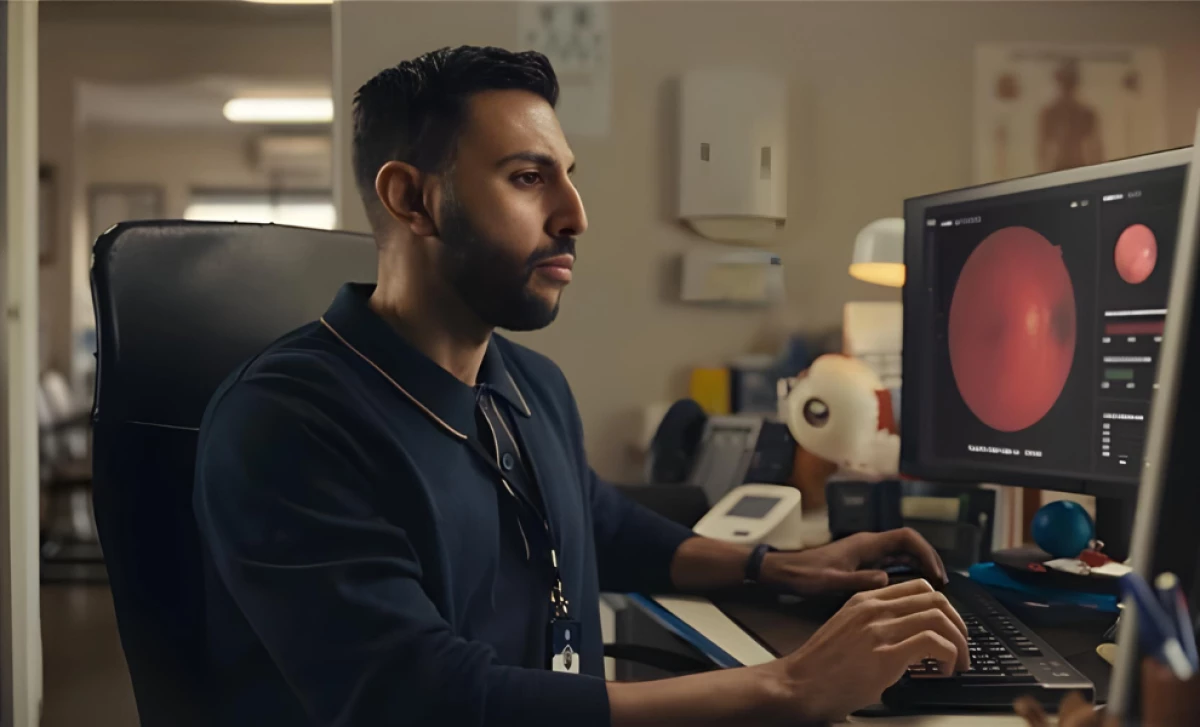
The first film, The Sidelines, follows a regional doctor using Google AI to check for diabetic retinopathy, a disease that can cause blindness if it goes undetected.
The tool delivers results in minutes, giving patients in remote towns access to care that would normally mean traveling to a specialist.
The second film, The Dining Table, focuses on the everyday challenges of hearing loss.
Traditional hearing aids often amplify everything at once, making it hard to hear a single voice in a noisy room.
Researchers supported by Google AI are developing new models that focus on speech, helping people stay present in conversations that matter most.
Suzana Ristevski, chief marketing officer for Google Australia and New Zealand, explained the campaign’s impact:
“Whether it’s improving the effectiveness of hearing aids or helping prevent diabetic vision loss, this campaign demonstrates that more’s possible when medical researchers join forces with Google AI.
Thanks to local partners, this groundbreaking work is taking place in Australia right now.”
Storytelling With Purpose
The brand push also paid attention to how the stories were told.
Directed by Sanjay De Silva of Division, the films used Google’s own tools in production, from creating realistic backgrounds to subtle post-production effects.
Actors with lived experience of diabetes and hearing loss were cast, lending authenticity to the films.
Google Australia is attempting to get on the front foot and spark more positive conversations around AI and its applications with a new campaign via RGA Australia.https://t.co/vZp4UMcPaW
— Mumbrella News (@Mumbrellanews) September 8, 2025
Rachel Blacklaws, creative director at R/GA, called the films “stories of possibility made tangible.”
Director Sanjay De Silva said the team aimed for an intimate, cinematic tone:
“It’s not about the technology, it’s about the people, and the possibilities it unlocks.”
The ad went live across Australia on September 7, reaching audiences through TV, YouTube, digital audio, BVOD, outdoor, and print.
Shorter versions and a partnership with The Voice will help carry the message to more viewers, especially around hearing health.
The rollout lands at a time when the country faces a critical $28 billion shortfall in science and research funding, according to the Australian Academy of Science.
The report warns that without greater investment, Australia could struggle to keep pace in fields like AI, biotechnology, and data science.
Against this backdrop, Google’s $1 billion Digital Future Initiative positions the company as a key player in helping fill some of those gaps through partnerships with local researchers.
Our Take: Can Google Make AI Feel Familiar?
I think this campaign works because it takes AI out of the spotlight and shows it in everyday situations people actually understand.
Telling stories about eyesight and hearing makes the technology relatable, since almost everyone knows someone affected by these challenges.
If I were at another tech company, I’d pay attention to how Google is keeping the focus on people’s lives instead of selling features.
Even the way it used its own tools quietly in production shows confidence without trying too hard.
To me, the strongest part is how the films suggest technology can do its best work in the background, simply helping life run a little smoother.
For another look at Google’s brand storytelling, see how the company teamed up with Stephen Curry in its “Performance Advisor 42” spot.
Whether it’s solving remote access gaps or enhancing devices people use daily, these AI firms turn innovation into inclusion.