
AI design tools have changed how quickly businesses can move from an idea to something people can actually experience.
This has opened up opportunities that would have been difficult to imagine even just a decade ago.
The same applies to my team at ANML, where we're finding new ways to use AI throughout design and development, and I've seen the enormous potential.
But at the same time, there is something that worries me about it.
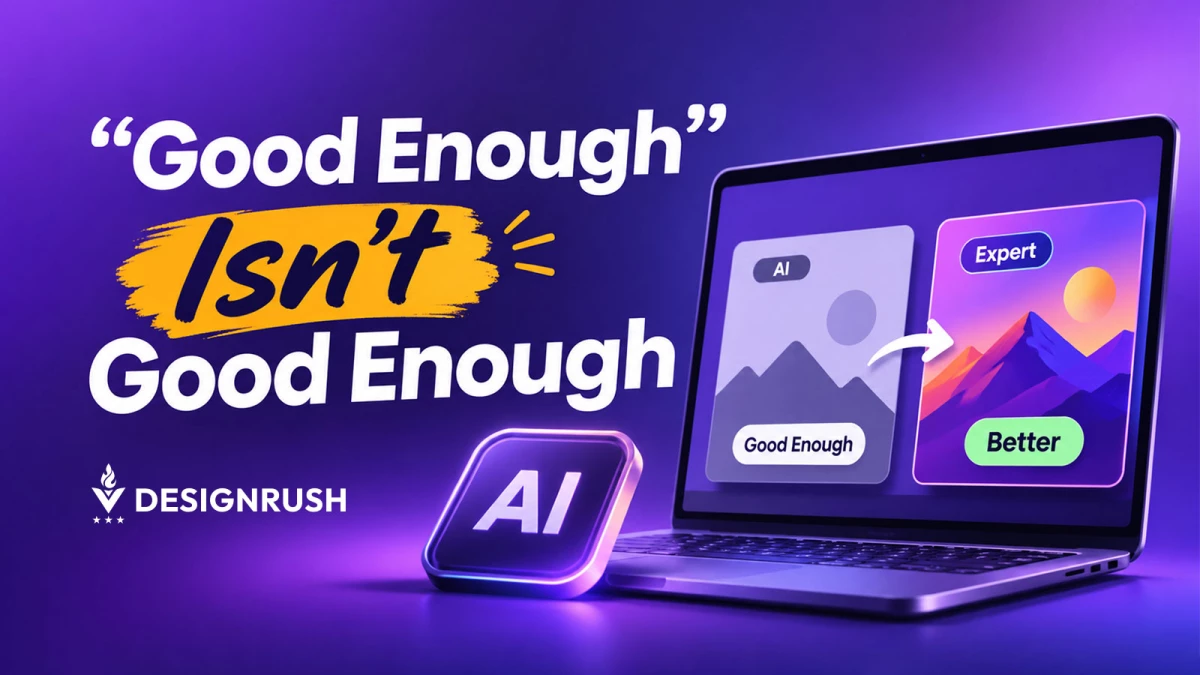
When producing something becomes easier, it's also easier to accept the first result that looks "good enough."
I've spent over 20 years working in design, and I've learned that the difference between work that functions and work that genuinely stands out rarely comes from the ability to operate a particular tool.
Rather, it comes from the decisions made along the way, the willingness to experiment, and the attention given to details that might otherwise go unnoticed.
And the lack of those three things can easily lead to producing work that is technically competent but indistinguishable from everything else.
Unfortunately, this "good enough epidemic" is a real threat that I'm already seeing happen.
Make Speed Serve The Work
I've watched design evolve through several major shifts in technology and methodology.
Flash pushed experimentation, even if the sites themselves didn't age well. Designers had considerably more freedom
The work demanded technical effort, but it also encouraged experimentation.
Then, flat design brought a different visual language, and I embraced it myself.
The aesthetic was simpler, but the best work still depended on intentional decisions about typography, hierarchy, composition, and interaction.
Later, UX processes became increasingly standardized. Research, documentation, and established practices helped teams make better decisions.
AI is the next iteration of these shifts in design.
The technology makes it possible to generate interfaces, explore concepts, and move through development much faster.
Naturally, that's a very real and significant advantage.
However, the problem emerges when speed becomes the primary measure of success.
Just because a team produced ten concepts in the time it used to take to create two doesn't necessarily improve the team's judgment, understanding of the audience, or quality of the final experience.
Being exceptionally skilled at a design tool doesn't automatically make someone a great designer, and the same holds true for AI.
After all, AI should expand the possibilities available to a team, not lower its expectations for what those possibilities should produce.
Recognize When Good Enough Becomes The Default
The biggest problem with good enough is that it isn't wrong. In many cases, the work is passable.
But to build something that really speaks to a target market requires more than "passable," more than "good enough."
This is especially true in B2B, where the same visual patterns, interaction choices, and messaging appear across dozens of competing websites.
I've noticed how easily AI-generated work can fall into this problem.
The tools produce familiar structures because those structures are recognizable and generally effective.
A designer can prompt an interface, receive a reasonable result, and move forward without questioning whether the result has anything distinctive about it.
This unintentionally creates websites, visuals, and marketing material that look and feel increasingly interchangeable with other brands, undermining the very purpose of investing in a digital experience.
I don't believe every interaction needs to be unusual or every website needs to reinvent established conventions. Familiar patterns exist for good reasons.
But it's important for anyone using these tools to know which conventions help the audience and which ones are simply making the work easier to produce.
Protect The Decisions That Make Design Distinctive
The temptation to accept generic output typically becomes stronger when teams are under pressure to deliver more work in less time.
AI can generate a layout, suggest copy, produce components, and help developers move through implementation.
Those capabilities are valuable, but they don't remove the need to make decisions about the experience.
For teams looking to strike a balance, I would suggest the following measures:
1. Establish a point of view before generating
A strong digital experience needs more than a collection of attractive components.
Before using AI to generate design concepts or interfaces, I want the team to understand the business, its audience, the product, and the intended experience.
That context gives the work a reason to exist beyond producing something visually acceptable.
Instead of asking whether a generated layout looks good, the team can ask whether the design:
- Communicates the right message
- Supports the intended behavior
- Expresses the brand in a recognizable way
2. Use iteration to move beyond the first acceptable result
At ANML, I approach AI-assisted design as an ongoing exchange between the tool and the designer.
We can generate an idea, examine the result, make adjustments manually, and use AI again to explore the next iteration.
That process allows the team to evaluate details that might otherwise be overlooked.
A layout may need a different hierarchy. An interaction may feel too predictable. A visual element may look appropriate in isolation but weaken the overall composition.
The ability to make those adjustments quickly is valuable, but the decision to make them still depends on human judgment.
3. Give the experience something worth remembering
A recognizable experience might come from the way a brand uses typography, how information is organized, the tone of its interface, or a small interaction that makes a product feel more considered.
Those details should support the overall experience rather than exist purely to attract attention.
I want designers to think about what makes an experience feel specific to the business behind it.
If the logo disappeared, would the interface still communicate something recognizable about the brand?
That question can reveal whether the design is expressing a clear identity or simply following a familiar visual formula.
Bring Craft Back Into The AI Workflow
To be clear, I believe the ability to move quickly is one of the most exciting aspects of AI-assisted work.
It gives teams more freedom to test ideas, explore interactions, and build functional experiences without treating every experiment as a major undertaking.
But instead of thinking of it as a way to get more work done, we should look at it more as a way to get better work done.
And that truly begins by realizing that "good enough" simply isn't good enough.