
Last year's back-to-school denim season followed one script. Pick a star, hand them the whole campaign, and let their reach do the work.
Levi's had Beyoncé, Gap had Katseye, and American Eagle had Sydney Sweeney fronting one of the biggest campaigns of the year.
But this year, it appears nearly every major denim brand has pulled back from this kind of approach.
American Eagle CMO Craig Brommers traced the change back to the brand's own customer research.
"In 2025, American Eagle launched a campaign that created monoculture," he said, referring to the Sweeney campaign.
"As we prepared for this season, we did, as we always do, a lot of listening to our core Gen-Z and Gen-Alpha customer base.
The one thing that struck us is this is not a monoculture moment."
It seems that Brommers wasn't alone in reaching this conclusion.
Every other major denim brand reached the same conclusion this season, though each one solved it differently.
The Roster Replaces the Face
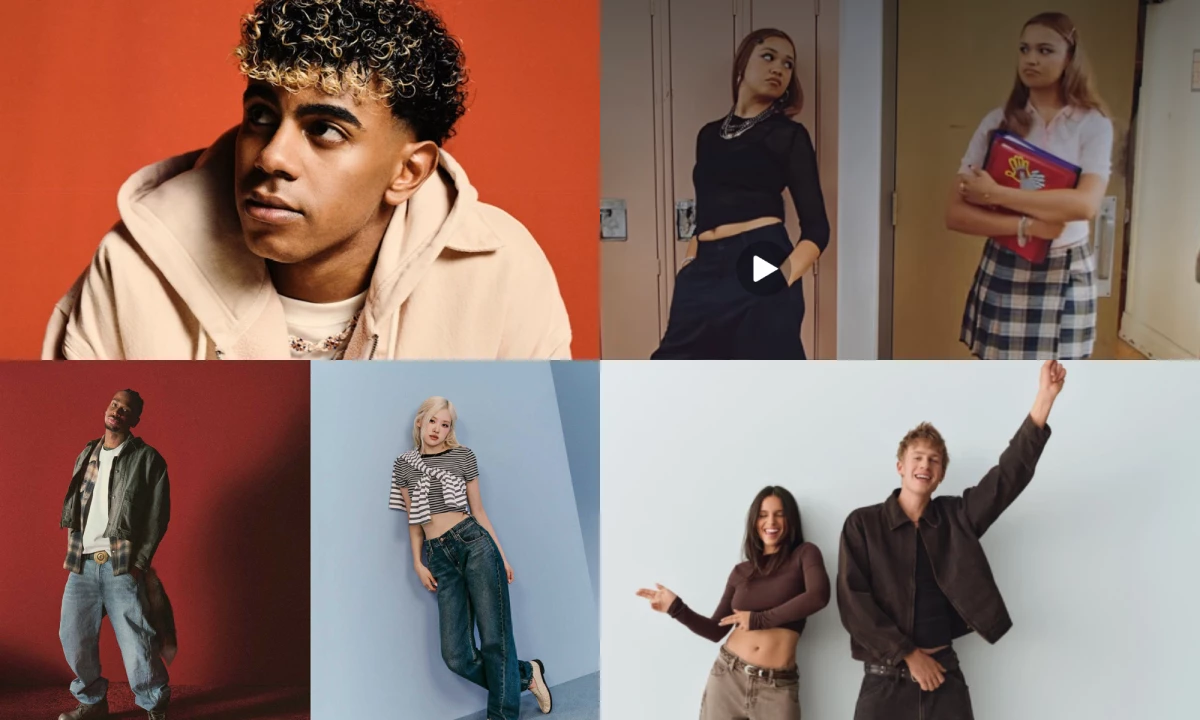
American Eagle's 2026 back-to-school push keeps Sweeney on board after last year's campaign success.
The brand is also adding two more ambassadors who couldn't be more different from her or each other.
Country singer Ella Langley and global ambassador Lamine Yamal round out the roster.
Yamal is 19, a Gen Zer himself, and one of the world's best footballers, having won the Euros with Spain in 2024 and the World Cup in 2026.
He signed his five-year deal with American Eagle in January, six months before the World Cup win that sent his brand value soaring.
The campaign also includes "Mall Diaries," an owned content series built on 2000s mall nostalgia.
Activations tied to RushTok, the viral TikTok trend where students document sorority recruitment, are running on campuses nationwide.
In-store creator programming also runs on its own, independent of any single ambassador.
Journeys took a similar approach for a different reason with its "Turn It Up" campaign, part of the brand's ongoing "Life on Loud" platform.
The shoe retailer cast an ensemble: actors Madison Bailey and Anna Cathcart, skateboarders Sky and Ocean Brown, and musicians Samara Cyn and INJI.
"Today’s teen audience isn’t one-dimensional, so our campaign shouldn’t be either," Stacy Doren, Journeys Group CMO, told Retail TouchPoints.
Meanwhile, Levi's paired K-pop star ROSÉ with NBA MVP Shai Gilgeous-Alexander in its "Keep It Loose" fall campaign.
Both fronted the brand's Super Bowl campaign in February, with each pulling from a separate fan base.
Gap ran "Denim On Your Own" with musician Malcolm Todd and actress Inde Navarrette,
Todd has a top-five Billboard album, while Navarrette is the breakout star of the horror film "Obsession."
Neither carries the mainstream name recognition of Beyoncé or Sweeney, but both have real credibility within music and film fan circles.
Pacsun, on the other hand, skipped individual celebrity casting altogether.
Its "Denim Starts Here" campaign was shot on an actual college campus with a cast the brand described as real friends alongside emerging talent.
The approach uses documentary-style authenticity and skips famous faces.
Pacsun Chief Merchandising Officer Richard Cox said the brand's audience is not "dressing for one trend or aesthetic."
Five brands with five different answers, and they all start from the same read on how Gen Z splits.
Only 5% of Brands Show Up Across Six Audiences
Gen Z research outside fashion tells the same story this year.
Basis Global analyzed more than 50 million organic Gen Z signals across social, search, and digital behavior.
Only 5% of the top 80 U.S. brands show up across all six types of Gen Z cultural conversation that the study tracked:
- Credibility
- Urgency
- Retention
- Self-expression
- Advocacy
- Participation
Interestingly, more than half of the brands analyzed appeared in only one of these types.
Nike was one of the few brands that ranked first in the U.S. while appearing across all six conversation types.
And the brand's World Cup campaign this year reflects this strategy.
Nike's 12-week rollout featured Ronaldo, Haaland, Mbappé, and Ronaldinho alongside Kim Kardashian, Serena Williams, Travis Scott, LISA, and Central Cee.
This roster pulled in sports stars, music culture, and fashion relevance all under one push.
Lululemon also appeared across all six conversation types, while Palace Skateboards shows what narrow and deep relevance looks like.
The skatewear brand ranked 13th among Gen Z in the U.K., and it came from one category: cultural urgency around drops and collaborations.
Outside of this specific world, most Gen Z consumers likely don't know that Palace Skateboards exists.
Glossier and The Ordinary both rank high in the same research, with Glossier sitting at No. 2 globally.
The two brands grew on product transparency and community trust built over the years, with no mass-recognized celebrity attached.
Overall, the research shows that Gen Z's attention does not concentrate the way earlier generations' did.
A single ambassador reaching one fandom, one aesthetic, or one platform community no longer translates into reach across the others.
Part of the reason is where Gen Z spends their time.
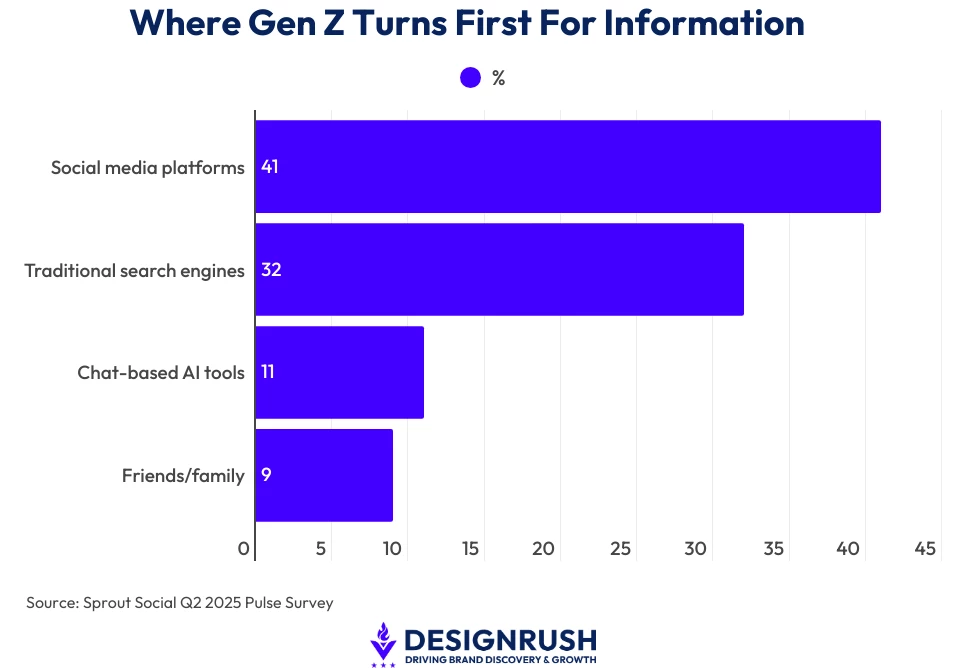
Sprout Social research found 41% of Gen Z turn to social platforms first when looking for information, against 32% who start with traditional search.
And each platform now functions like its own self-contained world for the people inside it.
A football fan on one platform, a K-pop fan on another, and a niche aesthetic community on a third are rarely seeing the same ambassador or campaign.
Reaching all three used to be a matter of buying enough reach, but now it requires actually showing up inside each one.
Depth Outranks Breadth
Coverage casting is not a simple addition.
Adding a fourth face to a roster doesn't add a fourth subculture in equal proportion, because talent budgets and creative attention both have limits.
Agencies advising on these campaigns need to weigh which two or three communities actually drive purchase behavior for a given brand.
Getting this right is a media-planning problem as much as a casting one, rewarding whoever ranks subcultures instead of just listing them.
Basis Global's research backs this up, showing brands that lead intensely in one conversation type can outrank brands with wider, shallower reach.
Depth in the right rooms changes how influencer partnerships get valued at the planning stage.
Here are a few things this back-to-school season shows brands and agencies planning around Gen Z talent strategy:
- Audit cross-platform overlap before signing a multi-year deal: A face that dominates one subculture may carry no equity in the others a brand still needs to reach.
- Pair paid talent with owned content: American Eagle's Mall Diaries series gives the brand a relevance layer that does not depend on any single ambassador's personal fanbase.
- Benchmark against the six Basis Global conversation types: Know which categories your customer base actually engages in before assuming wider cultural relevance.
Full cultural ownership of Gen Z is now the exception across the entire market.
Planning around this constraint is what lets a casting strategy get accurately measured and adjusted from season to season.
Our Take: Is the Single Celebrity Campaign Dead?
A roster strategy gets judged on how long its relationships last.
We think that the single celebrity campaign still works; it just stopped covering a whole season by itself.
Spreading talent across subcultures solves this season's reach problem.
Glossier and The Ordinary got to the top of the same rankings without a famous face at all.
And we think this fact suggests that the ceiling on casting is lower than anyone is treating it.
Whether any one of these relationships gets time to deepen into real brand loyalty is a separate question.
Brands that get this right will use a season like this one to find out which face earns the longer contract.
Brands building Gen Z talent strategy need agencies that understand how to map cultural fragmentation before a single name gets attached to a campaign.
Take a look at the top digital marketing agencies in our directory.