
Building Trust Online: Key Findings
- Gen Z now bases brand trust on authentic reviews and creator commentary, not ads or polished testimonials.
- 82% of consumers encounter fake reviews at least once over 12 months, impacting trust and sales.
- With fake reviews costing businesses over $770B, verifying and managing real feedback has become critical to reputation strategy.
Gen Z is rarely moved by traditional ad campaigns, according to Forbes.
Unsurprisingly, they increasingly rely on online reviews to form opinions on brands. But what is surprising is that credibility isn’t always the deciding factor.
When we say “online reviews,” that extends beyond what you’d traditionally think of, such as testimonials on review platforms like Yelp or Amazon.
Gen Z often turns to creator commentary, subreddit threads, and community discussions, formats they see as more real, even if not always verified.
And honestly, we can’t blame them. Fake reviews are everywhere.
Eighty-two percent of consumers encounter fake reviews at least once a year, according to Capital One Shopping.
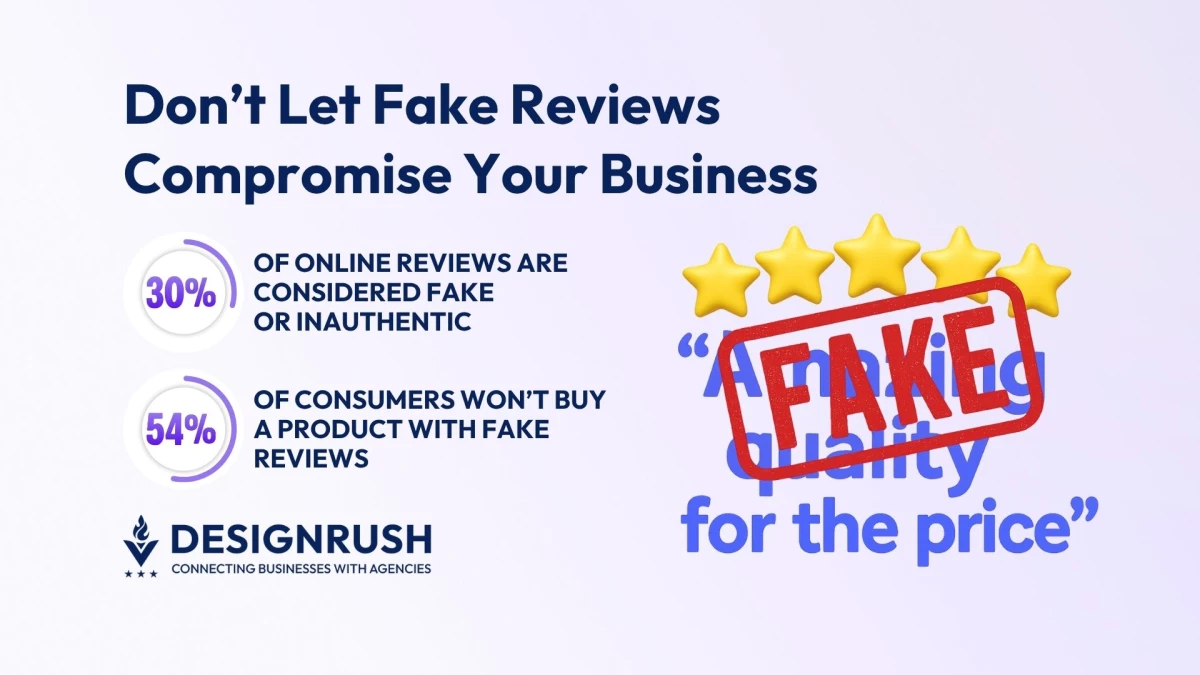
And to make matters worse, experts estimate that an average of 30% of online reviews are considered fake or inauthentic.
In fact, fake reviews are such a problem that Amazon and the Better Business Bureau have joined forces to take down fake reviews.
And while having a few fake reviews may seem more like a nuisance than an actual problem, the truth is very different.
Researchers found that 54% of consumers will hesitate to purchase a product or service if they suspect it of having a fake review.
Overall, fake reviews will cost businesses roughly $771 billion in lost sales and reputational damage in 2025, according to CapitalOne’s report.
These issues have begun to highlight how important it is for businesses to stay on top of their online reviews and reputation management, both in terms of the number of reviews and ensuring that the reviews are verified.
“Consumers now validate trust through many touchpoints. So when the authenticity of these reviews is compromised, it disrupts how people decide,” said Mohammed Daouk, VP of Marketing at NiceJob, a leading reputation marketing software platform.
“That’s why business owners need to take the lead in gathering reviews from their customers. In today’s digital world, trust plays a massive role in consumer decision-making. When potential customers search for services, they often turn to online reviews as their first source of credibility.”
Why Reputation Marketing Software Matters More Than Ever
As customer skepticism continues to grow, businesses need systems that help them protect, verify, and amplify genuine reviews.
The problem, however, is that manually managing that process isn’t particularly realistic, especially for brands operating across multiple platforms.
This is where reputation marketing software comes in.
These all-in-one solutions are designed to help businesses promote their positive online reputation, attracting more customers and growing brand trust.
By centralizing feedback, automating outreach, and tracking credibility signals, these tools help brands maintain the kind of transparency today’s consumers demand.
Typically, these platforms offer features such as:
- Automated review generation/outreach
- Automated posting on online review platforms
- Sentiment analysis based on customer feedback
- Social proof integration
- Customer referral invites
Beyond convenience, the real value of reputation marketing software lies in how it helps businesses build credibility at scale.
With consumer trust now hinging on visible authenticity, these tools allow brands to stay consistent, responsive, and data-driven in how they manage public perception.
And ultimately, all of these combined help businesses grow by:
- Building stronger brand credibility: Reinforcing trust by keeping genuine, verified feedback front and center.
- Resolving issues faster: Detecting negative reviews early so teams can respond before reputational harm spreads.
- Increasing conversion rates: Turning positive, well-managed reviews into powerful purchase drivers.
- Boosting search visibility: Using consistent review activity to improve SEO and local rankings.
- Maximizing time and resources: Automating repetitive monitoring and outreach across multiple platforms.
How One Business Turned Reviews Into Growth
Cathedral Roofing, a Florida-based roofing company, was facing a challenge many locally focused businesses experience: despite delivering high-quality service, its digital presence didn’t reflect that reliability.
The team struggled to gather reviews consistently, respond to feedback across multiple channels, and encourage satisfied customers to share their experiences.
To address these gaps, Cathedral Roofing adopted NiceJob’s reputation marketing platform, which offered seamless CRM integration, automated review requests via SMS and email, and built-in smart referral prompts.
This allowed the company to focus on customer relationships while the software managed feedback collection and visibility in the background.
Within just seven months, Cathedral Roofing saw measurable results:
- 120+ new Google reviews, strengthening the brand’s credibility and visibility
- Tripled monthly review volume, ensuring a steady stream of recent, verified feedback
- 22% increase in referral-based leads, driven by automated review sharing
- 18% higher online conversion rates, due to the growing volume of authentic reviews
- 8-point rise in NPS, reflecting stronger customer satisfaction and loyalty
Reframe Trust as a Daily Practice
Earning consumer trust today isn’t a one-time campaign.
Businesses should treat every review, comment, and customer interaction as an ongoing dialogue rather than a post-sale obligation.
Yet, setting up automated systems is only half the job. The real work lies in responding authentically, analyzing sentiment trends, and using feedback to refine the customer experience.