
For years, Nike's World Cup marketing followed a recognizable pattern.
A multi-million dollar cinematic film dropped ahead of the tournament, designed to dominate cultural conversation for a week before the matches began.
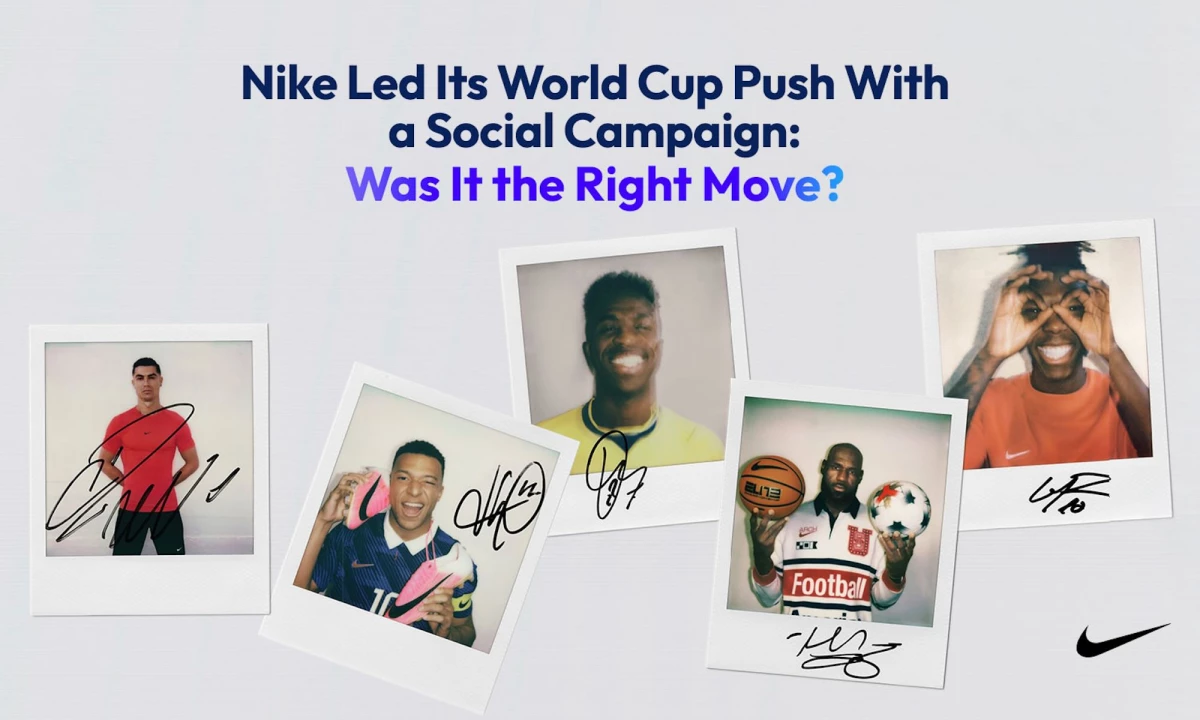
This year, Nike opened its World Cup campaign with 42 autographed Polaroid photographs and no hero film.
On May 21, the brand launched the opening phase of its "12 Weeks of Football" platform across its social channels.
The all-star cast spans Cristiano Ronaldo, Erling Haaland, LeBron James, Serena Williams, Kim Kardashian, Travis Scott, LISA of BLACKPINK, and Central Cee.
The press release spelled out the intent.
"We're not dropping a big hero ad and moving on," it read.
"We're building an entirely new world of football. Twelve weeks, one Universe of Football."
The six-minute hero film, "Rip the Script," which was created by Wieden+Kennedy and directed by Dan Streit, arrived weeks later.
Opening with Polaroids and holding the film back is what makes this social-first strategy worth examining.
The photos, the cast reveals, and the rolling product drops all go live on social feeds, where the audience Nike wants already spends its time.
It signals how the brand now thinks about attention at scale, and whether the rest of the industry should follow.
Raw On Purpose
The choice of Polaroids tells you everything about how Nike wants this campaign to feel before a single video has dropped.
The images are intentionally raw and unpolished, and feel more like something from a group chat or a social feed dump than a global brand rollout.
The cast reaches past football and into music, fashion, and pop culture, with the Polaroids teasing streetwear collaborations across five national teams:
- Jacquemus x France
- Palace x England
- NOCTA x Canada
- Patta x Netherlands
- G-Dragon x South Korea
All of it feeds a 12-week content platform that unfolds through product drops, creator content, and community play through the Toma el Juego street football program.
The whole system is built to keep Nike present across every audience community for the full tournament window.
Famous Campaigns noted that the cast "spans sport, music, fashion, and pop culture in a way no other brand could pull together."
A roster this broad is Nike's biggest asset, and the rolling format puts it to work all summer.
A single film would have spent the same star power in one burst.
Spread across the entire tournament, this one cast becomes dozens of separate cultural entry points, each pulling in a different community.
Nike VP of Brand Management Helena Thornton described the ambition once the film launched:
"We made this film to meet football communities exactly where they are, not just on a screen, but in their world and deeply ingrained into their subcultures," she explained.
The Polaroids did the work on social media first, seeding the subcultures the film would later reward.
The Hero Film Model Under Pressure
The hero film model was built for an era when broadcast TV could gather mass attention all at once.
This attention was worth a premium.
But over the past decade, the audience has scattered across platforms.
Most of that audience now lives on social feeds, where no single film can corral it anymore.
Meeting fans in the scroll is the whole premise of Nike's pivot, and Media Marketing's analysis backs the logic behind Nike's pivot.
"Instead of relying on one large hero film dominating television and YouTube, brands are now trying to build attention through a constant rhythm of smaller cultural moments capable of living for weeks across social platforms," it noted.
The same pattern runs across this year's World Cup advertising.
Powerade, Lay's, and Fox Sports are making similar bets.
A four-year sponsorship platform, a two-campaign split across U.S. and global audiences, and a multi-week rollout.
These all point to the same appetite for sustained presence across a 39-day tournament.
Nike pushed this logic further than any of them, treating the film as a single beat inside a season-long media strategy.
The Brief Has Changed
Nike's brief is different from anything most creative teams deliver.
A hero film involves a single piece of work, a defined production budget, a launch date, and a measurable increase in coverage.
A 12-week platform needs rolling production, a sustained distribution plan, and a way to measure attention that builds over the whole window.
The risk is the one every long rollout carries, since attention fades if the content loses traction, and every drop has to earn its place.
SGI Europe flagged that sustaining this infrastructure across 12 weeks is far more demanding than a single launch.
The early signs say it paid off. "Rip the Script" drew heavy coverage weeks in, a sign the audience was primed before the film even arrived.
The YouTube video drew nearly 76 million views in just eight days, while the Instagram post pulled in 2.4 million likes.
The catch is that only brands with the workflows and creator networks already in place can move at this pace.
What stands out from Nike's approach can apply to any brand weighing a similar move:
- Coordinate the cast across platforms. A multi-person roster only works if each figure reaches a distinct community.
- Build for cumulative attention. A rolling platform can't be judged by launch-week metrics, and briefs should say so upfront.
- Commission the infrastructure before launch. Production pipelines, creator relationships, and publishing workflows have to be in place before rollout.
The engagement numbers look strong, but the real verdict waits on whether all these views translate to real sales.
Our Take: Is the Social-First Strategy Worth It?
This social-first pivot makes sense only because Nike is Nike.
We think it's worth it, though the move rests on assets few brands can match.
The network, the cultural reach, and the production muscle to run a platform this long are rare.
A smaller brand trying the same thing risks spreading attention thin and filling the calendar with noise that has no center.
The campaign sustains its pace because W+K's global network feeds the machine without pause.
Smaller agencies face the harder test of running something this long, then proving in numbers that it worked.
Nike's gamble looks right because its ambassadors carry the audience the strategy needs.
LISA alone reaches more than 100 million on Instagram, and Nike feeds the feed with a roster of names at this scale all summer.
The audience reach is the template every rival will chase, and few have one that comes close.
Brands building sustained attention need creative partners who can deliver content at scale. Explore these top sports marketing agencies in our directory.