
Digital sports platform Fanatics puts its own fan community on trial, figuratively speaking.
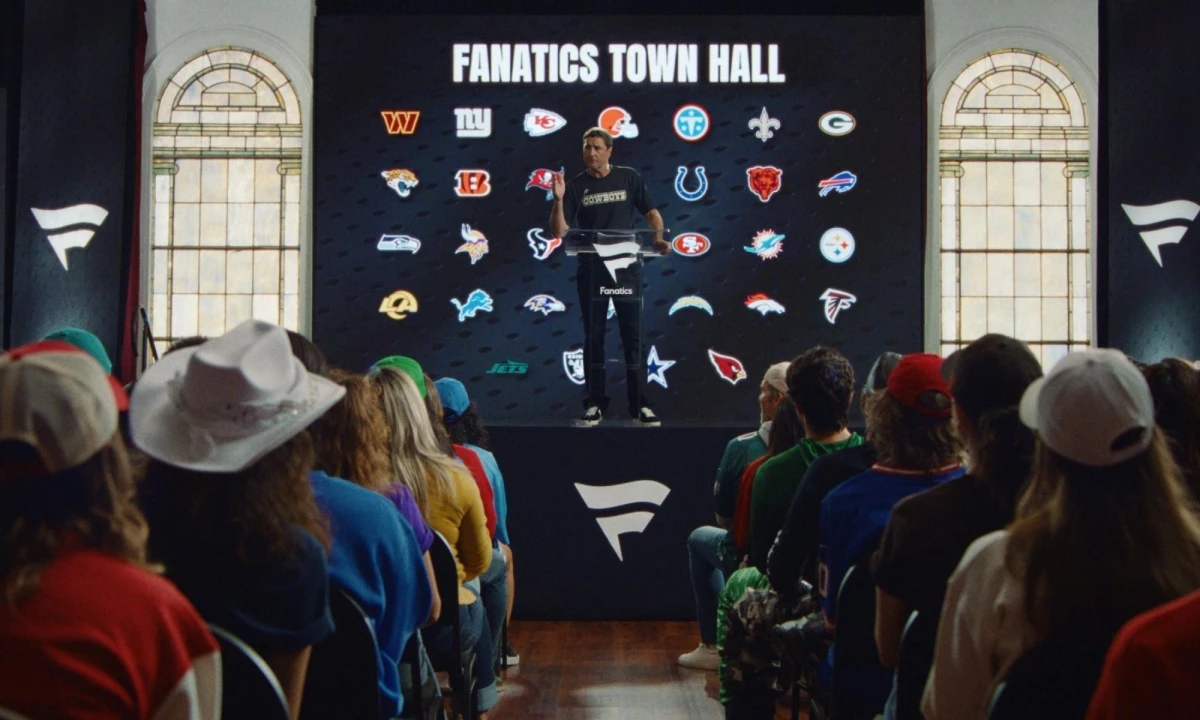
The brand’s new "Fanatics Town Hall" campaign stars Luke Wilson, Calvin Johnson, and Livvy Dunne in a mock civic hearing.
Fans testify about jerseys, cards, tickets, and football rituals.
Directed by Max Gutierrez, the hero film was produced by Fanatics Studios and branded entertainment studio OBB Bolded.
Campaign extensions also feature members of Fanatics’ Fan Advisory Network, a company-run program launched in April on X.
Wilson framed the pitch as recognition for the time and money that fans already spend.
"What drew me to this was the simple idea at the center of it: fans put more into sports than anybody," Wilson said in a press release.
"Fanatics rewards fans for being fans."
The company is using a community it created, selected, and positioned as a source of real feedback.
The Town Hall Becomes a FanCash Pitch
The hero film opens with Wilson presiding over a packed Fanatics Town Hall that borrows cues from shareholder meetings and city council hearings.
Fans stand up to explain their obsessions, including lucky jerseys, overloaded closets, card pulls, free pick’em games, and NFL trash talk.
Johnson and Dunne add celebrity recognition, while Wilson acts as the straight-faced host.
The former NFL wide receiver eventually delivers the commercial verdict: "Football hits different here people."
Every jersey purchase, game played, and card pack opened can earn FanCash.
Fans can then spend it on merchandise, tickets, cards, events, and other Fanatics offerings.
Wilson makes the pitch in plain terms, saying he wants "a jersey so lucky that it becomes a family heirloom."
The format gives FanCash an organic role inside the skit, making the promotional marketing feel natural.
Fanatics sells brand loyalty through the language of fandom, which makes the commercial proposition easier to understand.
Sports Fans Rank Rewards Above Ticket Access
Fanatics reports that it reaches more than 100 million fans worldwide through partnerships with over 900 sports properties.
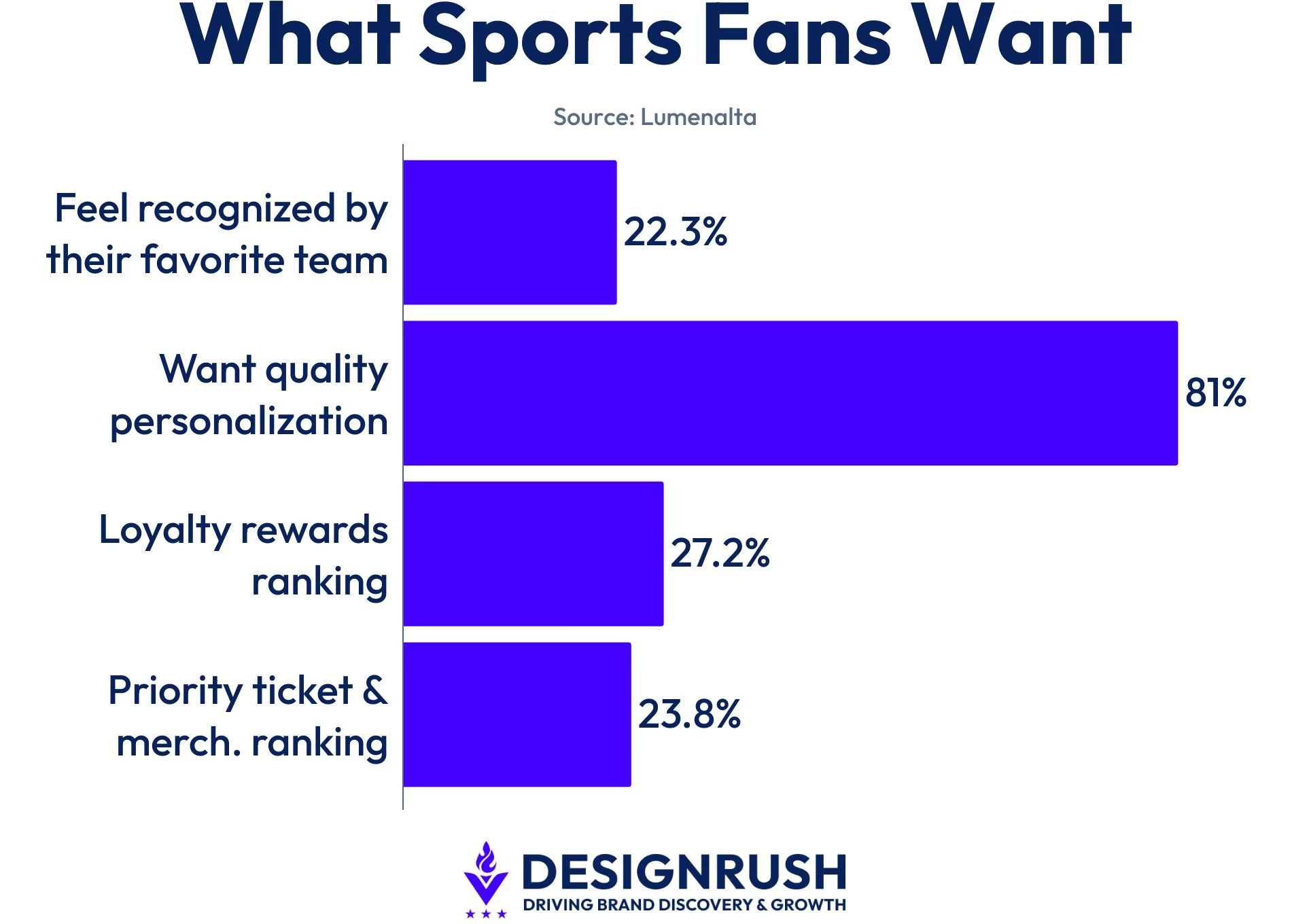
But only 22.3% of fans said they feel recognized by their favorite teams and leagues, according to a Lumenalta survey of 1,000 U.S. sports fans.
Eighty-one percent said that personalization would make them more likely to engage and spend.
Loyalty perks ranked as the most requested feature in the same survey, ahead of priority ticket and merchandise access.
These figures give FanCash a market where merchandise, digital engagement, and demand for recognition overlap.
The data suggests three ways brands can make loyalty programs more useful to sports fans.
- Fans already create value across multiple behaviors. Brands should reward purchases, engagement, and existing behaviors to increase repeat participation.
- Recognition can become a commercial incentive. Brands should connect personalization with tangible benefits to give fans a reason to spend.
- Loyalty needs to work across the fan journey. Teams should connect rewards across products and experiences to keep value circulating between interactions.
Fanatics has a strong foundation for this model because FanCash connects several behaviors under one rewards currency.
Our Take: Can Brand-Created Fans Feel Authentic?
A fan council that a company recruits, screens, and books into its own commercial is still a casting department with a friendlier name.
We'd argue the setup can still read as authentic, since the Fan Advisory Network gives members a real channel for feedback and events.
The gap is disclosure, because audiences meet these fans on screen without learning how they were picked.
Pepsi answered the same question by shooting Knicks fans on the street during the NBA Finals and posting them on billboards within days.
Anyone walking past those boards could see exactly where the faces came from.
Fanatics owns the harder version, a standing community it has to keep credible across a full NFL season.
We think the test comes in the campaign extensions, when the same faces return often enough for viewers to start asking who they work for.
Looking to make sports campaigns feel closer to fan culture? Explore these top sports marketing agencies for specialist partners.