
Grok’s Federal Deal: Key Points
- xAI signed a contract with the U.S. government to provide Grok across all federal agencies for $0.42 per agency, the lowest price and longest term under OneGov so far.
- The agreement covers Grok 4 and Grok 4 Fast and includes a dedicated engineering team from xAI to help agencies integrate and use the models.
- It positions Grok alongside rivals like OpenAI and Google, showing how branding and timing can become a lasting influence.
This deal is as much about symbolism and politics as it is about technology.
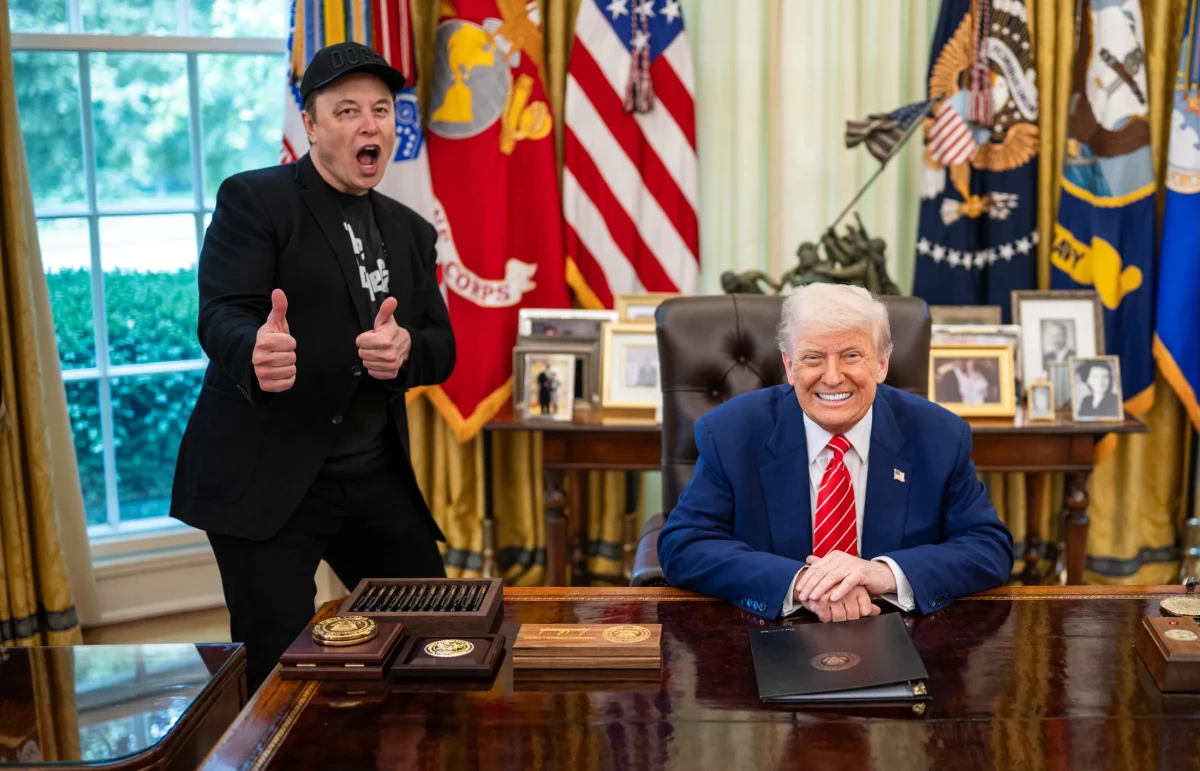
Elon Musk’s xAI has secured an 18-month agreement with the U.S. General Services Administration to bring Grok into every federal agency.
“xAI has the most powerful AI compute and most capable AI models in the world," Musk, who co-founded the company, said in a GSA news release.
"Thanks to President Trump and his administration, xAI’s frontier AI is now unlocked for every federal agency empowering the U.S. Government to innovate faster and accomplish its mission more effectively than ever before.”
Announcing an expansion to xAI For Government – making industry leading Frontier AI accessible to United States Federal Government users.
— xAI (@xai) September 25, 2025
1) All federal agencies and departments will get access to our Frontier AI models (Grok 4, Grok 4 Fast) for $0.42 per department for a period…
The contract is the longest of any signed under the OneGov AI program, extending until March 2027.
By comparison, OpenAI and Anthropic agreed to one-year terms at $1 each, Google charged 47 cents, and Meta provided free access to its Llama models.
The deal, priced at just $0.42 per agency, is symbolic and strategic.
Musk chose the number as a reference to one of his favorite science-fiction novels, "The Hitchhiker’s Guide to the Galaxy," which influenced his way of thinking.
Here, “42” is described as the answer to the ultimate question of life.
ELON MUSK: "I'm curious about the nature of the universe, and I want to go out there. And I want humanity to be out there exploring the stars, maybe meeting alien civilizations. Maybe in some cases, we see the ruins of alien civilization, the kind of stuff that you see in Star… pic.twitter.com/spgela0GmY
— DogeDesigner (@cb_doge) September 10, 2025
The signed agreement provides agencies with Grok 4 and Grok 4 Fast, xAI’s advanced reasoning models.
It also includes a team of company engineers dedicated to helping agencies deploy them effectively.
Training programs and secure integration support are also part of the package, with upgrade paths to higher-level enterprise subscriptions aligned with FedRAMP and Department of Defense standards.
Political Symbolism and Brand Power
Federal Acquisition Service Commissioner Josh Gruenbaum praised the contract for aligning with Trump’s pledge to win the global AI race.
Trump officials have tied OneGov directly to his AI Action Plan, positioning frontier models as part of America’s competitive response to China.
Musk’s presence at Charlie Kirk’s memorial with Trump days before the announcement signaled a thaw in their relationship after months of public clashes.
The optics matter as much as the contract itself.
At 42 cents per agency, the price may look trivial on paper, yet it elevates Grok as the White House’s preferred AI and frames Musk’s chatbot as America’s brand.
This visibility also underscores how brand power can shift perception, placing Grok alongside OpenAI and Anthropic in Washington even after its earlier setbacks.
Branding Lessons From Grok’s Breakthrough
Musk’s win offers a blueprint for how the appropriate narrative can elevate a product.
- Symbolism drives headlines: The 42-cent pricing transformed procurement into cultural news.
- Partnerships amplify reach: Engineers and training built into the deal make Grok more than just a model.
- Reputation risk doesn’t erase opportunity: Despite Grok’s controversies, it is now positioned as a Washington standard.
Together, these elements highlight how brand strategy can shape perception as much as technical performance.
Our Take: Is Grok Now America’s AI Brand?
I think so, yes, at least within Washington. Musk has turned this deal into a political and branding milestone.
While Grok trails rivals in the private sector, the federal contract gives it legitimacy and visibility that will matter in future procurement rounds.
The bigger question is whether Grok can prove reliable inside government workflows.
If it performs while competitors rotate through shorter deals, xAI could lock in an advantage. If not, Musk risks being seen as a master of headlines but not delivery.
Cultural relevance and strategic timing can turn even symbolic deals into durable brand positioning.
The AI race will be decided not just by technical benchmarks but by which players succeed in branding themselves as leaders.
This same principle also plays out in consumer marketing, where Lightlife relied on trusted food voice Molly Baz to “Tempehfy” everyday dishes.
Hotels.com takes a similar path, enlisting Nikola Jokić to anchor a playful travel campaign.
Both show how aligning with reliable personalities can strengthen brand identity in crowded markets, something top AI firms are also racing to achieve.