
Data Connectors and Infrastructure: Key Findings
- Bighorn Web Solutions released two merchant-first data connectors for Shopify and Magento that can be customized for any source system.
- Both connectors will be sold as one-time licensed solutions, with the promise of lifetime ownership for all merchants.
- These new custom data connectors provide cost certainty, ownership, and adaptability, making them better suited for high-volume or complex operations.
Bighorn Web Solutions, a leading eCommerce agency, announced the release of custom-built connectors for Shopify and Magento, designed to sync product data, orders, customers, and more.
Unlike most SaaS-based connectors, these offer the following features:
- Cost certainty: Both are sold as one-time licensed solutions, eliminating recurring fees.
- Code ownership: Instead of renting access, merchants buy the code and keep it. This means integrations can evolve without outside permission.
- Adaptability: The connectors are inherently plug-and-play with STORIS and Epicor P21 ERP, but can be customized to any source system.
- Long-term support: Bighorn pledges to maintain the application for as long as the client requires, or “up to forever” in their words.
“We built these data connectors to solve a long-standing problem for retailers: relying on expensive, restrictive SaaS connectors,” said Caleb Bradley, Founder and CEO of Bighorn Web Solutions.
“Our goal was to give merchants complete control over their data integrations, with a flexible solution that adapts to their unique business needs.”
Editor's Note: This is a sponsored article created in partnership with Bighorn Web Solutions.
The Hidden Costs of SaaS Data Connectors
SaaS data connectors are often the default option because they are convenient and inexpensive.
A monthly fee covers updates, support, and the promise that someone else will handle the headaches.
However, brands quickly find out that there are several hidden costs associated with the solution:
- Subscription creep: Costs for SaaS data connectors often increase proportionately to transaction volume, i.e., businesses pay more just because they’re growing.
- Vendor dependence: When a provider ends up delaying an update or changing its terms of service, merchants are often left to absorb the cost of their lost revenue.
- Rigid templates: Solutions sold off-the-shelf aren’t always capable of meeting the unique needs of businesses or industry-specific regulations, forcing out-of-pocket customization.
- Unpredictable future: Merchants may be forced into costly and sudden migrations or rushed replatforming due to unforeseen changes like mergers.
Each of these issues may seem manageable when they happen individually. But together? These create a long-term liability that few merchants ever really budget for.
When to Choose SaaS vs. Custom Connectors
Here’s a simple way to tell which solution works better for your situation:
- SaaS connectors fit best when operations are simple, budgets are limited, and future growth is modest.
- Custom connectors become essential when transaction volume is high, workflows are specialized, and data is too valuable to leave to chance.
It’s important to realize when your operation is about to hit the ceiling of what SaaS connectors offer.
If you’re fast approaching that ceiling, it’s time to seriously think about going with a custom data connector like the ones offered by Bighorn Web Solutions.
Shift the Mindset Toward Ownership in eCommerce Tech
As consumer behavior continues to trend towards online shopping, eCommerce is growing exponentially in key markets across the globe.
According to statistics reported by DesignRush, eCommerce revenue is projected to exceed $1.18 trillion by 2029.
Meanwhile, the Asia-Pacific region leads the global eCommerce market with 62% of all transactions.
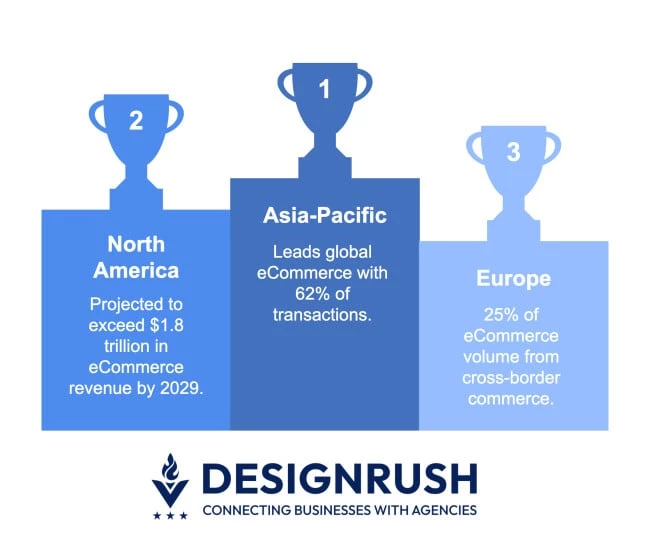
This surge puts extraordinary pressure on the digital infrastructure behind every transaction, making ownership of integrations and data flows less a technical choice than a strategic imperative.
That’s why companies that continue to rent their system integrations risk finding that growth enriches their vendors more than themselves.
And just like in real estate, those who rent rarely own their future.