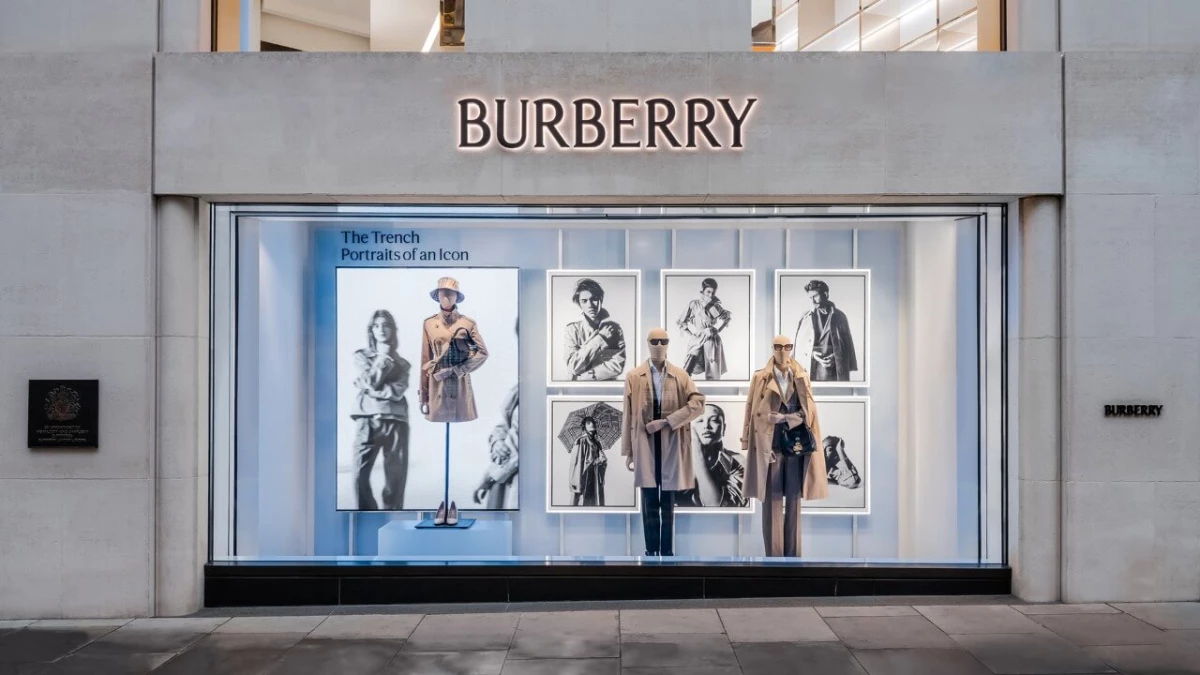

Burberry is cutting weaker stores as its recovery plan gets more selective.
The British luxury house closed 21 stores in fiscal year 2026 and opened nine, ending the year with 410 directly operated stores.
The closures came during a year when Burberry also lifted profitability.
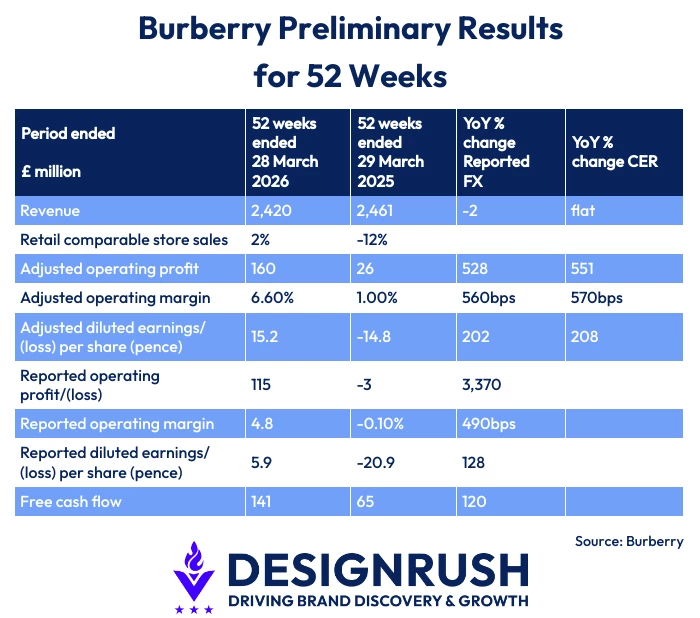
Adjusted operating profit rose to £160 million ($214.5 million) from £26 million ($34.8 million).
These were disclosed in Burberry’s latest annual results ending March 28, but the locations that were shut down weren't stated.
Burberry CEO Joshua Schulman said during the earnings call that the brand is leaving stores in locations "that are no longer appropriate or have profitability challenges."
In other cases, he said Burberry will look for more cost-effective ways to showcase its products.
The company posted a £21 million profit ($28.2 million) after a £75 million loss ($100.6 million) a year earlier, with revenue at £2.4 billion ($3.2 billion).
Comparable sales rose 2% for the year, helped by a stronger fourth quarter in the Americas and Greater China.
The improved results give Burberry more flexibility to cut weaker stores while concentrating investment on high-performing ones and key luxury markets.
Burberry’s recovery also points to a tougher reality for luxury retail.
Physical stores now need to function as profitable brand assets instead of default distribution points.
Store Cuts Target Weak Locations
The store reduction sits inside Burberry Forward, the plan designed to bring the brand back to steadier growth.
The focus is on tighter operations, a clearer product offer, and stronger use of its British heritage.
But the store cuts don't mean a full retreat from physical retail.
Burberry said overall retail space was broadly stable, down by just 1%, which points to a more selective footprint reset.
The company also plans to focus on stronger in-store experiences and higher productivity in the next fiscal year.
Burberry’s results also show why the store network is being judged more tightly.
Gross margin reached 67.9%, up 530 basis points at constant exchange rates, while operating expense savings reached £80 million (107.3 million).
At the same time, Burberry has been investing more in wholesale and department store partnerships, which have produced stronger figures.
This reduces the need to rely on every directly operated store for distribution.
The remaining locations now face greater pressure to produce stronger sales and brand equity.
Heritage Products Support the Recovery
Burberry’s store closures look more controlled because product demand is improving in the categories it wants to own.
The brand said outerwear outperformed in all regions during the year.
Scarves also grew in double digits in the second half, while leather goods improved during the latter half of the year.
A tighter footprint works better when customers understand what the brand stands for before they walk in.
Burberry also said its eCommerce sales rose in the high teens, supported by a stronger user experience.
That gives Burberry more flexibility across channels, with physical stores centered on brand experience while eCommerce and wholesale handle wider reach and distribution.
The company expects revenue growth and margin expansion in fiscal year 2027, while warning that geopolitical and macroeconomic pressure could still affect consumer confidence.
Burberry’s recovery plan gives marketers three useful takeaways:
- Make every location earn its role. Store networks should support service, discovery, and margin.
- Use core products as retail anchors. Recognizable categories give stores clearer reasons to exist.
- Keep channels working together. Owned stores, wholesale, department stores, and eCommerce need distinct jobs.
The success of the cuts will depend on whether the remaining stores produce higher traffic, stronger spending, and clearer product focus.
Our Take: Can Fewer Stores Help Burberry?
We think the store cuts make sense because Burberry is trying to build a more disciplined retail network instead of maintaining scale for its own sake.
The strategy also aligns with how the brand is reshaping distribution across eCommerce, wholesale, and flagship retail.
The challenge is making sure fewer stores don't weaken visibility in key luxury markets or reduce everyday exposure to the brand.
For retail and agency teams, the lesson is that smaller store networks only work when each location carries clearer commercial and brand value.
Burberry has also been sharpening its brand story through campaigns like its London-set "Her Parfum" launch with Olivia Dean.
The push used music, movement, and location to keep the scent line culturally current.
Together, the store cuts and creative push show how it's trimming weaker touchpoints and strengthening the stories shoppers see.
Looking to sharpen retail strategy around brand recovery and customer experience? Explore these top retail marketing agencies in our directory.