-details-webp.webp)

Scalable Web Data: Key Findings
- Treating data as infrastructure helped tech-driven companies move AI models into production faster while cutting time spent on cleanup and compliance.
- Using structured, AI-ready datasets reduced deployment friction and allowed teams to focus on building high-performing systems, not wrangling raw inputs.
- Purpose-built data infrastructure is the foundation for scalable, high-impact AI products, and the key to turning experiments into business outcomes.
The promise of AI is immense, but so are the roadblocks. From underperforming models to unpredictable outputs, the common culprit isn’t the algorithm. It’s the data.
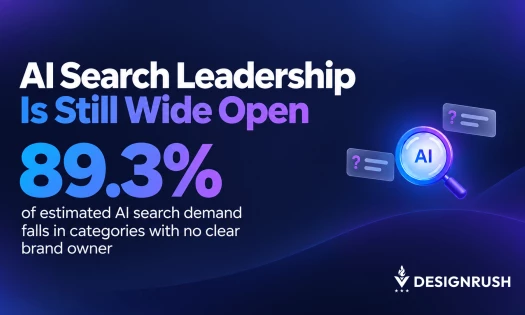
In fact, 17% of respondents from McKinsey's 2025 State of AI report say that 5% or more of their organization’s EBIT (Earnings Before Interest & Taxes) over the past year came from using generative AI.
This shows that when the right data foundations are in place, AI can directly drive measurable business value.
Quick listen: Why the future of AI depends on structured, scalable data — in under 2 minutes.
High-performing AI systems need the right infrastructure to discover, collect, and feed reliable, real-time information into models at scale.
Here are three key shifts companies need to make to turn data into a competitive advantage, and how platforms like Bright Data are evolving to support that.
1. Stop Scraping, Start Thinking Infrastructure
Quick wins like scripts or proxy tools might work in the beginning. But as demands grow, they fall apart fast.
To build AI that scales, treat web data as long-term infrastructure, not a side project. That means:
- Automating discovery, extraction, and delivery
- Building pipelines that adapt to site structure changes
- Ensuring global uptime and geographic coverage
- Managing compliance from the ground up
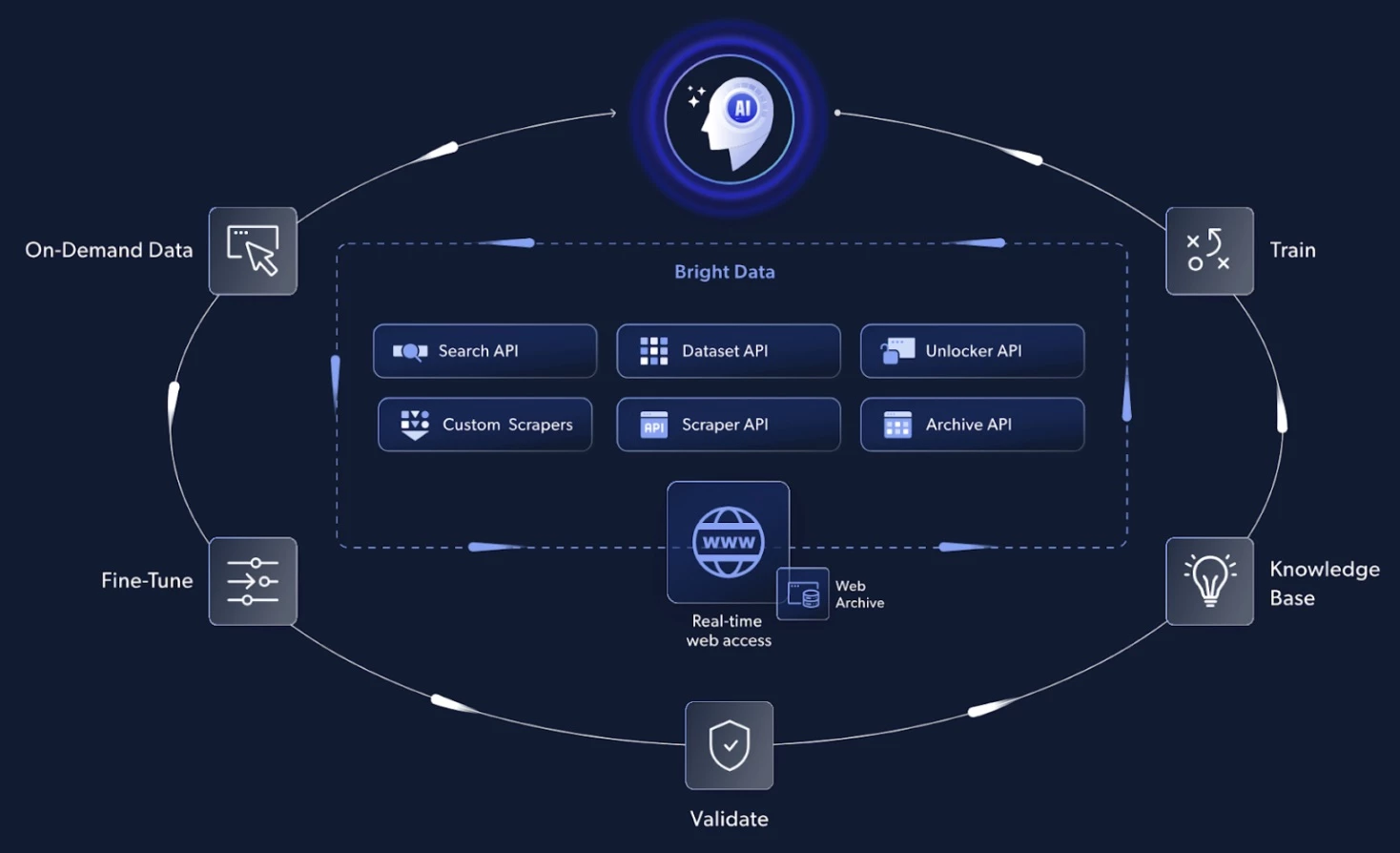
“Scrapers are the starting point, but are often brittle and hard to scale. Today’s AI models need constant access to fresh, structured, and compliant data. That requires infrastructure that’s always on, adapts automatically, and can be governed centrally,” says Bright Data Chief Product Officer Ariel Shulman.
2. Deliver Structured, AI-Usable Data
Raw web data is full of noise, duplicates, and inconsistent formats.
Feeding it into a machine learning pipeline without serious cleanup slows time to value and drains engineering resources.
Speed things up by using infrastructure that delivers structured, AI-ready data from the start. Look for:
- Pre-labeled or categorized datasets by industry
- Consistent schemas across sources and geographies
- Metadata for temporal context and version control
- Plug-and-play integration with ML workflows and data lakes
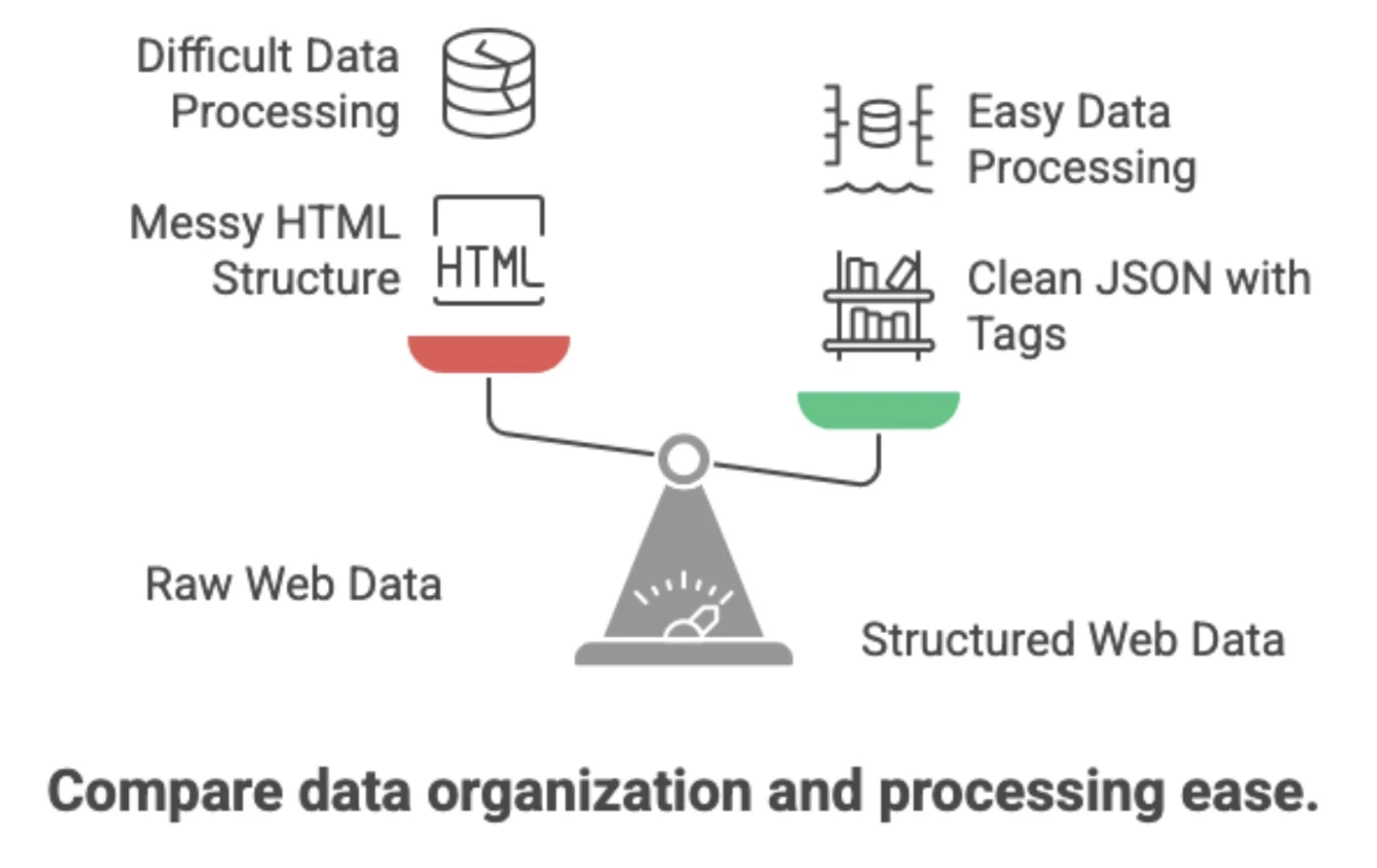
The more work your infrastructure does upfront, the faster your models get to production — and the better they perform when they get there.
“It’s not just cleaning; it’s context. AI models need data that’s already been structured, annotated, and curated to the use case,” says Shulman.
“Our clients save months by using pre-categorized datasets and consistent schemas, which let their teams focus on building, not wrangling.”
3. Align Data Strategy With Your AI Use Case
Different AI systems need different types of data to perform well, yet too many teams use the same approach across use cases.
The result? Slower models, weaker predictions, and missed opportunities.
To build the right foundation, ask yourself the following:
- Do we need real-time data, historical data, or both?
- Is location-specific input essential to our use case?
- Are we training large-scale models or powering lightweight, real-time systems?
- What are our requirements for freshness, accuracy, and scalability?
When your data strategy is tailored to what your AI is actually trying to do, performance improves — and so does business impact.
“It’s everything. If engineers can’t get what they need quickly and reliably, the whole project stalls,” says Shulman.
“We focus on making it easy to access data through dedicated APIs, with full visibility and control. It turns infrastructure from a blocker into a force multiplier.”
Bonus Tip: Build for the People Who Use It
Even the smartest data strategy fails without developer adoption. If the people building your AI can’t easily access, test, and scale your data infrastructure, it becomes a bottleneck.
Make usability a core requirement. Choose platforms designed for the teams who’ll work with them day to day.
Prioritize tools that offer:
- Robust APIs and SDKs for seamless automation and integration
- Clear documentation and responsive support to speed up onboarding and troubleshooting
- Monitoring dashboards and debugging tools that provide real-time visibility and control
- Built-in compliance features to manage governance, privacy, and usage at scale
When infrastructure is developer-friendly, teams move faster, collaboration improves, and your AI projects have a much higher chance of delivering real results.
Infrastructure Is the Real AI Multiplier
Clever prompts and faster GPUs make headlines, but it’s data infrastructure that powers true AI success.
Without a solid foundation, even the most advanced models can stall before delivering value.
Whether you build your own or partner with a platform like Bright Data, investing in flexible, scalable, and ethical data infrastructure is what separates promising AI experiments from production-ready, business-driving solutions.