
Amazon has made it easier for outside merchants to join its Shop Direct program and appear in its search results.
Now, external retailers can sync:
- Product catalogs
- Prices
- Inventory in real time
So their listings appear right next to those from Amazon sellers when customers search.
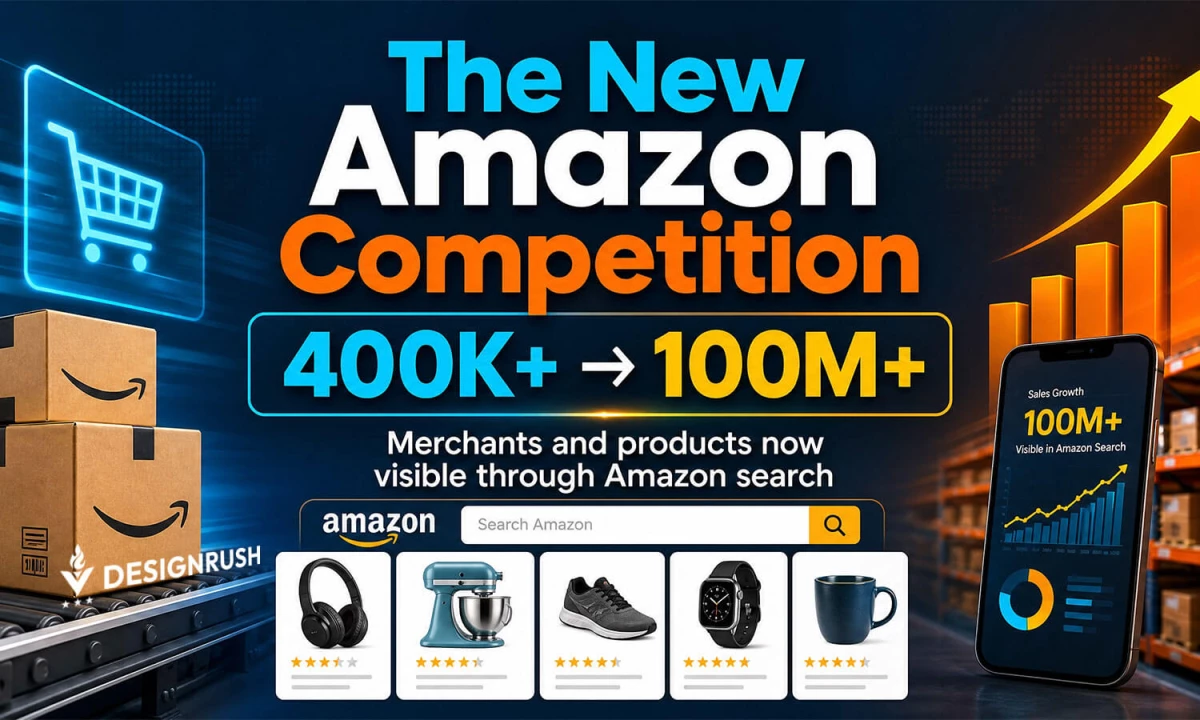
Shop Direct now includes more than 100 million products from over 400,000 merchants.
Some of these items can be bought using Amazon's "Buy for Me" feature, where Amazon's AI completes the purchase using saved payment and shipping details.
Customers can also pick "Shop Direct" to go straight to the merchant's website and finish the purchase there.
I've spent years helping brands get noticed on Amazon. Now, the boundaries of Amazon are opening up, but most sellers haven't updated their strategies to keep up with these changes.
Marketplace isolation is no longer a strategy
Many sellers still think their main competition is just the other few listings on the same search page.
That's not true anymore.
Amazon displays prices and products from retailers that were never part of its marketplace, and these listings appear right alongside the usual search results.
Shop Direct started to help customers find products Amazon didn't sell, and the new feed integration makes it much easier for merchants to join in without special setups.
Meanwhile, about one-quarter of consumers already use generative AI while shopping, and 60% of Gen Z regularly use AI Overviews during search, according to McKinsey.
This suggests AI-powered product discovery is becoming part of mainstream buying behavior.
In practice, this means brands now face a much bigger and less predictable group of competitors.
A brand can rank well against competing Amazon sellers and still lose a sale to a retailer offering a lower price or a stronger product listing.
The comparison process has changed, too. Shoppers once had to open multiple pages to weigh their options. Now, pricing, product details, and competing offers can appear together in the same shopping journey.
This changes what it takes to win in search results, so brands need to compare themselves to more than just other Amazon sellers.
The new pressure points and how to handle them
Three areas need fresh attention as Shop Direct scales:
1. Brands should update their prices in real time, not just occasionally.
With AI-powered search showing options from outside the marketplace, outdated prices or inconsistent deals are easier for both customers and Amazon to notice and skip.
Brands should check competitors’ prices daily and be ready to adjust quickly without losing profit.
The goal isn’t always to have the lowest price; it’s to make sure your price fits your real position when shoppers see it.
2. Product data needs to work for both machines and people.
Likewise, one in five generative AI users now rely on the technology daily, while a majority consider it their primary answer engine, according to Forrester, increasing the importance of product information that AI systems can accurately interpret.
Titles, attributes, images, and specifications all feed the AI systems behind Amazon search and Alexa for Shopping, which replaced Rufus, Amazon’s shopping assistant.
Many feed-based competitors are syncing rich, real-time catalog data, raising the bar for competitive listings.
My advice? Audit your catalog data as carefully as you would audit a website for technical SEO.
Incomplete attributes, short descriptions, or inconsistent specs are now a visibility problem, not just a content issue.
3. Differentiation needs to be part of the listing itself, not just assumed.
A brand’s positioning, reviews, and content used to be compared to a familiar group of Amazon competitors.
Now, that same content is judged against the entire retail web.
This means your brand story, A+ Content, and strong reviews matter even more to help your listing stand out from similar external options.
If your listing relies on shoppers already knowing why your brand is trustworthy, that no longer works. The difference must be clear on the page.
The fundamentals haven’t changed. Ranking, conversion, and margin protection are still the main goals.
What’s different now is the size of the competition and how quickly shoppers make decisions.
What this means for brands now
The growth of Shop Direct aligns with Amazon’s broader shift toward AI discovery, including tools like Alexa and Help Me Decide that are designed to help customers move from searching to buying more quickly.
Separately, McKinsey found that large digital marketplaces are rapidly embedding AI into shopping experiences, reinforcing their role as destinations for product discovery, research, and purchasing.
As these systems get better and better, the products that show up first will be the ones with the cleanest, most complete data, no matter where they’re sold.
Brands that treat this as an opportunity to improve rather than a threat will be the most successful.
So invest in pricing tools, keep your catalog data strong, and build a content strategy that helps you stand out without depending on a closed marketplace.
Amazon marketing used to have its own world and its own rules.
Now, Shop Direct’s growth shows those rules are shaped by the wider retail internet.
Brands that adapt quickly will benefit most from the extra exposure, while others risk falling behind.