
2025 Black Friday Spending: Key Findings
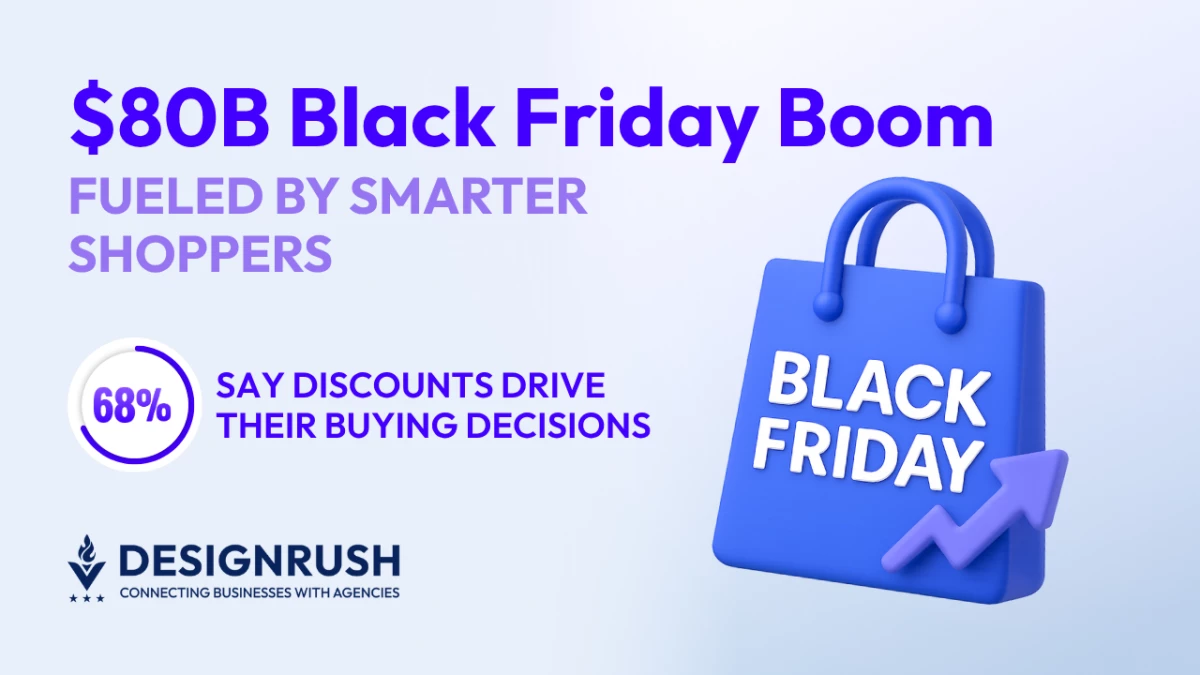
- Black Friday spending in the U.S. is expected to reach $80 billion, driven by shoppers who plan ahead instead of buying on impulse.
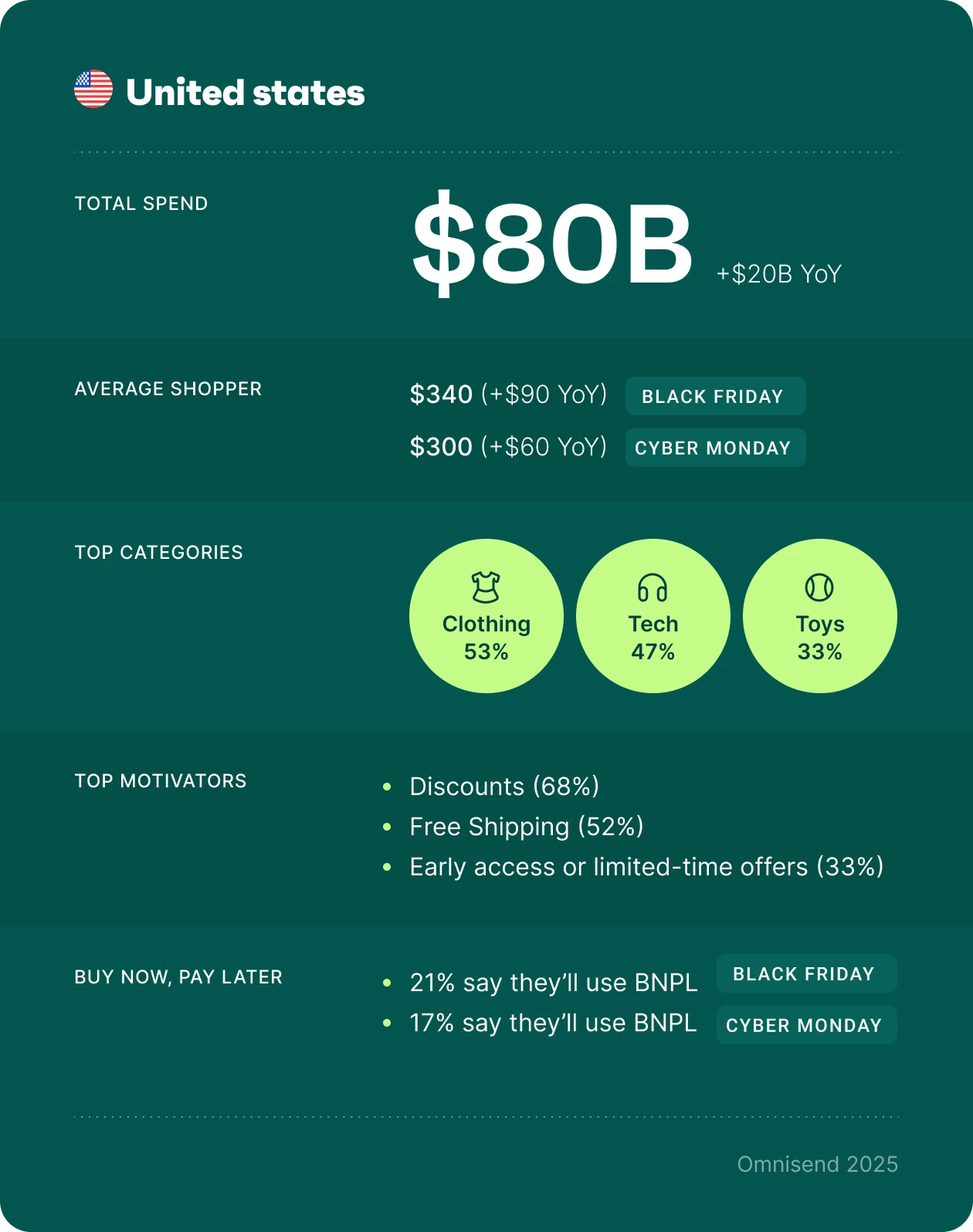
- 68% of respondents choose discounts as their top motivator, while 52% prefer free shipping, showing that simple incentives still shape consumer behavior.
- The report identifies a move toward “efficiency-driven retail,” where timing, trust, and clear value guide every purchase decision.
Black Friday and Cyber Monday are losing their reputation as shopping frenzies.
Omnisend’s new BFCM 2025 Global Spending report shows that the event has become a period of planning and precision.
The company’s survey of 4,000 consumers across the U.S. projects $80 billion in U.S. Black Friday spending this year.
That’s weird….I thought people couldn’t afford eggs….guess Biden’s economy is pretty good after all https://t.co/YEWkIP0qGPpic.twitter.com/vuA4EDSfr9
— Wu Tang is for the Children (@WUTangKids) November 30, 2024
The report also includes forecasts for Canada, the U.K., and Australia, and the findings show how shoppers are taking control.
While headlines continue to highlight inflation and budget concerns, consumers seem to not be scaling back.
“Even with cost-of-living pressures, people aren’t pulling back, they’re playing it smart,” Marty Bauer, eCommerce and retail expert at Omnisend.
“They’re spending strategically, stocking up during BFCM so they don’t have to buy later at full price. So this year BFCM is more about efficiency rather than indulgence.”
What shoppers are doing is adapting: focusing on timing, value, and necessity rather than volume or novelty.
Editor's Note: This is a sponsored article created in partnership with Omnisend.
Planning Replaces Impulse
Omnisend found that 68% of American consumers are primarily motivated by discounts and 52% by free shipping.
Loyalty programs, early access, and influencer deals ranked much lower.
Many shoppers said they already know what they plan to buy, with most tracking prices well before the season begins.
Nearly 60% will prioritize clothing, while 42% and 27% will buy gadgets and toys, respectively.
It’s also important for brands to note that Omnisend found that the average Black Friday consumer is predicted to spend $332 (+$52 YoY), while Cyber Monday will amount to about $240 (+$44 YoY).
Bauer described the change as a move from impulse indulgence to efficiency.
“For retailers, this means shifting the message. Consumers aren’t chasing excitement, they’re chasing value."
The brands that position deals as financial relief and make it easy to buy will win this year,” he added.
Black Friday has turned into a budgeting strategy to help shoppers see the long-term benefit of buying early.
This will define which brands feel relevant in a market where value for money now equals brand trust.
Younger Shoppers Redefine Value
Amazon continues to lead in popularity, but Omnisend’s data shows growing interest in Temu, Shein, and TikTok Shop.
Gen Z consumers are driving this change, favoring low-cost, fast-moving marketplaces that combine convenience with entertainment.
The report also shows that 14% to 21% of shoppers plan to use buy-now-pay-later (BNPL) options for large items, while most still prefer to pay in full.
Control remains the theme. Fashion and electronics dominate, but toys have grown fastest, as parents secure gifts early to stretch holiday budgets.
In Australia, Black Friday and Cyber Monday spending is projected to hit $6.1 billion, up $1 billion year-over-year, with 59% buying clothing and most driven by discounts and free shipping.
In Canada, consumers are expected to spend $9.3 billion, up $1.7 billion, with 51% choosing apparel and a notable rise in average spend to $319 for Black Friday.
In the U.K., total spending will reach £13.9 billion, a £4.1 billion increase, with shoppers leaning toward clothing (49%) and tech (45%), reflecting a strong recovery in consumer confidence.
Omnisend’s survey findings point to a retail environment that rewards steady communication and reliability over flash sales.
The brands and agencies that can adjust their in-store and eCommerce strategies on time will benefit most from this new BFCM mindset.
How Businesses Can Respond
Omnisend’s findings make it clear that brands need to think differently about seasonal strategy.
Consumer behavior and expectations are sharper and more predictable than ever.
- Frame offers around savings that last. Shoppers want proof that a purchase today helps them spend less tomorrow.
- Use automation for clarity. Personalization should simplify choices and surface the most relevant offers.
- Invest in experience after the sale. Transparent shipping, dependable service, and timely communication drive loyalty beyond the shopping season.
The retailers that treat convenience and consistency as part of the offer will be the ones that build long-term relationships and growth.
A More Calculated Black Friday Spending
Omnisend estimates that U.S. consumers will spend roughly $80 billion this Black Friday and Cyber Monday.
This shows that caution and confidence can coexist.
Lauris believes this will redefine the playbook for future retail cycles.
“We’re seeing a generation of shoppers who understand the system better,” he shared.
“They know how to plan, how to compare, and when to act. This awareness will keep changing how brands effectively connect with them.”
Black Friday is no longer about speed, but about timing, trust, and value.
And those who understand this balance will lead the next era of global retail.