
Post-Prime Day Lessons: Key Findings
- Prime Day 2025 was the most successful one to date, racking up $24.1 billion in U.S. e-commerce sales alone, constituting a 30% increase YoY.
- Campaign success depends on sequencing, not size. Amazon’s record-breaking Prime Day performance came from building a full-funnel strategy weeks in advance.
- Data isn't a postmortem. Treating it as a live feedback loop turns every campaign into a smarter one.
Quick listen: Amazon’s $24B Prime Day proves full-funnel strategy beats flash sale tactics. Here’s what brands should copy.
Prime Day 2025 didn’t just break records. It redefined them.
Across four days, Amazon racked up $24.1 billion in U.S. e-commerce sales, a 30% year-over-year jump, according to an Adobe Analytics report released on MediaBrief.
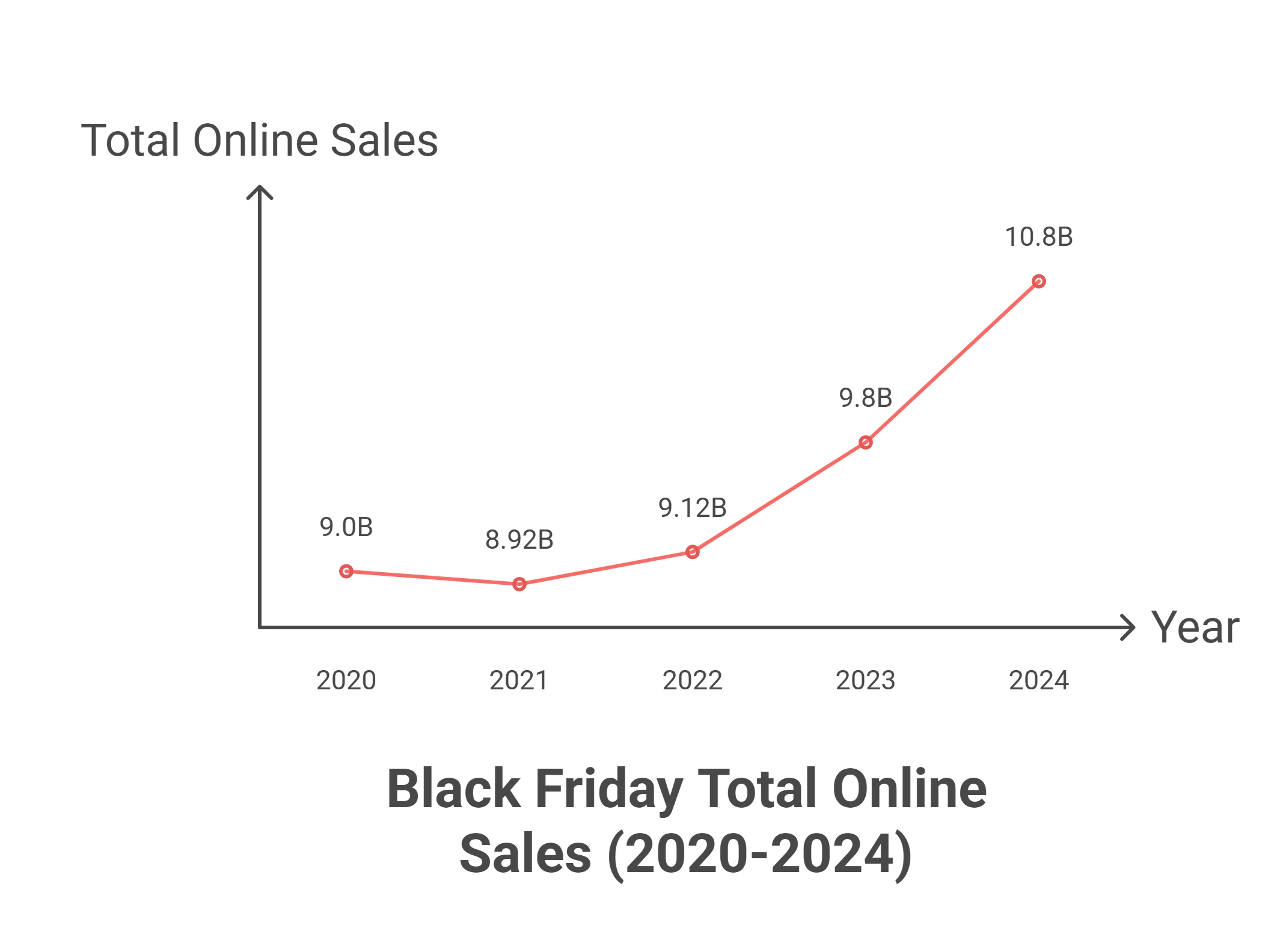
To put that into perspective, that’s more than the online sales of the last two Black Fridays combined ($10.8B in 2024 and $9.8B in 2023).
 Although it’s easy to chalk up these results as just another example of “offering a sale boosts revenue,” a deeper look reveals something more.
Amazon didn’t just slash its prices. It conducted a highly choreographed and intentional buying journey that spanned platforms, formats, and customer mindsets.
Influencer marketing primed audiences weeks in advance. Livestreams ran hot with creator-led deals. Algorithms matched shoppers to bundles they didn’t know they needed.
All of these happened inside a tightly controlled flywheel that turned content into commerce with almost unnerving efficiency.
Amazon treated this year’s Prime Day as a full-funnel media event — one that should leave brand and retail leaders wondering whether their own campaigns are built for today’s buying behavior… or yesterday’s channel strategy.
And with the retail media market expected to surpass $231 billion globally by 2030, as reported in Forbes, brands that cling to the idea of campaigns being one-off promotions will be left behind.
Fortunately, Amazon’s game plan for Prime Day 2025 offers lessons and strategies worth stealing and implementing into your own brand campaigns. Here’s what brands should take away.
- Build a Funnel-First Media Engine
- Merge Content with Commerce
- Use AI to Collapse the Purchase Journey
- Control the Full Customer Experience
- Turn Campaign Data into Fuel
Five Lessons That Powered Amazon’s Prime Day Success
1. Build a Media Engine Around the Funnel, Not the Flash Sale
Prime Day began weeks before the first lightning deal dropped.
Amazon built layered landing pages by audience type, seeded early teasers across Twitch and Fire TV, and applied hyper-specific targeting through its DSP.
The result? Paid search accounted for 28.5% of Prime Day sales, an eye-catching stat that points to the true architecture behind the success.
In other words, this was a campaign built around guiding customers down a carefully lit path.
Many brands, by contrast, still treat peak moments as fireworks: fast, bright, and over in an instant.
But sales events shouldn’t just be loud. They should be sequenced.
Otherwise, what gets mistaken for hype is often just ad spend without structure, leading to muted results.
2. Blend Your Content with Commerce
Amazon Live drew hundreds of millions of livestream views before and during Prime Day. For many, that number would be a true victory.
Amazon, however, understood that the number alone wasn’t what truly mattered. It was the context.
These weren’t scripted commercials disguised as content. They were creator-led demos, real-time discounts, and comment-driven offers.
The livestreams themselves were part and parcel to the shopping experience.
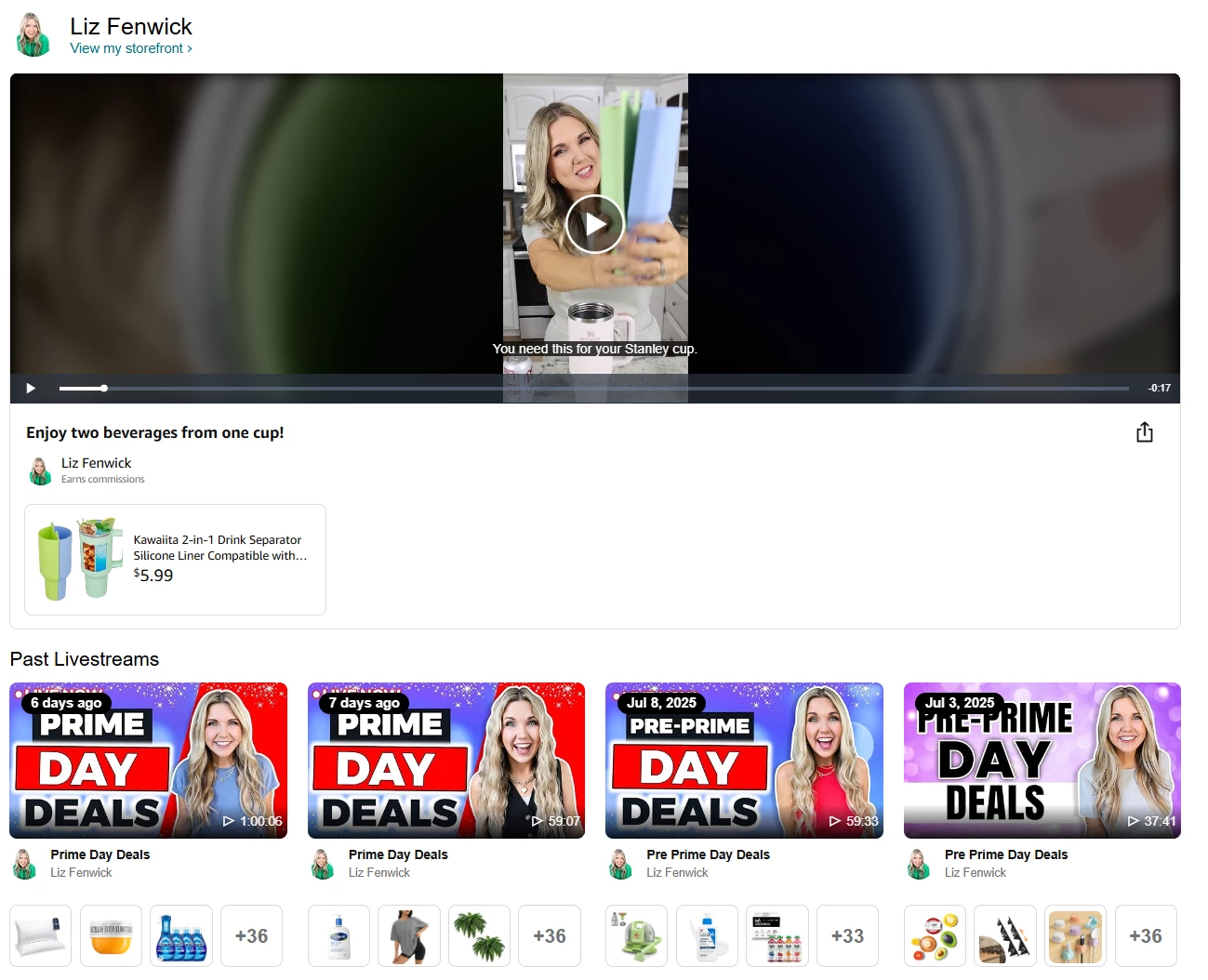
That distinction matters. Too many brands treat influencer content like a sidecar that’s bolted on, nice to have, and largely cosmetic.
Amazon used it as the engine of its entire Prime Day machinery. And it paid off big time.
If brands want content that drives commerce, they’ll need to embed commerce into the content itself — not sandwich it between hashtags and hope for the best.
3. Use AI to Shorten the Gap Between Intent and Purchase
Amazon didn’t just use Rufus, Alexa Shopping, and its generative AI (GenAI) buying guides just so it could surface SKUs.
They used AI to reduce indecision, answer questions buyers didn’t even know, and bundle logic with convenience.
🤖🛍️ We’ve got 5 smart AI features to help you save time and money for Prime Day this year.
— Amazon (@amazon) July 8, 2025
From Rufus, your AI-powered personal shopping assistant, to Amazon Lens for visual searches using images, screenshots, barcodes, and more 👇 pic.twitter.com/jYkx1PRPID
This is a big deal because 53% of US consumers plan to use GenAI to shop online in 2025, based on an EMarketer report.
When faced with a platform with nearly endless options, consumers tend to come face to face with decision paralysis.
Through the clever use of AI, Amazon was able to help its consumers overcome choice overload and come to a decision faster.
Many brands are looking at AI to speed up internal processes and the like.
But a better use case they might be overlooking is velocity by reducing the number of doubts a consumer has, helping them understand why a certain product is the right choice.
4. Own the Experience End-to-End
From first scroll to final click, Amazon controls every stage. It writes the ads, hosts the content, moves the product, and follows up with new offers.
And now, through Buy with Prime, it even extends that infrastructure to DTC sites outside its ecosystem.
This matters because the more hand-offs an experience is for a buyer — clicking from a social ad to a janky mobile site to a third-party checkout — the more brand trust is lost.
That's because brands that outsource chunks of the funnel for convenience often find themselves with disjointed experiences and weaker results.
End-to-end doesn’t mean owning every tool. It simply means taking responsibility for how the whole customer journey feels.
5. Treat Campaign Data as a Feedback Loop
Campaign data is not like a report card you show to the C-suite and move on from. But within that pile of metrics are insights meant to be acted on, not archived.
In fact, Amazon took this one step further, continuously optimizing creative, product inventory, and targeting based on live data.
That kind of agility played a key role in compounding Amazon’s returns.
The takeaway here is that campaign data will often paint a story, sharing lessons that can be used to make the next campaign more successful.
Naturally, not every brand is expected to adjust their campaigns mid-way, but the mindset shift matters.
When data is treated as a living feedback loop, not a final grade, each campaign becomes a stepping stone to smarter strategy, sharper creative, and stronger performance.
Put These Strategies to Practice
Not every brand has Amazon’s budget or backend. And that’s fine. Your brand doesn’t need to have the same infrastructure to apply Amazon’s approach.
What matters here are the strategies behind the success of Prime Day. Because these are easily replicable.
For example, TikTok Shop is already replicating the content-to-checkout model through short-form video, creator partnerships, and in-app payments.
Similarly, Target Roundel and Kroger Precision Marketing are making retail media more accessible for mid-sized brands through rich shopper data and improved sequencing tools.
How you can use these platforms:
- On TikTok: Coordinate influencer content, CTAs, and remarketing into one narrative arc.
- On Target or Kroger: Use shopper data to sequence paid media, time offers, and target by category behavior, not just demographics.
- On your own DTC site: Configure AI to guide discovery and remove purchase friction, without outsourcing your brand voice.
Use Prime Day as a Blueprint, Not an Exception
Prime Day was a masterclass in system-based selling, and I believe brands would be wise to study its foundations instead of just looking at the end result.
Because online retail has evolved past simply reaching buyers.
It’s now about guiding them across content, formats, and moments that don’t look like ads but still convert like them.
The lesson isn’t to replicate Amazon’s tools. It’s to replicate the intention behind them.
Build a system, not a stunt. Think in loops, not spikes.
And above all: make sure every dollar you spend actually moves the buyer forward and has them coming back for more.