
When Klarna launched its AI assistant in 2024, the system handled 2.3 million customer service conversations in its first month.
The volume covered two-thirds of the company’s customer service chats, equivalent to the work of 700 full-time agents.
This is a breakthrough in practical application of AI!
— Sebastian Siemiatkowski (@klarnaseb) February 27, 2024
Klarnas AI assistant, powered by @OpenAI, has in its first 4 weeks handled 2.3 m customer service chats and the data and insights are staggering:
- Handles 2/3 rd of our customer service enquires
- On par with humans on…
Klarna later rehired customer service staff after CEO Sebastian Siemiatkowski said the company’s focus on cost had come at the expense of service quality, according to Bloomberg.
We just had an epiphany: in a world of AI nothing will be as valuable as humans!
— Sebastian Siemiatkowski (@klarnaseb) February 14, 2025
Ok you can laugh at us for realizing it so late, but we are going to kick off work to allow Klarna to become the best at offering a human to speak to!!!
So excited about this, more to come!
Now, the questions for companies evaluating AI customer service systems are:
- Are customer issues being resolved correctly?
- When should human agents step in?
- How are AI decisions being monitored?
AI Customer Service Needs Stronger Governance
Ninety-one percent of customer service and support leaders faced executive pressure to implement AI in 2026, according to Gartner.
That pressure is increasing scrutiny around how these systems perform after deployment.
Alex Holmes, Head of Growth at Influx says companies should judge AI support systems by the quality of the customer interactions they produce.
"The number of conversations an AI system handles only shows how much activity it processes.
"Companies also need to know whether those interactions lead to accurate answers, successful resolutions, or a smooth handoff to a human agent when needed."
Around 80% of organizations lack capabilities such as clear decision boundaries, monitoring systems, and audit trails, according to Deloitte’s 2026 State of AI in the Enterprise report.
For customer support teams, those capabilities determine how easily they can review AI decisions and identify cases that require human involvement.
Would you trust an AI that sounds 100% sure but is completely making things up? CX Today breaks down why this is a bigger CX risk than most teams realize. https://t.co/vmPowsKDvq
— Influx.com (@influxdotcom) June 24, 2026
About 51% of customers indicated that they were willing to use generative AI assistants for customer service interactions during 2025, based on Gartner research.
This level of acceptance allows AI to take on more routine requests, while human agents remain available for conversations that require additional context.
A conversation can end quickly without resolving the issue. AI may also miss context, struggle with unusual requests, or delay a handoff to a human agent.
According to Holmes, teams also need to track which requests AI handles well and where human support remains necessary.
“Customer service teams should look at whether AI is resolving the customer’s issue, not only whether it is responding quickly,” Holmes says.
“That means tracking repeat contacts, escalation rates, and the questions that still require human support so teams know where AI is working and where it needs changes.”
AI Customer Service Still Requires Human Agents
Early AI customer service discussions often focused on whether companies would replace human agents.
Notably, 85% of customer service and support leaders are expanding human agent responsibilities as AI reduces contact volumes and changes team operations, according to Gartner.
Only 31% have implemented or planned AI-driven frontline layoffs through the first quarter of 2027, according to the same research.
Influx combines AI tools with human support teams, using automation for routine requests and agents for cases that require more context.
“AI should handle the conversations it is suited for, while human agents remain available for issues that require judgment, empathy, or additional context,” Holmes says.
“Companies need clear escalation rules so agents receive the right cases at the right time and customers do not have to repeat their concerns after being transferred.”
Reviewing escalations shows which requests AI cannot resolve and why they require human involvement.
It also helps teams identify cases where customers reach human agents after an unsuccessful AI interaction.
How Can Companies Make AI Customer Service Successful?
More companies are testing AI agents, but adoption alone doesn’t show whether these systems are delivering results.
Automating conversations does not tell companies whether their AI support is working.
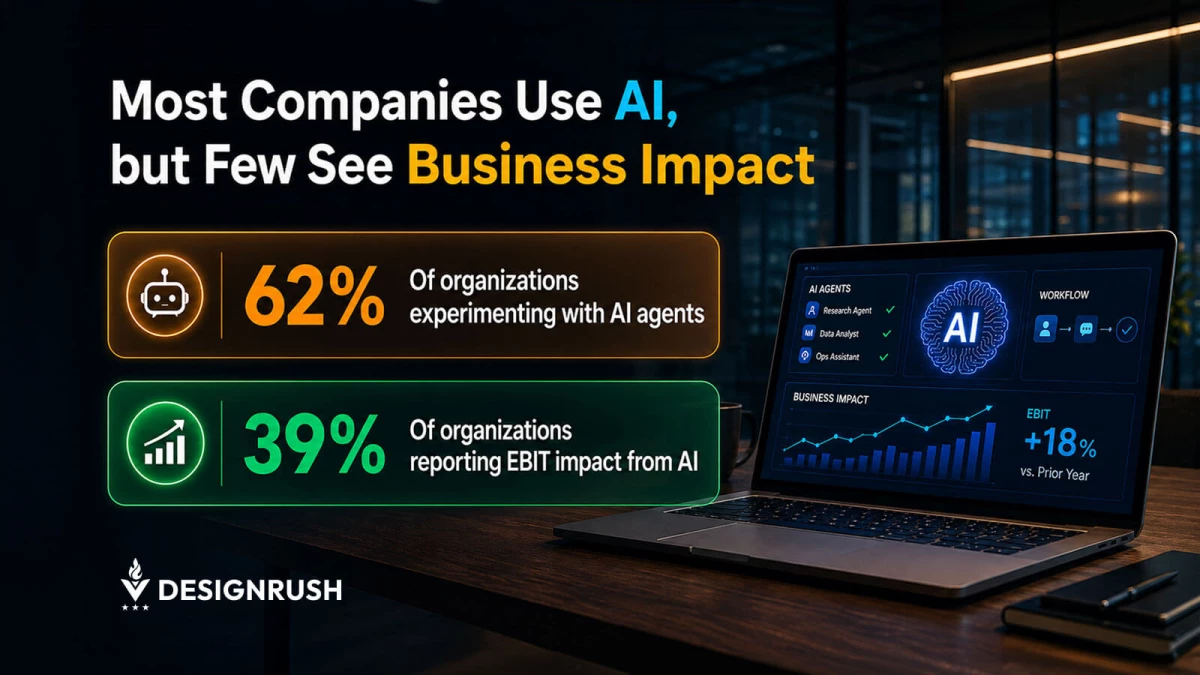
In 2025, 62% of organizations were experimenting with AI agents, while only 39% reported enterprise-level EBIT impact from AI adoption, according to McKinsey’s State of AI report.
The challenge is turning those tests into support systems that deliver reliable results.
Holmes recommends that companies:
- Assign clear responsibility for managing AI support operations.
- Set rules for when conversations should move to human agents.
- Review customer interactions regularly to see where AI is delivering accurate support and where teams need to step in.
Support teams should track how often customers return with the same issue, how often AI conversations are escalated, and which questions still require human agents.
Reviewing failed interactions, repeat contacts, and escalations can show teams where AI needs changes.
These reviews can help teams identify which cases need better automation and which still require human support.
The goal is to understand where AI improves support and where human agents remain essential.