
AI Agents Strategy: Key Findings
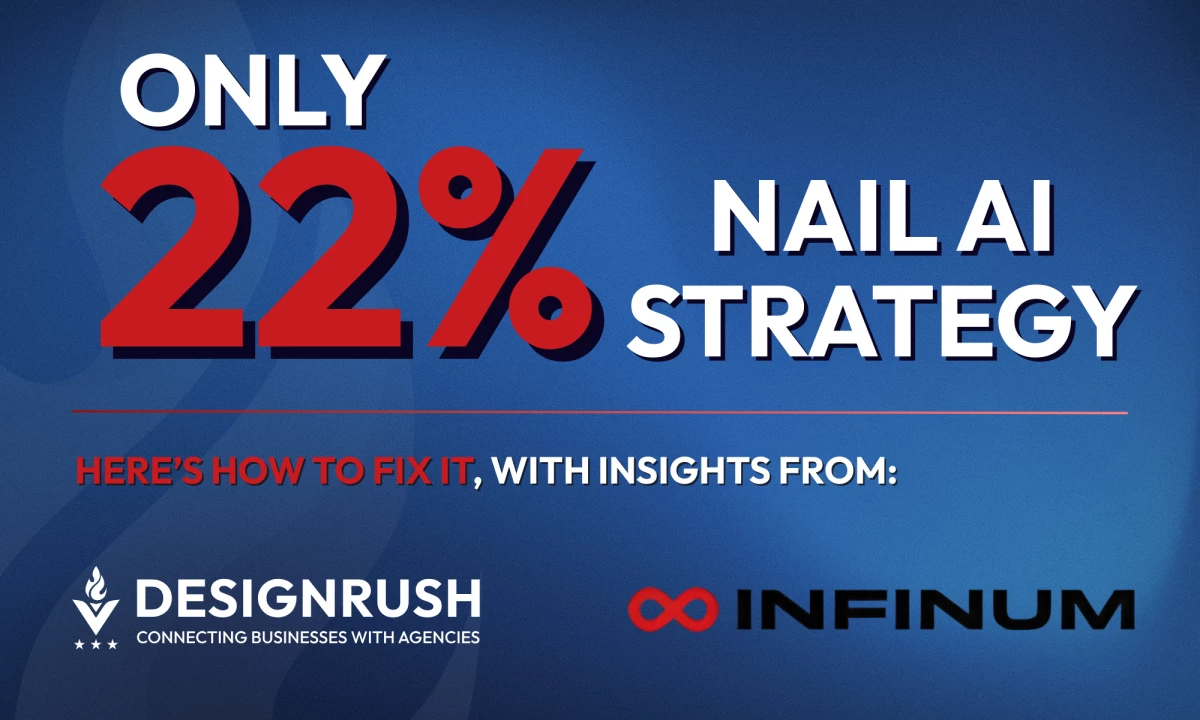
- Only 22% of organizations have a clear AI strategy, yet those that do are 3.5x more likely to see ROI.
- Most AI projects fail because companies make three common mistakes: unclear objectives, poor system integration, and ignored governance.
- Designing AI agents with measurable outcomes, proper data, and human oversight drives efficiency, reduces risk, and enables scalable results.
Rushing into AI without clear business goals is one of the fastest ways to burn through budget.
Only 22% of organizations have a visible, defined AI strategy, which means the vast majority are chasing AI without clear objectives, according to a Thomson Reuters Future of Professionals Report 2025.
Without clear direction, AI often gets stuck in scattered pilots that never scale, draining budget without delivering results.
In contrast, companies that build a structured approach are 3.5 times more likely to see ROI from their initiatives.
This underscores how unclear goals translate into missed ROI.
Rushing AI deployment often creates agents that add work instead of reducing it.
Rather than building agents that quietly handle planning, decision-making, and execution in the background, they end up with systems that create more work than they solve.
Top digital agency Infinum argues that the right approach isn’t about adding technology for the sake of it, but about designing agents that work as part of the business from day one.
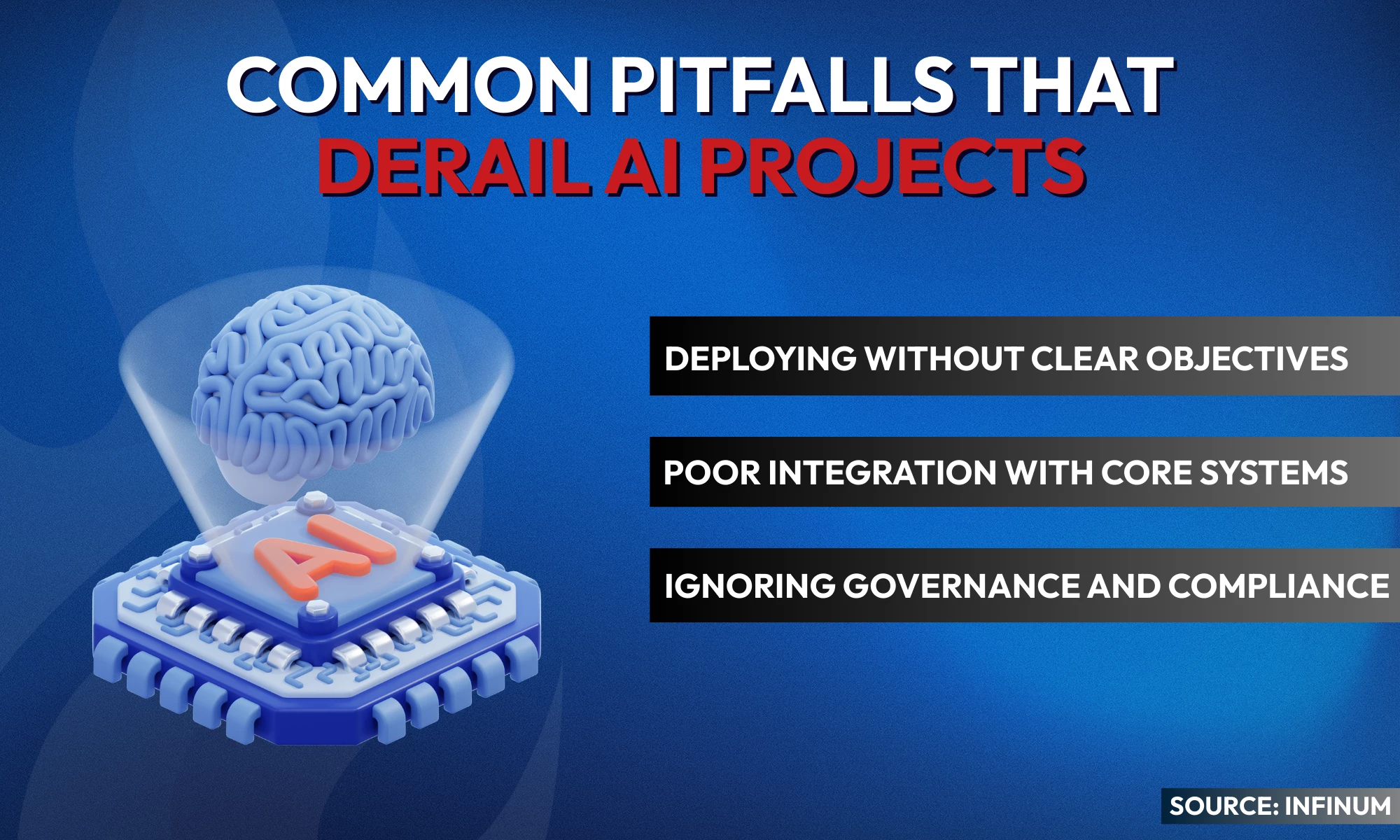
What holds AI back isn’t the technology, but the recurring missteps companies make at the strategy level.
Editor's Note: This is a sponsored article created in partnership with Infinum.
3 Pitfalls That Undermine AI Before It Even Starts
If you don’t roll out AI with structure and planning, you’ll end up with a messy system that doesn’t work well together and might even put your data at risk.
The fix lies in strategy, integration, and governance. With these in place, AI can shift from a side experiment to a true contributor to business growth and long-term value.
Infinum’s AI rollout proves the point.
Without structure, adoption fragments and creates risk, while embedding AI across delivery and enforcing strict usage rules turns experiments into repeatable, long-term value.
To get the most out of your AI efforts, here are the three common AI downfalls to avoid.
Mistake 1: Deploying Without Clear Objectives
AI agents fail when there’s no defined business problem to solve. Companies that jump in without measurable targets often struggle to prove ROI or secure buy-in.
What to do instead:
- Define the business problem first. State the outcome you want and the metric that proves it.
- Run short, measurable pilots. Use an agentic sprint or prototype to prove a single use case before scaling.
- Assign an executive sponsor and a clear owner for ROI tracking. Stop pilots that have no path to measurable impact.
Mistake 2: Poor Integration With Core Systems
An AI agent is only as strong as the systems it connects to. If it can’t access or act on the right data, it becomes another disconnected tool rather than a driver of efficiency.
What to do instead:
- Map data flows and touch points before you build. Know where the agent will read, write, and act.
- Embed AI directly into research, design, development, testing, and monitoring so it works as part of delivery rather than a separate add-on.
- Secure reliable pipelines such as APIs, event streams, or middleware. Add observability so errors are visible and traceable.
Mistake 3: Ignoring Governance and Compliance
When oversight is an afterthought, risks multiply. From data security gaps to biased outputs, the lack of governance can quickly turn innovation into liability.
What to do instead:
- Create guardrails like data access rules, model provenance, testing requirements, and an incident playbook up front.
- Put humans in the loop for high-risk decisions and set monitoring for drift, bias, and performance.
- Publish usage policies and train teams on what is allowed and what is not.
Nikola Kapraljević, Infinum CEO, summed it up:
“Without structure, AI adoption can become fragmented and insecure. With strategic intent, it becomes a long-term enabler of value for both our teams and our clients.”
The takeaway? Define the problem, embed agents into core workflows, and enforce governance so pilots turn into measurable, efficient, and low-risk sources of long-term value.
Once those common mistakes are out of the way, the next step is setting AI agents up to actually deliver value.
How to Make AI Agents Deliver Real Value
You can do this by:
- Keeping data clean: Clean, organized data makes everything run smoother. That could be as simple as checking for duplicates, fixing errors, and making sure the right info is in the right place before the system uses it.
- Checking performance often: AI isn’t a “set it and forget it” tool. Look at how it’s doing against your goals, like accuracy or time saved, and step in if things start slipping.
- Handing off the boring stuff: Let AI take care of repetitive tasks, like scheduling, data entry, or reports, while people stay focused on decisions that need context or judgment.
And finally, don’t forget to set clear success metrics from the start so every agent you deploy has measurable outcomes.
For example, if you’re rolling out a customer support agent, success might mean cutting average response time by 30% within three months or boosting resolved tickets per agent by 20%.
Your exact goals are up to you. The key is knowing what “good” looks like before you start. That way, it’s easy to tell if your AI is actually helping.
Turning AI Prototypes into Real Business Impact
Prepared to unlock AI-driven efficiency?
Start small, but smart. Infinum’s 14-day agentic sprint shows how a working prototype can go from idea to measurable impact fast.
Focus on high-value use cases, clear success metrics, and seamless integration with your systems.
When AI agents are designed this way, they drive efficiency, reduce risk, and free teams to focus on strategic work.
The Result? Businesses that tie AI projects to measurable outcomes see faster ROI, reduced operational friction, and more reliable scaling across departments.