
AI Employee Key Findings:
- AI employees help local businesses recover lost revenue from missed calls and service gaps without hiring more staff.
- Implementing production-grade AI agents leads to higher customer satisfaction, faster response times, and 24/7 coverage.
- Avoiding common AI deployment mistakes is critical to turning automation into a scalable advantage.
More than half of consumers will switch to a competitor after just one bad experience, according to Zendesk Benchmark data.
That makes every customer interaction critical, especially for call centers, dental practices, and local businesses.
After all, an unanswered call or mishandled conversation is a direct threat to both revenue and reputation.
This is why solutions like chatbots and AI employees have seen a rapid rise in popularity over the last few years.
AI employees, including voice and text agents, promise 24/7 coverage, faster response times, and reduced staffing costs.
-content-large-webp.webp "AI vs Human")
But in practice, many businesses discover that off-the-shelf AI tools fall short and are unable to handle the complexity of real operations or the expectations of modern customers.
Implementing a Voice AI Employee comes with real-world challenges that can impact customer experience.
After deploying hundreds of AI agents across industries like dental, HVAC, and home services, Newo.ai uncovered common pitfalls that often limit performance.
Its 1-click Builder helps businesses avoid these issues by creating fully trained Voice AI Employees that integrate seamlessly across phone, SMS, and webchat.
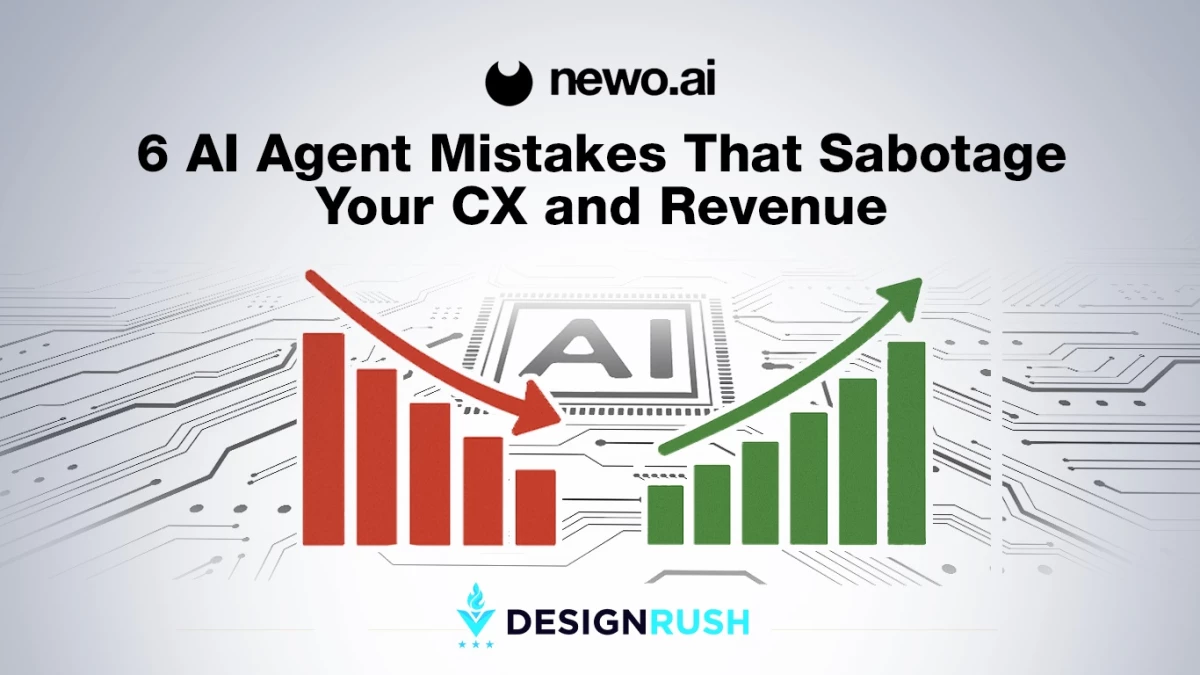
Before you deploy your own, here are six critical mistakes to avoid — and how production-grade platforms like Newo.ai are solving them in the field.
Editor’s Note: This is a sponsored article created in partnership with Newo.ai.
Mistake #1: Believing a Fluent AI Agent Is a Reliable One
It’s easy to assume that if an AI agent sounds natural, it must be capable. But fluency doesn’t equal accuracy.
Many off-the-shelf AI agents are built to mimic human tone and cadence, which makes early demos sound impressive.
However, without built-in safeguards, these systems often skip critical steps in workflows, misinterpret context, or respond with incorrect information, especially during complex or unscripted interactions.
Why does this matter?
Because customer-facing errors don’t just inconvenience your team. They directly impact revenue.
Missed appointments, invalid bookings, or incorrect business hours lead to lost leads and erode trust with customers who may never call back.
In short: sounding human is not enough.
The best AI agents must be consistently accurate, especially when handling revenue-critical workflows like scheduling, intake, or service routing.
“Fluency gets attention in a demo. But in production, accuracy and context-awareness are what drive ROI. If your AI doesn’t execute your workflow correctly 99.7% of the time, it’s not ready for customer-facing use,” said Dr. David Yang, Newo.ai co-founder.
Mistake #2: Underestimating the Complexity of Multi-Location Operations
Many businesses assume that once an AI agent can handle one location, it can handle all of them.
But scaling across multiple branches introduces a degree of complexity that most AI tools aren’t equipped to manage out of the box.
Each location may offer different services, operate in different time zones, follow separate schedules, or serve customer needs unique to the locality.
Without the ability to understand and respond based on location-specific logic, AI agents can easily route calls incorrectly, offer unavailable services, or create scheduling conflicts.
This matters because customer trust is fragile.
When a patient is booked at the wrong clinic or told a service is available when it isn’t, the damage goes beyond a single interaction.
It affects staff efficiency, customer loyalty, and your brand’s professionalism at scale.
A production-grade AI must be able to handle location-aware workflows: routing calls, offering services, and respecting schedules based on where and when the customer is calling.
Mistake #3: Treating Voice and Text as Separate Experiences
Many businesses implement AI agents for phone support and later bolt on separate tools for chat, SMS, or email.
The result? Fragmented customer experiences and disconnected systems that need to be managed and trained independently.
This siloed approach creates problems quickly.
An AI that handles voice may not “remember” a customer’s earlier chat. One agent might follow a different script compared to another.
And without unified data, performance tracking, updates, and personalization all suffer.
“It is fundamentally wrong to treat AI like a single-use feature. Voice here, chat there. Real success comes when AI is unified across every touchpoint and evolves as your operations grow,” said Luba Ovtsinnikova, Newo.ai co-founder.
This is because modern customers expect seamless interactions across channels. They may start with a text, continue over a call, and expect the agent to keep up.
Failing to deliver that continuity leads to frustration and increases the risk of missed opportunities, duplicated work, or abandoned conversations.
A scalable AI employee should operate as a single omnichannel brain, not separate bots.
That means one memory, one workflow engine, and one set of rules across voice, text, chat, and beyond.
Mistake #4: Assuming All Customizations Require Developers
When AI employees don’t behave exactly as expected, businesses often find themselves stuck, either waiting on vendor support or relying on costly developer hours to make small changes.
This happens because many platforms lack accessible customization tools.
Even minor tweaks like changing an after-hours message or adding a new intake question may require code or long turnaround times.
And that’s because businesses evolve fast. Marketing teams want to test new CTAs. Operations may adjust workflows weekly.
If every change requires technical intervention, the AI becomes a bottleneck, not an asset.
A truly scalable AI system should support multi-tier customization:
- Simple edits your staff can make themselves
- Deeper no-code configurations for power users
- Low-code extensibility for complex integrations
- Without that flexibility, you’ll either overspend on support or let your AI grow stale, and neither option supports long-term success.
Mistake #5: Overlooking Real-World Call Conditions
Most AI demos happen in quiet environments with clear audio.
But real customers call from moving cars, busy homes, or noisy offices. This introduces challenges that most AI systems aren’t built to handle.
Background voices, overlapping speech, speakerphone echo, or even music from a waiting room can derail an AI’s ability to understand and respond correctly.
This results in broken conversations, repeated questions, or outright call failures.
These situations aren’t edge cases, they’re the norm.
If your AI employee can’t function reliably in imperfect conditions, it will frustrate customers and quietly cost you revenue.
Production-ready AI must include advanced noise suppression, main speaker isolation, and fast-response processing to ensure it performs well not just in ideal conditions, but in the messy reality of daily business.
Mistake #6: Ignoring the Operational Lifecycle of AI Employees
Many businesses treat AI implementation as a one-time project: configure the agent, go live, and move on.
But just like human employees, AI agents need ongoing training, oversight, and updates to stay effective.
Without structured processes for version control, performance monitoring, and bulk updates, even the best AI agents become outdated.
This creates inconsistencies across locations, introduces avoidable errors, and prevents new features from being adopted quickly.
AI is evolving fast, and if you can’t easily roll out improvements, like better email capture or callback logic, you’ll fall behind competitors who can.
And as your business scales, so does the complexity: dozens or hundreds of agents may need updates at once.
A long-term AI strategy requires tools for lifecycle management, ensuring your AI employees improve over time, not degrade.
Build the Systems That Help AI Employees Succeed
AI agents have the enormous potential to:
- Improve customer experience
- Reduce operational costs
- Recover lost revenue
But only if it’s integrated with care.
Fluency without reliability. Customization without accessibility. Presence without performance. These are the gaps that turn promising AI into expensive disappointment.
Whether you're supporting one location or scaling across hundreds, the lesson is the same: AI employees need to be treated like real team members — trained, supported, monitored, and improved.
Choosing the right platform is part of it.
But knowing which pitfalls to avoid is equally important, so your AI agent isn’t just impressive in a demo, but also dependable in the real world.