
For decades, SEO focused on optimizing websites and content to improve rankings and earn clicks to grow traffic.
But that formula is beginning to break down thanks to the rise of AI search.
Today, 68.01% of Google searches in the U.S. now end without a click, per new analysis, which used Similarweb clickstream data between January and April 2026, from SparkToro Founder Rand Fishkin.
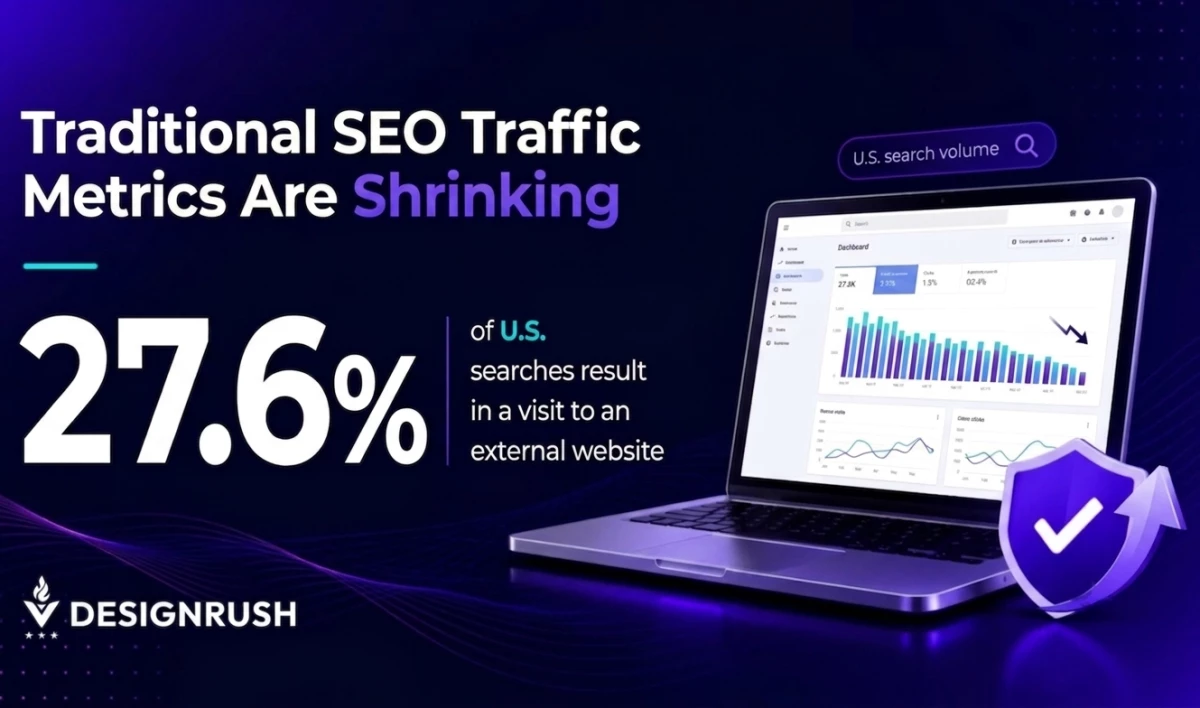
To make matters worse, only 27.6% of U.S. searches result in a visit to an external website.
At first glance, those numbers appear alarming. Fewer clicks should mean SEO is becoming less valuable.
But Fishkin argues that SEO isn't disappearing. After all, people continue searching just as often.
What is changing, however, is where they receive their answers, since Google now resolves informational queries directly through AI Overviews, AI Mode, featured snippets, and more.
That distinction matters because it changes how businesses should evaluate SEO.
According to David Malmborg of Boostability, many businesses are interpreting declining click volumes the wrong way.
"For years, marketers treated traffic as a product. Traffic has always been a byproduct of visibility," Malmborg says.
"If Google answers an informational question directly but your brand becomes the trusted source behind that answer, SEO has still influenced the buying journey."
Rethink What SEO Success Looks Like
It's not hard to see why clicks and traffic were the main measures of success for over two decades.
At the time, Google mainly functioned as a directory that pointed users to other websites. But now, Google's various AI search features answer factual questions before users need to click.
And while this has led to fewer clicks, it means that those who do click express stronger commercial intent since they are further along the funnel.
In other words, the value of the clicks that do come through may actually be increasing.
As such, brands should move the goalposts and evaluate SEO success using other metrics like:
- Qualified leads generated through organic search
- Revenue influenced by organic traffic
- Growth in branded search demand
- Customer acquisition efficiency
- Local conversions and calls
- Share of visibility across AI-powered search experiences
According to Malmborg, these measurements reflect SEO's contribution to business growth rather than traffic volume alone.
“In the grand scheme of things, SEO’s goal is to connect businesses with the right customers. If organic traffic declines, but qualified leads and revenue continue growing, the strategy is succeeding exactly as it should," he adds.
Build an SEO Strategy That Wins Beyond the Click
There's not much anyone can do about zero-click search, but that doesn't mean marketers should abandon SEO.
Instead, they should reframe what they expect SEO to accomplish.
A business that consistently appears in AI-generated answers, local results, review platforms, and traditional search listings has multiple opportunities to influence purchasing decisions before a click ever occurs.
That makes visibility across the entire search ecosystem just as important as rankings on Google's results page.
Boostability addresses this through its Be Found Framework (BFF), which combines four overlapping disciplines:
- SEO to strengthen traditional organic visibility
- GEO to improve inclusion in AI-generated answers
- SXO to improve the search and website experience for users
- AXO to ensure AI systems can accurately interpret and interact with website content
Rather than optimizing a single search engine, the framework encourages businesses to build visibility wherever customers search for information.
In practice, Malmborg suggests implementing the framework in steps:
Strengthen branded visibility
A customer who first encounters a business through an AI Overview may return days later by searching for the company by name.
That branded search is far more likely to generate a website visit than a broad informational query.
This is why businesses should:
- Maintain accurate business listings and local directories.
- Build a strong review profile.
- Earn mentions from trusted third-party websites.
- Keep branding and business information consistent across the web.
Prioritize high-intent content
Businesses should also spend less time competing for every informational search and more time supporting customers who are closer to making a decision.
That means investing in content such as:
- Product and service pages
- Pricing information
- Comparison pages
- Industry-specific solutions
- Location pages
- Frequently asked purchase questions
"As Google answers more informational queries directly, these commercial pages become increasingly important because they provide information that customers often need before taking action," Malmborg says.
Prepare content for AI search
AI search platforms decide which sources to cite by looking for information that is easy to interpret, verify, and retrieve.
That means a page filled with useful insights can still be overlooked if those insights are buried beneath vague headings, inconsistent formatting, or weak contextual signals.
With that in mind, businesses should make their content easier for both people and machines to navigate by:
- Implementing structured data where appropriate
- Answering common customer questions clearly and directly
- Building topical authority through related supporting content
- Earning citations and mentions from trusted third-party sources
Measure Visibility Before Measuring Traffic
The rise of zero-click search shouldn't be seen as a doomsday scenario for SEO. But it does spell the end of measuring SEO solely on traffic and clicks.
As Google continues answering more questions directly in Search, businesses that keep chasing every possible click may find themselves optimizing for shrinking opportunities.
Those that invest in visibility, authority, and high-intent discovery will be better positioned regardless of where customers choose to search.