
Editor’s Note: This is a sponsored article created in partnership with Bighorn Web Solutions.
Key Takeaways:
- 73% of consumers said personalized experiences are important, according to a study from Deloitte.
- AI-powered personalization drives higher conversions by delivering relevant, real-time content and recommendations.
- Emotional loyalty is built through meaningful, personalized experiences, not rewards programs.
Shoptalk 2025, held last March at the Mandalay Bay in Las Vegas, brought together thousands of retail professionals to explore the future of eCommerce.
With over 10,000 attendees, the event centered around the theme of “putting the customer at the center,” reflecting the growing emphasis on creating personalized, meaningful connections with consumers.
This shift in focus is not just a trend; it’s backed by real consumer expectations.
In 2024, a study by Deloitte showed 73% of consumers said personalized experiences are important, yet only 60% feel their loyalty programs deliver them.
The insights shared at Shoptalk 2025 underscore just how important it is for businesses to evolve with these expectations and put customer experience at the forefront.
Here’s a breakdown of the key takeaways from Shoptalk 2025, along with practical ways to apply them to your brand.
Takeaway #1: Why Loyalty is About Feeling, Not Points
Forget points programs and generic thank-you emails. Today’s customer wants to feel seen, heard, and remembered.
That means delivering moments that are less about pushing product and more about creating meaning.
Building emotional loyalty means understanding what your customer values, what they fear, and what makes them smile.
Teams like Bighorn Web Solutions help brands design customer journeys that don’t just convert — they connect.
Think personalized flows, intelligent segmentation, and website experiences that reflect the shopper’s identity, not just their cart.
“In today’s market, brands that lead are brands that connect. Content and design must be anchored in a clear voice and values to turn storytelling into a competitive advantage and emotional connection into measurable growth,” said Caleb Bradley, CEO of Bighorn Web Solutions.
Takeaway #2: AI-Powered Personalization that Makes the Shopping Experience Seamless
Artificial Intelligence isn’t a novelty anymore — it’s table stakes.
Retailers are using AI to personalize content, product recommendations, and even pricing in real time, all in service of a more relevant customer experience.
“AI has transformed personalization from a costly luxury into a strategic asset for SMBs. By automating insights and content creation, AI empowers businesses to deliver highly targeted, relevant experiences at scale, without the heavy overhead,” said Bradley.
Whether you’re a niche DTC brand or a big-box retailer, implementing AI-driven tools can improve everything from conversion rates to retention.
An Epsilon study found that 80% of consumers are more likely to make a purchase from brands that offer personalized experiences.
The takeaway? If you're not yet leveraging AI to personalize the shopping experience, you risk losing out on significant opportunities.
Takeaway #3: Retail Media Networks (RMNs) are Redefining Reach
Retailers are now publishers. Companies like Target and Ulta are monetizing their owned channels by launching Retail Media Networks (RMNs).
These aren’t just ad slots; they’re closed-loop ecosystems offering precision targeting and real-time insights.
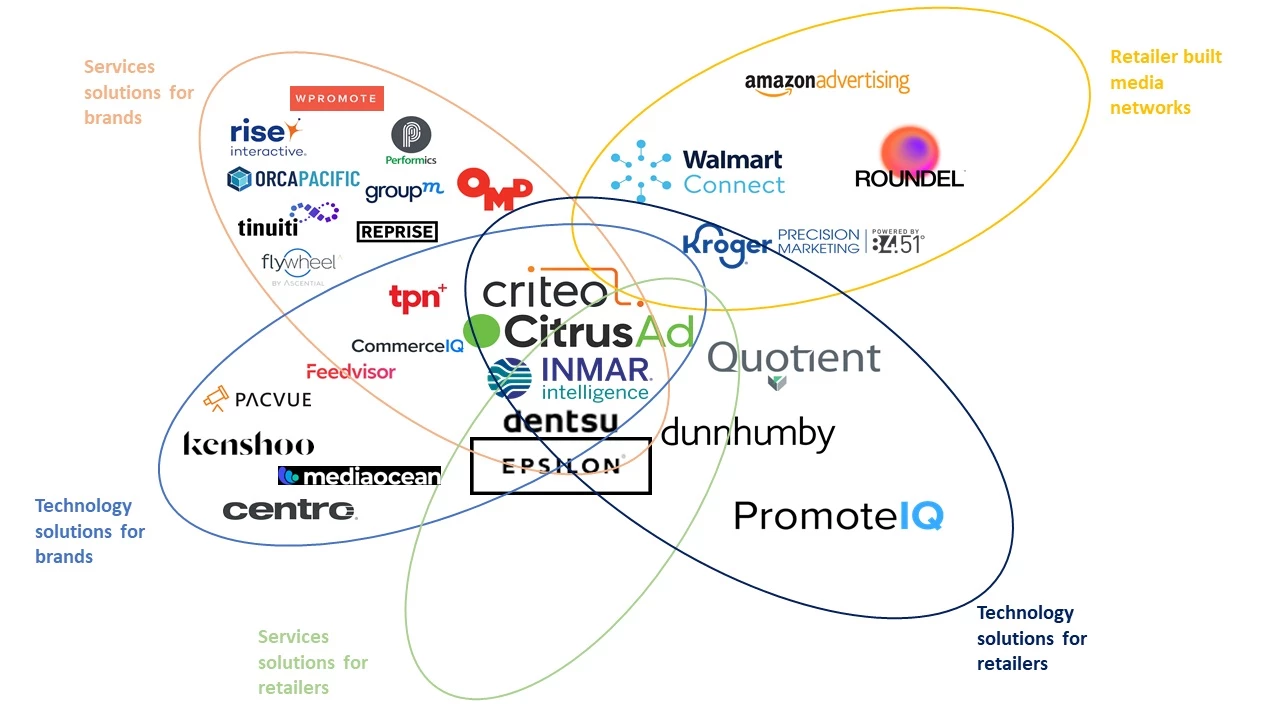
“As Retail Media Networks continue to expand, brands must prioritize the fundamentals to succeed: clean, optimized product feeds, high-impact creative that adapts to the platform, and rigorous measurement tied to business outcomes,” Bradley said.
“Brands that get it right focus not just on visibility but on precision and relevance, while those that fall short often treat retail media as an extension of traditional advertising instead of a dynamic, data-driven ecosystem.”
For smaller or mid-market brands, understanding how to integrate into RMNs is critical.
Optimizing product feeds, dialing in creative, and tracking attribution across platforms will separate the noise from the ROI.
The takeaway: your media strategy can’t stop at Google and Meta anymore. RMNs are fast becoming essential to the omnichannel mix.
Takeaway #4: Unified Commerce is a Customer Expectation
Today’s shopper doesn’t distinguish between in-store, mobile, or voice commerce — they expect fluidity.
Unified commerce means syncing your tech stack so that what happens in one channel doesn’t break the others.
“The biggest hurdles brands face when trying to unify systems across channels are fragmented data, misaligned internal teams, and legacy technologies that do not communicate easily.
Overcoming these friction points requires investing in flexible, interoperable platforms, creating shared KPIs across departments, and prioritizing data integration as a foundational strategy rather than an afterthought.
True omnichannel success happens when technology, teams, and customer data are fully aligned around a unified view of the customer experience,” Bradley said.
That means tighter integration across inventory systems, fulfillment, CRM, and customer support.
Manual updates and siloed data are friction points that frustrate shoppers and kill conversions.
Takeaway #5: Simplicity Sells
Shoppers aren’t overwhelmed by options — they’re exhausted by them.
A recurring theme at Shoptalk was the importance of clarity. Curated assortments, sharper messaging, and cleaner UX are winning out over complexity.
“Striking the right balance between choice and simplicity requires moving away from one-size-fits-all merchandising. By using dynamic segmentation, brands can present fewer but more personalized options, helping customers find what they want faster without feeling overwhelmed,” Bradley concluded.
This is especially true in niche and premium markets, where value perception is everything.
Brands that can articulate their purpose, reduce decision fatigue, and guide users confidently to checkout are seeing stronger performance.
Turning Insight Into Action
These trends aren’t just signals — they’re starting lines. What matters now is how brands act on them.
That’s where partners like Bighorn Web Solutions come in.
From simplifying tech stacks to improving customer journeys, many brands are now focused on putting strategy into action.
The common thread? A shift toward data-driven decisions, seamless cross-channel experiences, and building more meaningful connections with shoppers.
With customer expectations rising and attention spans shrinking, having the right eCommerce marketing partner helps retailers stay focused on what counts: building smart systems and standout experiences that drive growth.