
Editor’s Note: This is a sponsored article created in partnership with Nockta.
Key Takeaways:
- Remote work succeeds when supported by systems that prioritize flexibility, trust, and global readiness.
- Teams thrive when they align on shared goals and communicate effectively across time zones.
- With the right tools and culture, remote work becomes a competitive edge for attracting top talent.
By the end of 2025, an estimated 36.2 million Americans will be working remotely — an 87% increase from pre-pandemic levels, according to Upwork’s Future of Workforce Pulse Report.
But what’s more important than the number is how organizations are evolving how remote work gets done.
There’s a growing divide between companies that see remote work as a temporary "work-from-home" fix, and those building long-term, sustainable, location-flexible systems.
The future isn’t about being at home — it’s about working from where you are, in a way that’s optimized for productivity, creativity, and global collaboration.
Step One: Shift the Mindset from 'WFH' to 'Work from Where You Are'
Many companies still talk about remote work as “working from home.” But in 2025 and beyond, that’s too narrow.
The real opportunity lies in a more flexible approach: work from where you are.
This mindset shift opens up the door to:
- Hiring top talent across borders
- Supporting different lifestyles and work rhythms
- Encouraging outcomes over physical presence
But making it work takes structure and intention.
The companies succeeding today are the ones that moved beyond temporary WFH setups and built systems around flexibility, autonomy, and clarity.
Step Two: Understand the Psychology of Interdependence
Remote work thrives when teams aren’t just independent, but interdependent.
That’s the sweet spot where people take ownership of their roles, communicate transparently, and trust each other to deliver — even when they're spread across time zones.
This requires:
- A culture of trust over surveillance
- Clear role definitions and shared goals
- Emphasis on team rituals and shared values
When teams master interdependence, they can move fast and stay connected — without being in the same physical space.
Step Three: Be Real About the Pros and Cons
Remote work isn’t perfect — and pretending it is can lead to costly missteps. Here's a quick look at both sides of the equation:
Pros
- Access to a much broader and more diverse talent pool
- Lower overhead and operational costs
- Greater autonomy and flexibility for employees
- Less time and money spent commuting
Cons
- Time zone coordination can be tricky
- Cross-cultural communication requires effort
- International HR and legal compliance is complex
- It’s easy to miss the organic “human” moments that happen in shared spaces
- Global payments and contracts can get messy without the right tools
The key isn’t to avoid the downsides — it’s to design around them.
Step Four: Build Systems That Actually Support Remote Work
To thrive in a remote-first environment, companies need more than just Slack and Zoom. They need real systems that support human connection, cross-border logistics, and psychological safety.
Here’s what that looks like in practice, drawing on how digital agency Nockta has approached it:
- Recreate spontaneous interactions: Nockta uses Gather.town as a virtual office to simulate those impromptu chats that are missing in typical remote setups. It brings back the social vibe without being disruptive.
- Handle international logistics with the right tools: Platforms like Rippling and Deel help manage hiring, payroll, and compliance across multiple countries — a must-have for remote-first orgs working globally.
- Bring people together IRL (intentionally): While remote-first, Nockta organizes annual in-person meetups. The last one? A forest glamping retreat — no screens, just bonding, nature, and campfire strategy sessions.
- Respect cultural diversity in time off: With team members across continents, Nockta has a flexible time-off policy that honors different holidays and cultural values — creating inclusivity without forcing conformity.
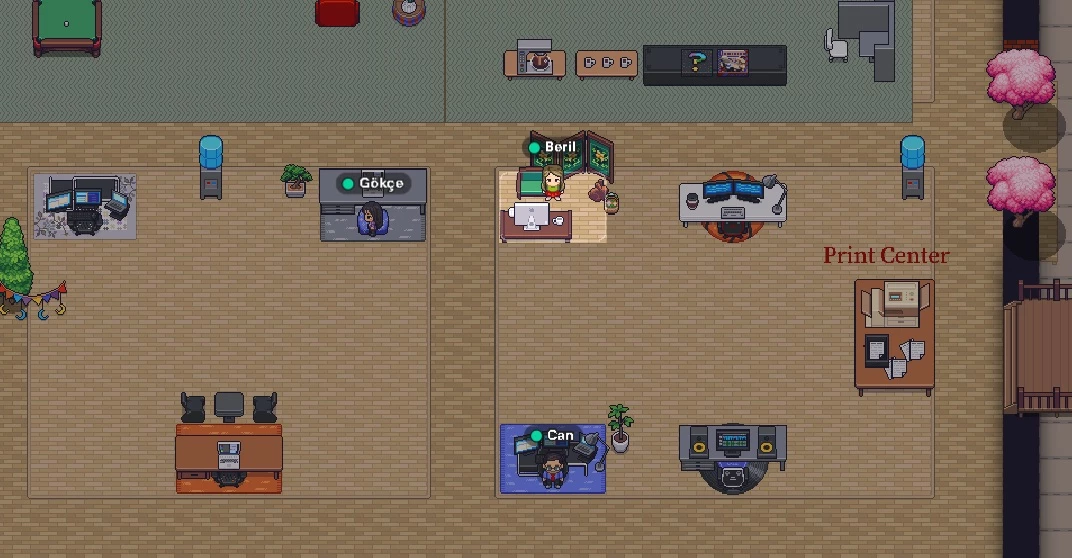
These aren’t just “nice to have” perks — they’re structural decisions that make remote work not just functional, but thriving.
James Bugra, founder of Nockta, emphasized the power of a globally connected team:
"Great work knows no borders. Our remote-first approach allows us to bring together the best global talent to create extraordinary digital experiences."
Step Five: Focus on Outcomes, Not Hours
One of the biggest mistakes remote-curious companies make? Trying to replicate office life remotely.
In a distributed team, the priority should be results over hours, and clarity over control. That means:
- Clear KPIs and project goals
- Asynchronous workflows whenever possible
- Purposeful overlapping hours (instead of full-day alignment)
- Regular retrospectives to reflect and improve
It’s about designing a system where people can do their best work, from wherever they are — without needing to constantly prove they’re online.
Final Thoughts: Remote Is Not a Perk — It’s a Competitive Edge
The remote-first model isn’t just a workaround for pandemic-era office closures.
It’s a strategic advantage for organizations ready to embrace flexibility, diversity, and outcome-driven work.
Companies that invest in systems — cultural, operational, psychological — will attract top global talent and stay ahead of the curve.
Those that treat remote work as a temporary solution or half-measure may find themselves falling behind.