
2025 Branding Trends: Key Findings
- Companies that align brand and customer experience grow revenue 3.5x faster, making consistency more important than chasing trends.
- CMOs should focus on genuine connections, meaningful storytelling, and responsible AI use to engage both B2B and B2C audiences.
- Tracking site visits, engagement, and conversions shows whether branding drives awareness, loyalty, and sales while keeping strategies flexible for changing markets.
Trust is fragile. A brand can spend years building it and lose it in a single misstep.
That trust decides whether customers stay loyal or walk away.
According to Forrester’s Brand Experience Index, companies that align brand and customer experience can grow revenue 3.5 times faster. That’s why aligning brand and customer experience is a growth strategy, not just a creative decision.
Consistency builds trust, and trust ultimately builds revenue.
In an interview with DesignRush, Digital Silk’s Branding Director Courtney Bozigian cautions that chasing trends or refreshing visuals too often erodes both trust and consistency, especially for mid-sized companies.

Who Is Courtney Bozigian?
Courtney Bozigian brings more than 15 years of B2B and B2C experience to Digital Silk, from managing global brand strategy, new product development, and retail management teams at Fortune 500 companies to her current role as Branding Director. She has an entrepreneurial spirit and uses her strategic-creative mindset to tell each brand’s unique story. She is an expert at using storytelling to connect with consumers on a deeper level to bring brands to market. As a lifelong student of brands, Courtney also teaches university-level marketing courses in marketing, consumer behavior, retail, and business communications.
Editor's Note: This is a sponsored article created in partnership with Digital Silk.
According to SAP Emarsys’ Global Customer Loyalty Index of 2024, there are five types of customer loyalty that brands need to understand to connect with and respond to consumers effectively.
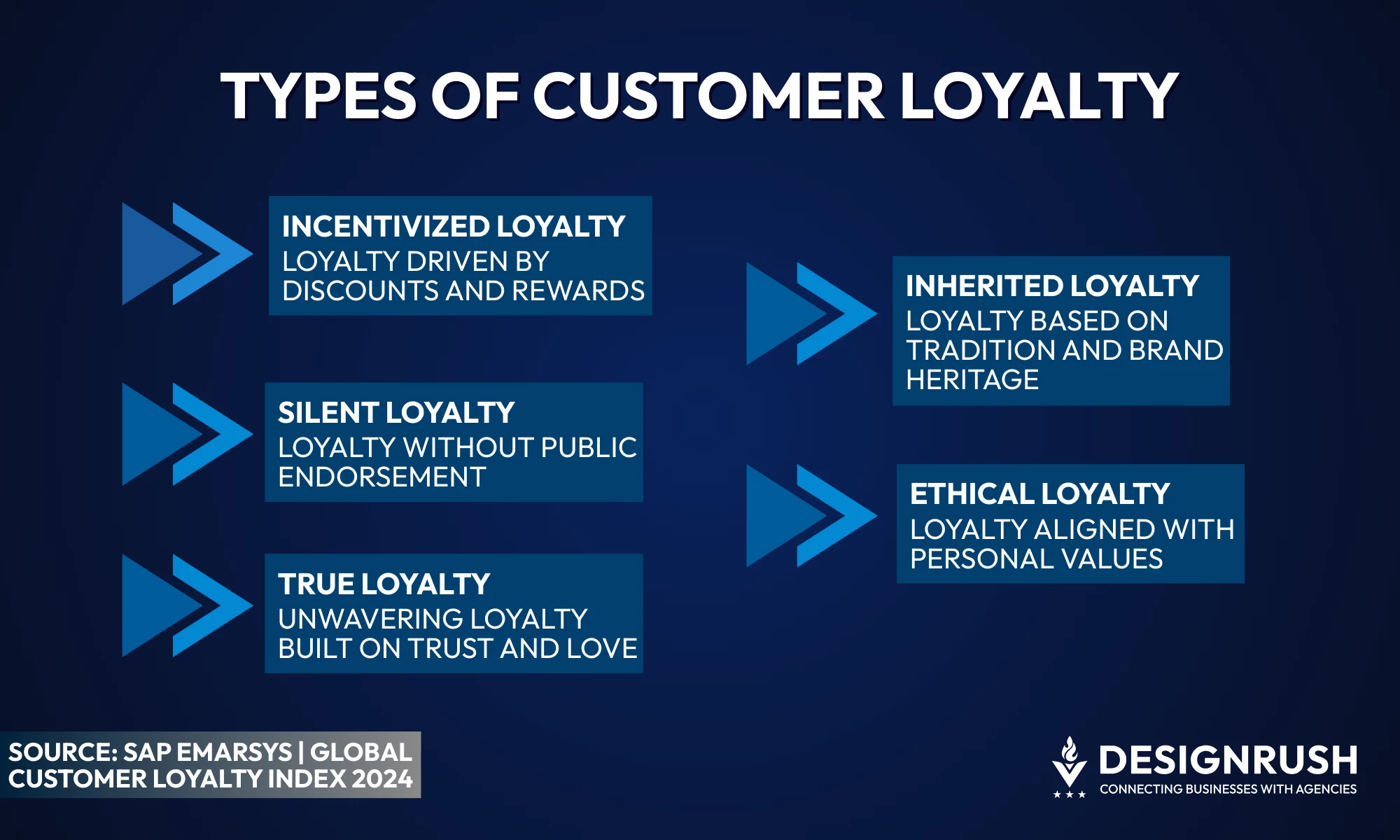
Understanding these five types of loyalty shows why trust, consistency, and alignment matter more than ever.
Why?
Because today’s buyers, including consumers and businesses, want brands that connect and feel clear.
“This includes brand strategy, logo design and visual identity development, brand books and brand style guides, as well as print and digital brand executions like advertisements, trade show booth design, presentation designs, and integration with social media and print campaigns, and of course, the brand’s website!” Courtney tells me.
As she points out, branding sets the vision from which everything else follows.
“Branding is central to our service offerings because all activities should start with the brand. Your brand is more than your logo. It is everything you communicate — tone, color palette, even alignment between brand activities and core values.”
Understanding branding shows why authenticity, story, and responsible use of artificial intelligence (AI) are driving success today.
With that foundation in place, the question becomes which branding trends are proving most effective in helping businesses connect with their audiences.
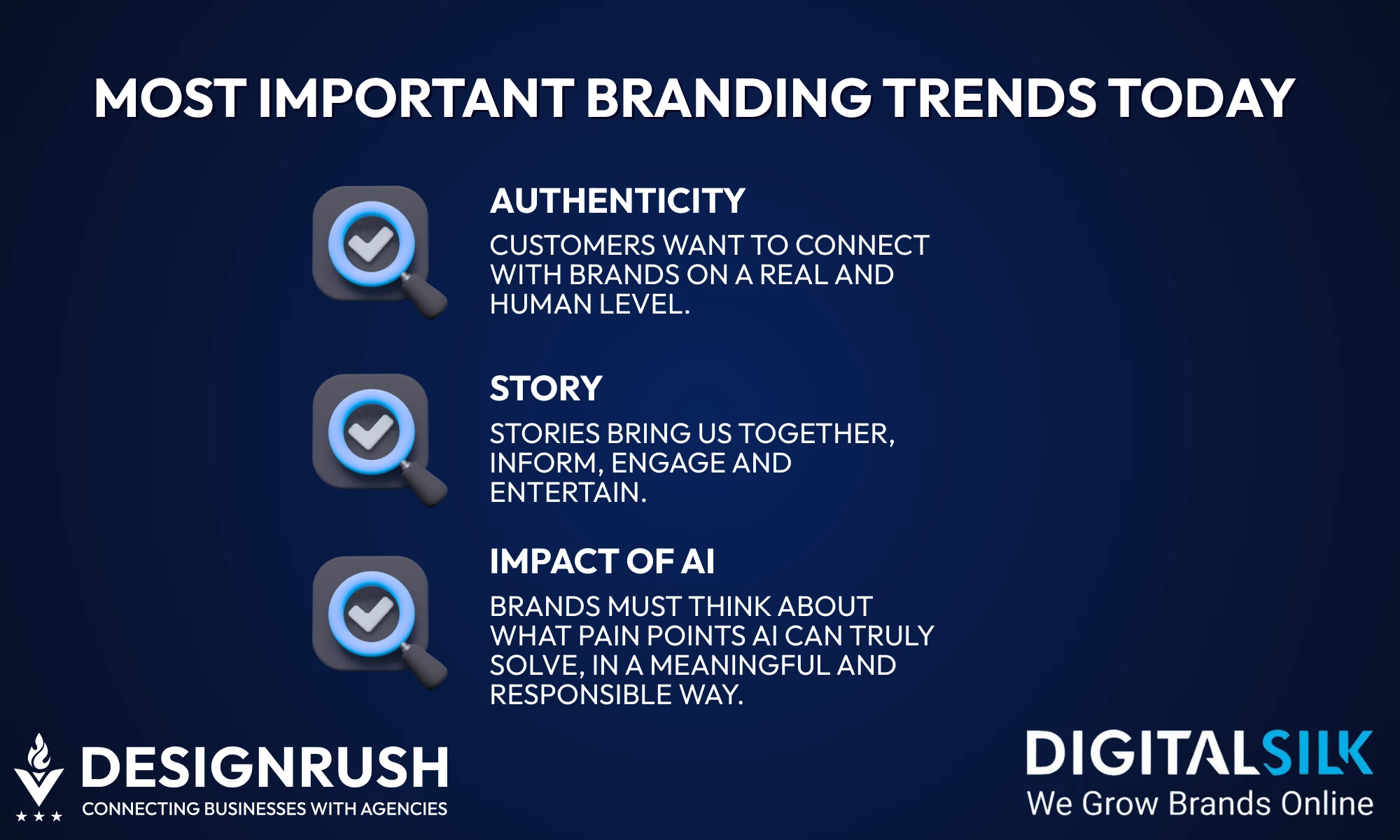
According to Courtney, these trends work because they meet what buyers, both consumers and businesses, actually want: clarity, connection, and relevance.
- Authenticity: Customers in both B2B and B2C markets expect brands to be genuine and human in how they connect.
- Story: Stories connect people. They inform, engage, and entertain, and a meaningful backstory that resonates emotionally is becoming just as important in B2B as it has always been in B2C.
- Impact of AI: Every industry is facing the impact of AI. The brands finding real success are the ones using it responsibly to solve real problems, not chasing it as a trend.
Courtney believes that brands have a more targeted, focused, and meaningful connection with audiences when they embrace these trends.
“As a result, it is easier to convert viewers into customers. We connect through what feels real and personal, as well as through stories that inform, entertain, and solve a real-world problem.
“By not chasing what’s 'trendy’ for the sake of fitting in, brands can have everlasting resonance and truly stand out based on both what’s unique and ownable to them and what their customers truly value.”
Avoiding Common Branding Pitfalls
But while these trends help brands build stronger connections, many businesses still fall into common traps that weaken their impact.
One of the most frequent mistakes, Courtney says, is chasing quick wins that look good in the moment but don’t align with the brand’s core identity.
View this post on Instagram
How? Instant gratification can feel like a stunt rather than a meaningful brand activity.
“Stick-to-it-iveness is another pitfall often experienced by small to midsize companies, meaning crafting a strategy and sticking with it. The temptation to change brand colors or a logo too frequently can lead to confusion with current customers,” Courtney notes.
She believes the solution lies in strategic brand building and agile marketing, which can help a small to midsize company “chart a course, follow the plan and weather any storm”.
“With that said, business is dynamic and both strategies and executional plans must be built to shift and adapt with the market.”
That flexibility matters, since being too rigid with your brand can limit innovation and close off the right opportunities.
To avoid these missteps, Courtney recommends that leaders have a clear view of whether their branding efforts are actually working.
That’s where tracking the right performance indicators becomes crucial, showing not only brand health but also how well branding supports growth.
For CEOs and CMOs, the key is knowing which metrics to track, as the right KPIs indicate whether branding is effectively building awareness, engagement, and sales:
- Brand performance is measured through both qualitative and quantitative metrics.
- Site visits, conversions, followers, and engagement help indicate overall brand health.
- Brand awareness studies show how well-known a brand is in the marketplace. Low awareness may signal early growth status or insufficient marketing spend.
- A/B testing helps gauge how effective brand messaging is with the target audience.
- Sales growth reflects brand effectiveness, with marketing spend expected to correlate with site visits, media reach, and conversion lifts.
- Measuring marketing impact provides a picture of both brand health and sales performance.
Putting this into practice, Digital Silk worked with the School of American Ballet to define a value proposition that tied together the school’s core values, audience needs, and the competitive landscape.
View this post on Instagram
This central message became the foundation for targeted campaigns that carried consistently across channels.
What the Right Strategy Looks Like
In the same way, Lannika Yachts underwent a full rebrand that began with a strategy to understand its audiences and story, leading to a new logo and visual identity applied across digital and print touchpoints.
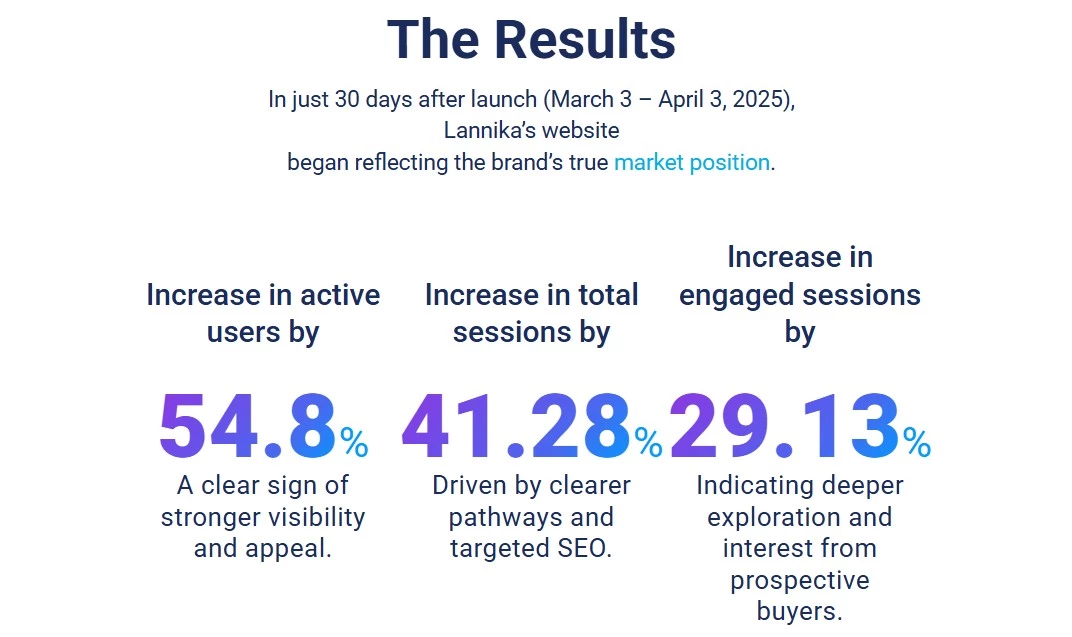
Work like this doesn’t happen by accident.
It comes from a brand strategy process designed to uncover what’s true inside the business and what’s happening in the market outside it.
“By balancing both internal and external brand realities, we can guide our clients as consultants to the overarching message and big idea for their brand that will feel authentic and ownable, while also grounded in marketplace reality,” Courtney says.
She recommends the following touch points:
- Know your audience
- Know what you do really well
- Know what the market wants
- Be real about what you can realistically act on and achieve
But a strong brand strategy is only one side of the equation; the other is how agencies show up for their clients.
Why Because even the most compelling strategy won’t land if it isn’t paired with trust, collaboration, and a sense that the agency is invested in the client’s success.
That’s why, when it comes to winning and keeping big, revenue-focused clients, the real differentiator often comes down to how relationships are built and nurtured.
“When I join a scoping call with a prospective client, I treat them like they are already our client - meaning we are part of the same team,” Courtney tells me.
“I try to listen, provide ideas and thoughtstarters, and get them excited about the potential to work with us.”
This approach is especially prudent when technologies like AI and rapid idea generation risk making interactions feel transactional.
Courtney suggests simple habits, such as being attentive, asking thoughtful questions, and bringing a positive attitude, to create the human connection that clients remember.
Still, no matter how well relationships are managed, the industry itself never stands still.
The Next Wave of Branding Disruption
With new technologies rapidly reshaping marketing, the question becomes: which innovations will truly redefine how brands connect with their audiences in the coming year?
Courtney advises that as new branding technologies emerge, companies should focus on how these tools support the core brand rather than letting trends redefine it.
“The brand is the personification of your business. The tactics with which you go to market might change, such as with the shift from search to generative search, from 1:1 sales to automation, the brand should remain constant,” she says.
“Your brand’s essence, its set of core values, its personality. How you deliver brand experience may evolve through technology, but the experience your customers come to expect from your brand will not.”
With that foundation in place, the next question is how executives can put these principles into action to future-proof their brand.
According to Courtney, the key is to:
- Build your brand like it were a person
- Focus on creating meaningful relationships with your customers
She reasons that people don’t connect with products or services as easily as they do with relationships and story.
“Products and services serve needs. Brands deliver those products and services through connection and story,” she notes.
Do this well and consistently, and you’re sure to build a dedicated following of brand fans who’ll stick with you.
Every brand touchpoint, from your website, social media, customer service, emails, to the product itself, is an opportunity to build trust.
Show up for your customers. Do what you promise.
Give them a glimpse into your brand’s world and make them part of the story.
Consistently delivering on this creates loyalty, strengthens clarity, and ensures the trust you’ve earned stays intact.
This is how you build a brand that lasts.
Branding Trends & Strategy FAQs
What is the most important branding trend in 2025?
Authenticity continues to dominate both B2B and B2C as customers seek real, human-centric connections with the brands they choose.
Why is storytelling a powerful brand strategy?
Storytelling creates emotional connections that inform, entertain, and resonate with audiences—making marketing messages more memorable and impactful.
How can brands avoid falling into the trend trap?
Align all activities with core brand values, tone, and goals; avoid jumping on trends that don’t fit your long-term vision.
Which KPIs should CMOs monitor for branding success?
Monitor site visits, engagement, brand awareness studies, and conversions to ensure brand activities are driving measurable growth.
What makes a brand future-proof?
Strong relationships, consistent storytelling, and a brand identity that remains steady even as marketing technologies evolve.