

A business ranking #1 in Google search results outperforms competitors by receiving approximately 27.6% of all clicks, a Backlinko study reveals.
This results in higher website traffic, conversion rates, and revenue.
How does your business get there to gain a competitive edge?
RedCore Digital Director and Founder Dan Wiggins has the answer and joins us today to discuss:
- The most common SEO challenges businesses make and how to overcome them
- How to leverage SEO to outperform competitors
- How to create a winning SEO content strategy for better search engine rankings
- Why regular SEO audits are essential for staying competitive

Who Is Dan Wiggins?
With over a decade of industry experience and a background in web development, Dan bridges the gap between SEO and development offering a comprehensive approach to digital marketing. Before establishing RedCore Digital, he gained valuable experience working both in-house and on the agency side, giving him a unique perspective on both client and service provider needs.
Search engines like Google continuously update their algorithms, pushing businesses to adjust their SEO practices and strategies quickly.
Undoubtedly, this is a tough challenge even for the most adept at SEO businesses, especially those in competitive industries.
Dan says that one of the most common issues is the internal misunderstanding of SEO and its proper implementation.
“This often stems from budget limitations, pressure from senior management to deliver fast results, and unrealistic expectations regarding the time it takes to see measurable outcomes.
SEO is fundamentally a long-term investment, and rushing the process can lead to prioritizing short-term tactics over sustainable strategies. Ultimately, this results in missed opportunities,” he explains.
Playing the long-term SEO game can indeed bring more sustainable business results than focusing solely on short-term gains.
Lily Ray, Vice President of SEO Strategy and Research at Amsive Digital, believes that this is the best SEO strategy. Watch the video to learn more:
Another challenge is the lack of sufficient resources and internal capacity to consistently produce high-quality content which is key for SEO success.
“This issue is often compounded by inadequate website development support. If the technical foundation of a site such as its structure, speed, or mobile usability is not optimized, even the best content may fail to perform well in search engine rankings,” he adds.
Dan advises businesses to prioritize educating stakeholders about the realistic timelines and budgetary requirements for successful SEO to overcome these challenges.
“It’s also essential to invest in either training existing staff or hiring dedicated talent to ensure a steady flow of quality content and robust website development.
By focusing on a well-rounded, long-term approach, businesses can gradually build a competitive advantage, even in crowded markets,” he concludes.
How to Leverage SEO to Stand Out from Competitors in 2025
Very often, SEO is about fighting with competitors for higher visibility and traffic.
This is why businesses should perform a competitor analysis to gain data like what type of content and keywords their competition ranks for and the types of websites that link to them which helps discover potential backlinking opportunities.
According to Dan, for businesses to drive SEO success and stand out from competitors in 2025, they should refine their strategies by:
- Paying close attention to keywords that are already generating some traffic and optimizing content around them: Use the data from Google Search Console (GSC); look at keywords with high impressions but low clicks. Brands that can identify these can adjust their existing content to address user intent better as well as boost click-through rates and traffic.
- Enhancing the overall user experience (UX) on their websites: Poor UX on a bad website can easily be fixed in a variety of ways. This includes improving page load times, ensuring mobile-friendliness, and creating intuitive navigation paths. As search engines increasingly prioritize UX as a ranking factor, optimizing these elements can give businesses a competitive edge.
- Implementing a more dynamic content strategy: This involves regularly updating existing content to keep it relevant and authoritative, as well as exploring new content formats such as videos or podcasts to engage different audience segments.
Previously, we spoke to Daniel Foley Carter, a seasoned enterprise-level SEO consultant, who discussed why SEO today focuses on users, not search engines, highlighting the role of UX. Watch the video to learn more:
Now, how can businesses in competitive industries prioritize SEO activities to maximize visibility?
Dan answers this by highlighting that businesses should focus on high-value, low-search-volume keywords with strong commercial intent.
“While high-search-volume keywords may seem attractive, they are often highly competitive and difficult to rank for, especially for smaller businesses.
Instead, by targeting niche keywords that directly align with the business’s products or services, companies can attract more qualified traffic that is likely to convert,” he explains.
However, he points out that it is important to strike a balance between targeting commercial and informational keywords. The priority should be on keywords that are most relevant to your brand’s goals.
“Businesses should allocate resources to technical SEO improvements, such as site speed, mobile optimization, and ensuring that the website is easily crawlable by search engines.
These foundational elements are crucial for maximizing visibility and ensuring that all other SEO efforts are fully realized,” he explains.
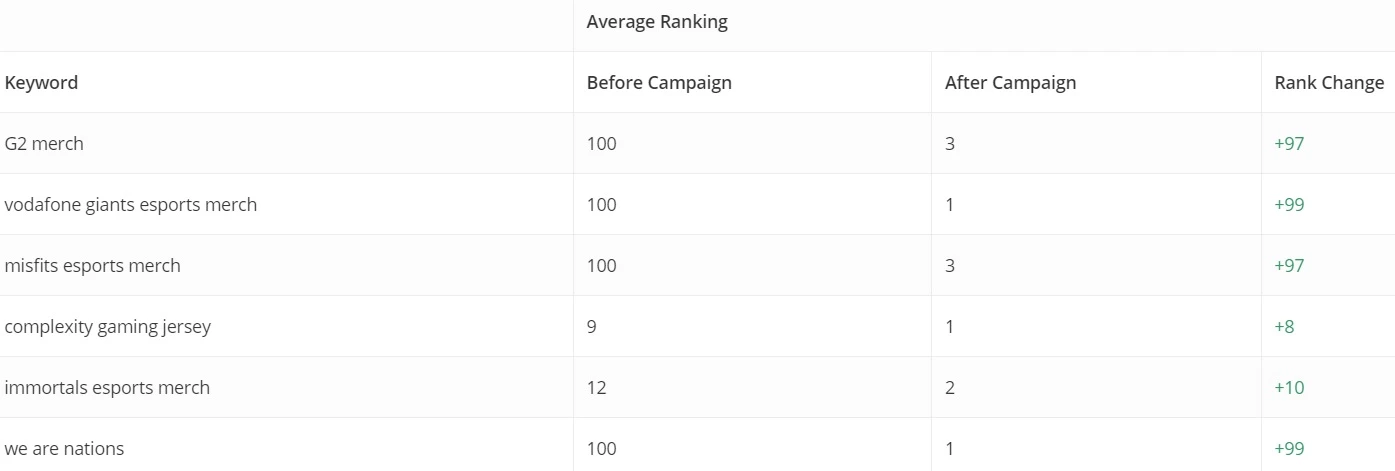
Dan shares a case study of their client We Are Nations, an eSports merchandise brand, which struggled with low search volumes and competing product pages that diluted their SEO efforts.
RedCore Digital solved this by reorganizing its products into more streamlined pages and improving the site's speed and UX design.
This helped achieve a 145% boost in organic traffic, a 723% increase in revenue, and a 46% rise in average order value, helping We Are Nations solidify its place in a competitive market.
How to Create a Winning Content Strategy to Outperform Competitors on Search Engines
In 2025, businesses must go beyond simply publishing articles and creating better content than their competitors to improve their industry standing.
According to Dan, a winning SEO content strategy should include:
- Regular content reviews: Your content remains relevant, reflects authority, and ranks consistently.
- Showing off your authority: Include detailed author bios that highlight the expertise of the content creators.
- Avoiding content cannibalization: Multiple pieces of content shouldn’t target the same keywords and compete against each other in search rankings.
- Using topic clusters: Have one main page supported by related articles to boost your site's visibility and authority.
In a previous podcast, DesignRush spoke to Omniscient Digital Co-Founder Alex Brikett who shared effective SEO tips to transform your content. Watch the video to learn more:
So, which one carries more weight to achieve better search engine rankings: content quality or quantity?
Dan’s answer is both, but businesses must balance these appropriately.
“High-quality content is essential because it provides value to the reader, meets user intent, and signals to search engines that the website is a reliable source of information.
However, quality alone is not sufficient if content is only published sporadically.
On the other hand, while consistently publishing content is important, focusing solely on quantity can dilute the value of the content, leading to lower engagement and poorer search rankings,” he points out.
Dan says establishing a content calendar that balances quality with consistency of publishing is also a crucial step.
SmartSites Co-Founder Michael Melen also advises on strategic content planning and execution, stressing the importance of flexibility and consistency.
"To keep content both high-quality and consistent, the first step is to define clear goals and understand exactly who you’re talking to.
Once you’ve got that foundation, build content around themes that genuinely matter to your audience — that’s what keeps them engaged.
Plan a schedule that’s realistic for your team to stick with, so quality doesn’t slip. Equip them with the right tools and clear guidelines to stay on-brand, every time. Check in on how it’s performing, and don’t be afraid to adjust as trends and needs change. This way, you’ll stay relevant and keep adding value to your audience," he says.
By maintaining a consistent publishing schedule and focusing on delivering high-quality content, businesses can steadily improve their search engine rankings and build a strong online presence.
Why Regular SEO Audits Are Essential for Staying Competitive
I asked Dan how often businesses should perform SEO audits to ensure their websites remain optimized for search engines.
He says that this should happen at least twice a year; however, quarterly audits can also be beneficial, especially for businesses operating in fast-paced industries where search trends and algorithms change rapidly.
“When conducting an SEO audit, businesses should pay close attention to both on-page and off-page factors,” he shares.
Dan also advises businesses not to rely solely on SEO tools that provide estimates rather than actual data from sources like Google Analytics.
“By diving into real data, businesses can uncover insights that are often missed by automated tools, such as understanding user behavior on the site, identifying pages with high exit rates, and discovering opportunities to improve UX,” he notes.
Remember, SEO is a long-term investment, so prioritizing sustainability over short-term tactics is key to building a strong SEO foundation that can steadily boost your visibility, drive consistent traffic, and foster lasting success for your business.
For businesses looking to gain a competitive edge in 2025, partnering with experienced SEO agencies can ensure your Google rankings complement your other marketing efforts and assist in business growth.