
Walmart's Digital Price Tags Rollout: Key Findings
- The retail giant is replacing paper price tags with digital shelf labels across all U.S. stores within the next year.
- Prices can now be updated in minutes, shifting control from store associates to a centralized system.
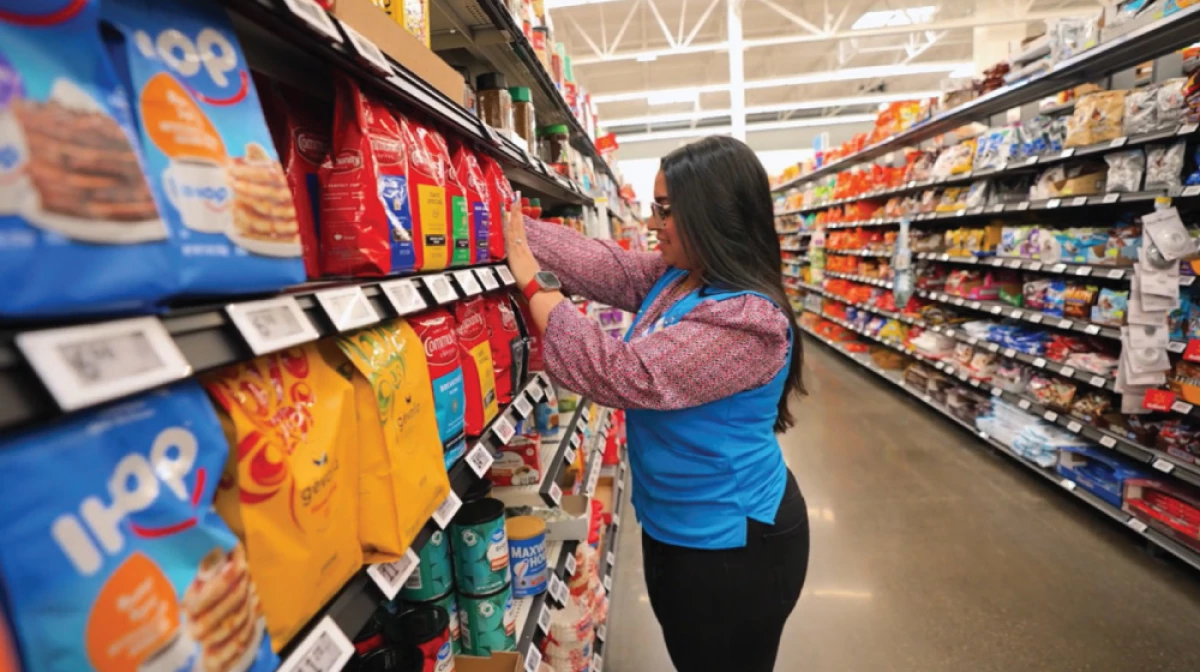
- Digital shelf labels also act as operational tools, helping staff locate items faster for restocking and order fulfillment.
Walmart is fixing something shoppers never think about, and it could change how pricing works in physical retail forever.
The retail giant is rolling out digital shelf labels across its U.S. locations, replacing paper price tags with electronic displays that can be updated instantly.
According to the company, the new system allows prices to be changed "in just minutes rather than hours or days."
This is not Walmart's first time rolling out this feature. A 2024 test in Grapevine, Texas, proved that the model worked.
Now it's going nationwide, with prices synced automatically between shelves and checkout through a single system.
Shelf Pricing Connected to Real-Time Systems
The shift removes one of retail’s most manual processes and hands pricing control to a central system.
"Before digital shelf labels, that meant walking up and down aisles, swapping out paper tags by hand," Walmart said in its announcement.
"Now, associates manage planned price changes through a centralized Walmart system."
The system also speeds up other store operations beyond pricing.
Employees can use a mobile device to trigger LED lights on specific labels, which helps them locate items that need restocking or fulfillment for online orders.
Walmart also says the rollout is part of its effort to modernize store operations and its supply chain, adding that prices will remain consistent for all shoppers.
However, this new capability tells a more complicated story.
Once pricing can be updated in minutes across thousands of stores, in-store pricing may start to feel less permanent, a concern that's already playing out online.
One viral post claimed that "prices can change in seconds while you shop," framing the rollout as a step toward dynamic pricing, though Walmart has not confirmed any such plans.
🚨 WALMART’S AI PRICE SYSTEM JUST ACTIVATED — DIGITAL PRICES CAN CHANGE IN SECONDS WHILE YOU SHOP AND A CUSTOMER CAUGHT IT ON CAMERA
— HustleBitch (@HustleBitch_) March 24, 2026
America’s biggest retailers are quietly replacing paper tags with digital screens.
Prices are no longer fixed.
They can change in seconds.
•… pic.twitter.com/8mmDy3PGVJ
And this concern isn't unfounded.
As RTMNexus CEO Dominick Miserandino told Yahoo Finance, it lays the groundwork for dynamic pricing, even though Walmart claims it doesn't.
"[O]nce you install technology that can change every price in the store in seconds, you’ve also created the infrastructure that could support dynamic pricing down the road.
And that seems quite a powerful tool that is tempting to use and misuse in the future," he explained.
Where Store Prices Are Actually Decided
Walmart is effectively rebuilding how pricing works at the store level, bringing physical retail closer to the responsiveness of online systems.
This changes who controls pricing, how quickly it can move, and what shoppers expect when they walk into a store.
- Pricing moves into centralized control. Retailers can manage consistency, promotions, and execution across all stores at once.
- Stores may start behaving like e-commerce platforms. The infrastructure now supports testing time-based or demand-driven pricing at scale.
- Shopper trust becomes part of the pricing equation. Retailers will need to manage perception around fairness and consistency.
It introduces a pricing layer that can be tuned continuously, making it part of ongoing store operations instead of a set schedule.
Our Take: Is In-Store Pricing About to Become Dynamic?
This is a clear operational upgrade, but it also changes how pricing may be perceived.
From Walmart’s perspective, the value is straightforward. Manual price changes are slow, resource-heavy, and prone to error.
Digital labels solve that and bring stores closer to the responsiveness of online retail.
But where this could fall short is customer trust.
The company has been clear that pricing will remain consistent throughout the day, but the technology itself introduces a potentially different reality.
When updates can happen instantly, shoppers may start to question whether prices are as fixed as they appear.
The infrastructure is now in place. What matters next is how it's used and how clearly this is communicated to customers.
Retail is moving toward systems where pricing can change as quickly as demand does. Explore top retail marketing agencies in our directory.