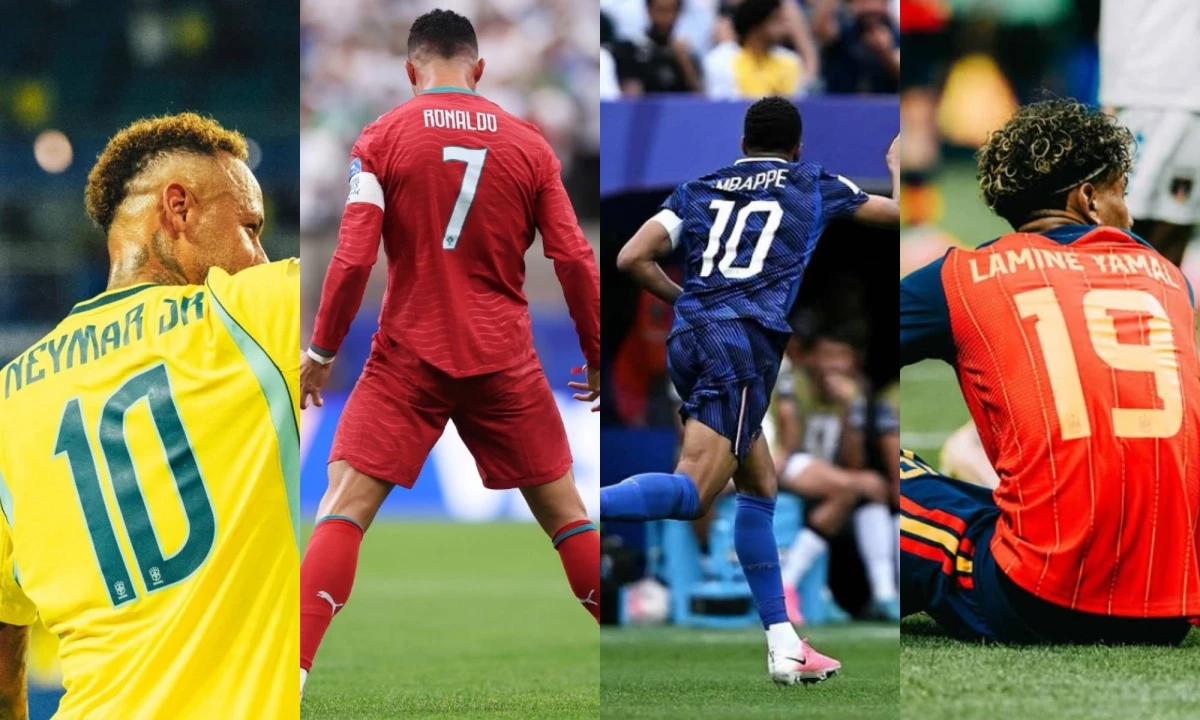

The 2026 FIFA World Cup started one of football's biggest commercial transitions in years.
Neymar retired from international football after Brazil's Round of 16 loss to Norway on July 5.
Cristiano Ronaldo confirmed that this tournament would be his last World Cup, and Portugal went out to Spain a day later.
Lionel Messi is the exception, now the World Cup's all-time leading scorer with 20 goals.
These exits mark a change for the brands that leaned on football's most recognizable faces for decades.
"I tried, I tried. Now it's over. I started here; I finished here," Neymar told reporters after Brazil's defeat to Norway.
The race to sign the next generation of brand ambassadors is already on.
The Handover Starts Now
Brands plan for succession years ahead, signing younger talent while the established stars still pull global audiences.
Nike, adidas, and Puma have all widened their football rosters to avoid leaning on any single player.
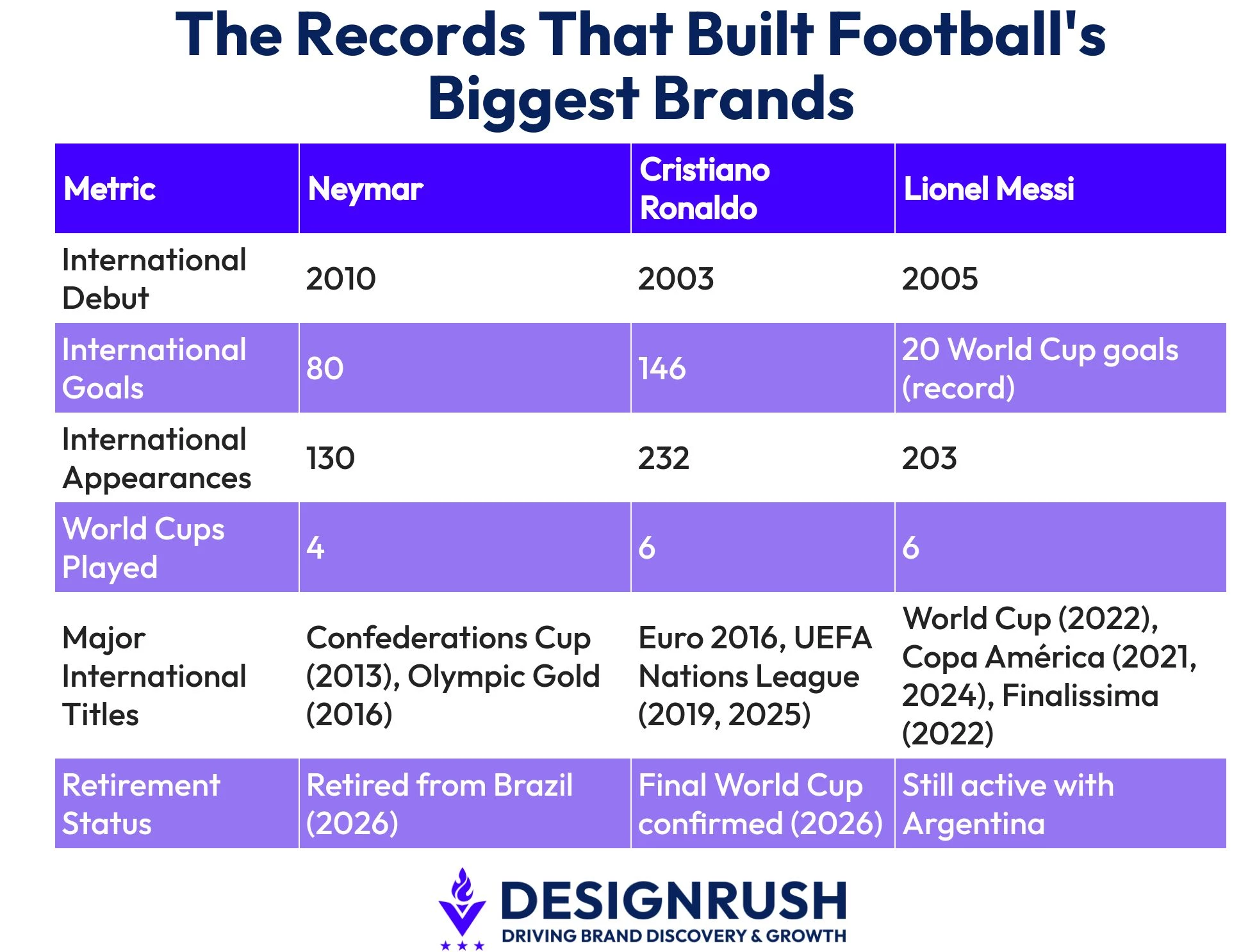
Neymar ends his international career with 80 goals, 59 assists, and 130 caps.
His reach helped Puma, his boot sponsor since 2020, connect with younger fans through fashion, gaming, and social media.
Ronaldo's last World Cup carries similar commercial weight.
At 41, he's still one of the most valuable endorsers in sport, anchored by a Nike lifetime deal.
He also has the biggest social following of any athlete at 671 million on Instagram alone.
The next decade of sports marketing goes to whoever signs the right twenty-year-old before the bidding war starts.
The Stats That Make a Star Bankable
Sustained success is what makes an athlete a lasting brand ambassador, because the recognition outlives the playing days.
Neymar retires as Brazil's all-time top scorer, which keeps him marketable well past his final match.
Ronaldo's World Cup ends here, and he leaves as Portugal's all-time leader with 146 goals in 232 caps.
This record is the foundation of his standing as one of the sport's most valuable endorsers.
Meanwhile, Messi is still adding to his record, with 20 World Cup goals across six tournaments.
The careers of football's biggest stars offer a blueprint for long-term endorsement success:
- Consistency creates commercial staying power. Brands should prioritize athletes who sustain elite performance to maximize ROI.
- Brand legacy outlives trophies. Marketers should back personalities with cultural pull to stay relevant long after retirement.
- Succession planning cuts commercial risk. Sponsors should build relationships with emerging talent early to keep audience loyalty.
Messi's record doubles as free advertising for adidas, so brands hunt the players closing in on the next milestone.
Our Take: Who's Football's Next Global Face?
The single global superstar every brand could rally a campaign behind may be a thing of the past.
We think that football is entering a portfolio era, where four or five players split the reach that Neymar, Ronaldo, and Messi once held alone.
Lamine Yamal, Vinícius Júnior, Kylian Mbappé, and Erling Haaland each bring a different kind of personal branding.
The pick may come down to social reach as much as trophies, since Yamal is already a marketing force as a teenager.
The billion-dollar, single-face deal, like Ronaldo's Nike lifetime contract, may not repeat until one of them breaks from the pack.
As football welcomes a new generation of stars, our coverage of the FIFA World Cup 2026's biggest campaigns shows how brands are preparing for it.
Looking to future-proof your sports marketing strategy?
Explore these top sports marketing agencies to find partners specializing in endorsements, sponsorship strategy, and brand partnerships.