
Saks Global Bankruptcy: Key Findings
- Saks Global’s Chapter 11 filing exposes balance sheet pressure as rising capital costs and softer luxury demand outpaced the merged group’s ability to stabilize operations.
- The company secured $1.75 billion in committed capital to keep stores and eCommerce active through restructuring.
- Brand-owned distribution continues to reshape luxury retail as labels prioritize data, pricing control, and margin, reducing the influence multibrand stores once held.
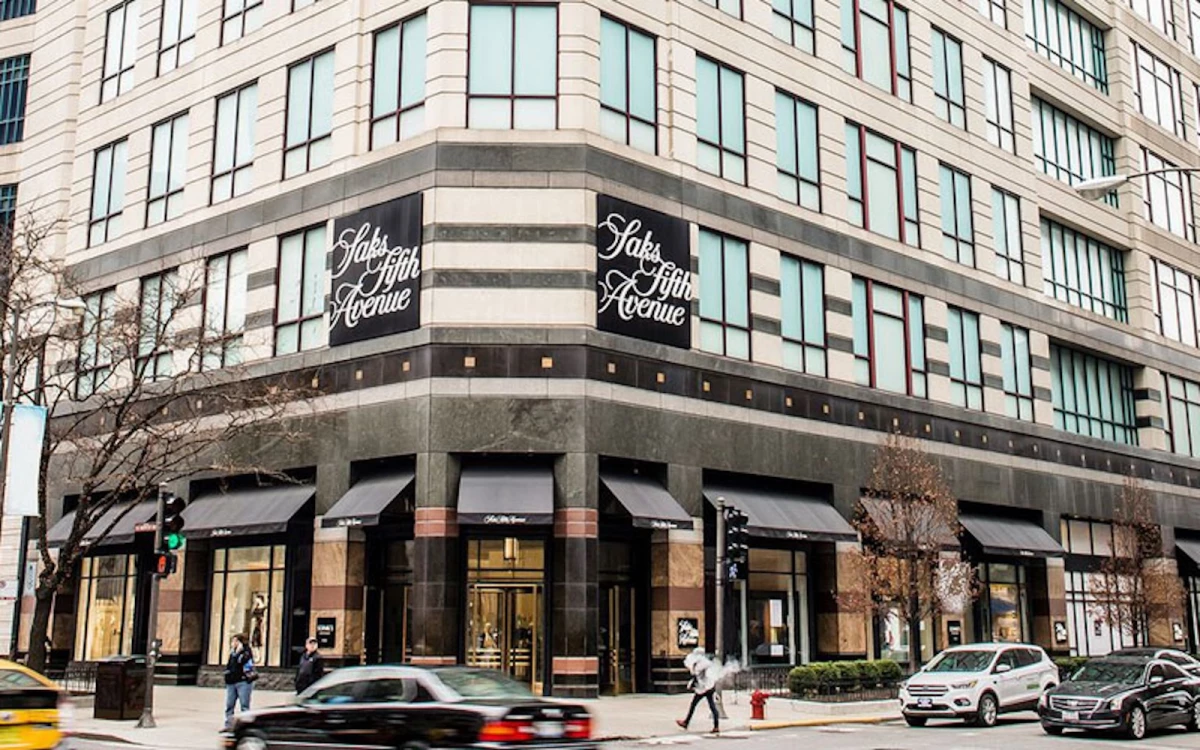
Saks Global has just entered Chapter 11 protection.
The filing follows a year of mounting financial strain tied to the Neiman Marcus acquisition and the cost pressures that came with it.
Saks Global confirmed it secured $1.75 billion in committed capital to support store operations, eCommerce, and vendor obligations during the restructuring process.
Leadership shifts accompanied the announcement, with industry veterans returning to strengthen continuity while lenders work on a formal plan.
The company emphasized that loyalty programs and employee commitments remain intact as restructuring proceeds.
What sits beneath the headlines is a model under pressure from higher financing costs and luxury brands taking tighter control over pricing, distribution, and customer relationships.
Saks Global enters bankruptcy with assets that still hold cultural weight, but with a structure that needs reinvention to stay relevant.
Luxury Retail’s Debt Problem
The Neiman Marcus deal had been positioned as a scale advantage, but the financial structure behind it became harder to sustain as interest rates climbed.
Luxury brands accelerated their move toward owned channels, reducing reliance on department stores and tightening control over merchandising, CRM, and customer service.
As a result, Saks Global faced fewer avenues to grow into the leverage the deal required.
Investors have been watching this tension build across the category, where the cost of servicing debt can overshadow the need for investments in digital and experiential initiatives.
The result is a portfolio caught between prestige positioning and a high-cost model that no longer aligns with how luxury demand behaves.
Shifting Power Toward Brands
The distribution landscape has changed in ways that make consolidation less effective than it used to be.
Brands have strengthened their clienteling tools, upgraded first-party data systems, and narrowed wholesale exposure to protect margin and storytelling.
Department stores now compete against brand-owned environments that deliver cleaner attribution and stronger loyalty economics.
The next stage of Saks Global's restructuring will test whether the company can rebuild relevance with consumers.
CMOs and brand leaders now face distribution decisions that carry more operational and reputational weight than they did before.
- Retail partners under financial pressure often struggle to maintain consistent experience standards, which puts brand equity at risk.
- Data access drives modern luxury loyalty, and direct channels offer clearer measurement and stronger lifetime value.
- Consolidation strategies lose effectiveness when brands and customers prioritize personalization over store count.
As the industry tracks Saks Global’s restructuring, the emphasis for marketers will shift toward brand partnerships that reinforce control, visibility, and customer depth.
Our Take: Is Luxury Retail Moving From Department Stores?
I see this as a turning point rather than a collapse, as luxury retail will always be associated with department stores.
Saks Global’s bankruptcy highlights what happens when a legacy structure doesn’t evolve fast enough toward data-driven, experience-led retail.
Its Hamptons glam activation with Amazon showed how aggressively Saks tried to create shoppable cultural moments even as its core model weakened.
Saks also entered the holiday season with a high-profile holiday spectacle with the Rockettes, a move meant to reinforce cultural visibility amid mounting operational pressure.
Brands spent years reclaiming control of their customers, and this filing reinforces why that move gave them strategic leverage.
From my perspective, the lesson is that control carries more value than scale, and retailers that don’t adapt will fall behind.
Want to protect your brand during moments of uncertainty?
Explore Top Reputation Management Agencies that help companies strengthen trust and control their narrative.