
PUMA’s Brand Collapse: Key Findings
- The sportswear brand's loss of cultural momentum has weakened its position, prompting Anta and Li Ning to explore a potential takeover.
- Its steep valuation drop created rare acquisition access, showing how vulnerable legacy brands become when resets fail to restore energy.
- A successful bid would reshape global sportswear competition, highlighting how quickly Asian giants are moving to scale their international reach.
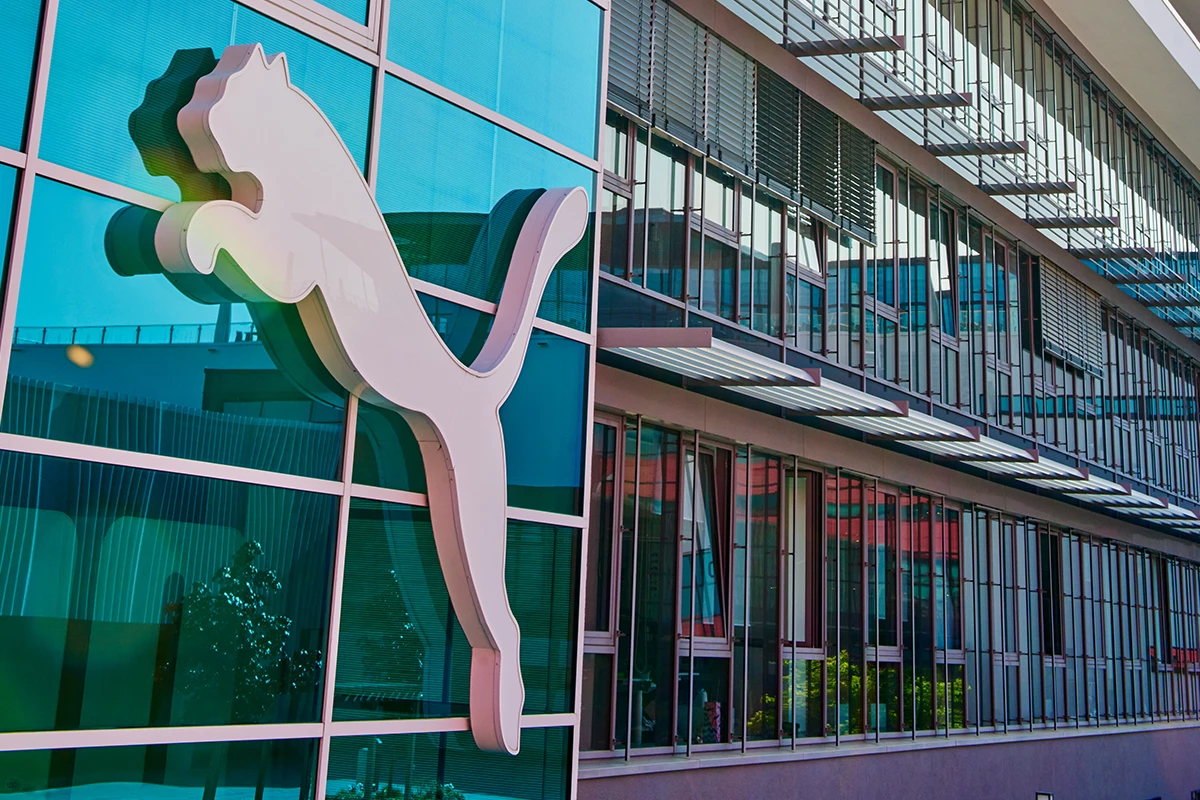
PUMA’s ongoing brand slide has brought the German sportswear company to an inflection point.
After years of weakening resonance, slowing sales, and a market value cut by more than half this year, the brand is now drawing interest from rivals who see an opening.
Sources familiar with the matter told Bloomberg and Reuters that Anta Sports and Li Ning are studying a potential takeover of PUMA.
The two companies are reportedly evaluating financing options and considering partnerships with private equity firms.
The reported interest comes as PUMA shares have dropped 62% year-to-date in Frankfurt trading, leaving the brand with a market value of roughly $2.9 billion.
The company’s biggest shareholder, the Pinault family’s Artémis holding company, owns 29% and has signaled that while the stake is interesting, it is not strategic.
ASICS was also mentioned as a potential bidder, but later denied any interest.
A few names surfaced in rumors, including Adidas, but none have confirmed formal talks.
Any suitor pursuing a deal would need to meet valuation expectations that remain above current market pricing.
CEO Arthur Hoeld, who was appointed earlier this year after predecessor Arne Freundt was dismissed, has been tasked with reviving the ailing brand.
The reset has included job cuts, a narrowed product range, and efforts to stabilize marketing operations.
On top of these, the industry has grown more competitive as On, Hoka, and Anta rise globally.
Why PUMA Became a Takeover Target
PUMA’s vulnerability is rooted in a multi-year decline in brand energy.
The company benefited from a temporary pandemic lift but failed to sustain consumer interest as the market normalized.
Several structural issues created this opening:
- Diminished cultural pull, as rivals delivered stronger storytelling and more relevant performance narratives.
- Inventory pressure, which eroded margins and limited PUMA’s ability to reignite brand heat.
- Tariffs and slowing demand, weakening core markets, and adding to financial strain.
- A reset plan that failed to convince investors, leaving the brand without clear momentum heading into peak seasons.
Anta, valued at over $31 billion, has a track record of turning around underperforming assets, including Amer Sports, owner of Salomon and Arc’teryx.
Li Ning, with an enterprise value of nearly $4 billion, is also said to be exploring options as it looks to build its global footprint.
This event now shows how quickly a global icon like PUMA can lose relevance when its brand story softens, and competitors move faster.
The Global Stakes of a PUMA Acquisition
A takeover or merger would change the sportswear industry in several ways.
Anta is already a major force in China and is rapidly expanding in Southeast Asia.
It has also introduced its brand in the U.S., with a flagship store in Beverly Hills and retail partnerships with Foot Locker and Dick's Sporting Goods.
It could certainly use PUMA to further accelerate brand awareness in Western markets.
Meanwhile, Li Ning, which has gained cultural momentum in China, could capitalize on PUMA’s infrastructure to build global scale.
Yet several challenges stand in the way of any deal.
The Pinault family’s valuation expectations sit above PUMA’s current market value, creating an immediate gap to close.
The brand’s internal instability and growing pressure from competitors like On and Hoka add even more risk for potential buyers.
An acquisition would only matter if the buyer could give PUMA a story people actually care about again.
That means fixing how the brand shows up, tightening how it works, and putting real weight behind products that feel current.
Until these pieces line up, PUMA will stay in a fragile spot, no matter who owns it.
Puma shares jumped more than 13% Thursday following a report that China’s Anta Sports is among a number of firms looking to buy the German athletic brand.
— CNBC International (@CNBCi) November 27, 2025
Click here to read more: https://t.co/UpJWYTeOBxpic.twitter.com/7qTt96mLva
This situation that PUMA has found itself in offers lessons for anyone managing a brand in a competitive category:
- Stay culturally present early, because once a brand starts slipping, the market moves faster than most teams expect.
- Tell a story only you can own, since relying on product alone leaves too much room for faster, louder competitors to set the pace.
- Pay attention to long-term signals, because the short-lived pandemic bump hid deeper cracks in how people felt about PUMA.
All of these simply state that a brand’s value comes from the meaning people attach to it. When it fades, the numbers follow.
Our Take: Can PUMA’s Empire Still Be Saved?
Yes, we think so. It's a legacy brand for a reason.
PUMA still has global reach and decades of history, but these strengths don’t carry the same weight without a point of view that feels alive right now.
The brand needs products that create real excitement and a clearer sense of who it wants to speak to.
Whether PUMA stays independent or joins a larger group, I believe the task will be the same.
It needs brand storytelling that resonates across markets. If it can’t reclaim this, other brands that already understand the cultural moment will take the lead.
Legacy sportswear brands that failed to evolve their digital presence and brand relevance, like Nike and Adidas, have also found themselves falling behind.
Competitive categories reward brands with conviction. These top agencies shape strategies that return focus to what makes a brand worth choosing.