
Pepsi Prebiotic Cola Launch: Key Findings
- PepsiCo debuts Pepsi Prebiotic Cola with added fiber, low sugar and calories, and no artificial sweeteners.
- The launch follows Pepsi’s $1.95 b Poppi acquisition in May 2025 to scale better-for-you offerings.
- Modern soda category grew to ~$1.8 b in U.S. 2024, with Poppi leading and Olipop close behind.
Quick listen: Pepsi’s wellness pivot and prebiotic cola play — here’s the strategy, in under 2 minutes.
Pepsi is betting prebiotics can fix what fizz alone couldn’t.
The beverage giant announced the launch of Pepsi Prebiotic Cola, a new product with functional fiber and reduced sugar.
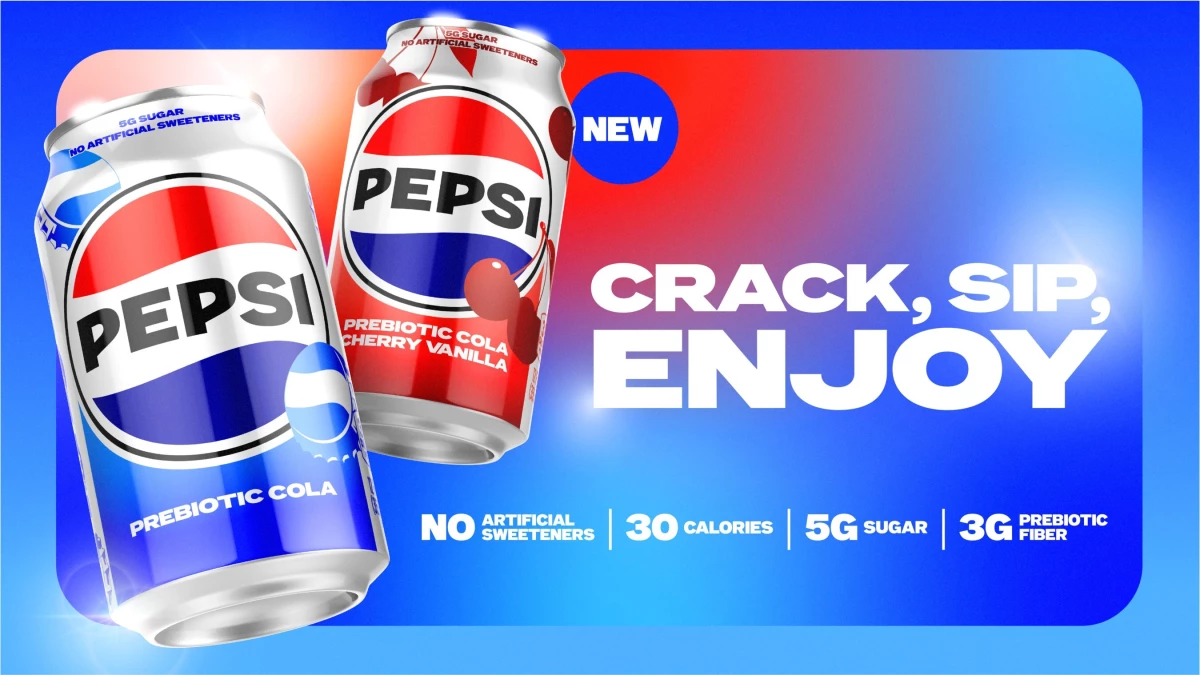
Each can of Pepsi Prebiotic Cola is formulated with a lighter nutritional profile and added functional benefits:
- Serving size: 12-ounce can
- Calories per can: 30
- Cane sugar: 5 grams
- Artificial sweeteners: None
- Functional ingredient: Includes prebiotic fiber
Two versions are set to launch: classic cola and cherry vanilla.
Pepsi Probiotic Soda features 5 grams of cane sugar, 30 calories, 3 grams of prebiotic fiber and contains no artificial sweeteners.
— Markie Devo (@markie_devo) July 21, 2025
🛒It will first be sold online starting on Black Friday in November before rolling out to major retailers in February 2026.
(PepsiCo) pic.twitter.com/S0gA33oxvH
Online sales begin on Black Friday, with full retail rollout slated for early 2026.
The launch comes shortly after PepsiCo finalized its $1.95 billion acquisition of Poppi, one of the fastest-growing names in the wellness beverage market.
Consumer Habits Are Forcing Soda Giants to Adapt
Pepsi’s new product comes at a time when consumer preferences are moving away from traditional cola.
Over the past two years, average monthly consumption has dropped from 9.4 servings per person to 7.7.
Diet soda is facing even sharper declines, with a 27% drop over the last three years.
Much of this decline is being driven by younger consumers, who are choosing drinks they see as simpler, cleaner, or beneficial for digestion.
PepsiCo’s beverage chief, Ram Krishnan, said the product reflects how the company is evolving with changing expectations.
“Our portfolio has consistently responded to what consumers want, and this new cola adds even more flexibility and functional value to the choices we offer.
We’re excited to deliver something new that still delivers the flavor experience people associate with Pepsi.”
As a result, the functional soda market has exploded, with Poppi and Olipop helping push the U.S. category to $1.8 billion in 2024.
Marketing Muscle Is Still in Play
While cola consumption is in decline, major brands haven’t pulled back on advertising.
In fact, Pepsi increased its U.S. ad spend from $40 million in 2023 to $58 million in 2024, according to MediaRadar.
That 45% jump signals the company is making a strong push to regain consumer attention, particularly as it rolls out Pepsi Prebiotic Cola.
The broader carbonated soft drink category reflects a similar pattern.
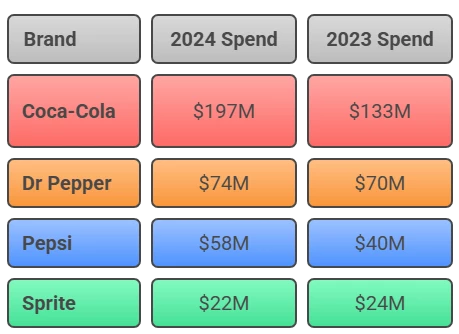
These figures show how top soda brands are fighting for visibility in an increasingly competitive market.
For Pepsi, this level of investment supports its efforts to position the new prebiotic cola as more than a niche health drink.
It is part of a larger push to protect and grow brand relevance.
Calculated Innovation With Brand at Stake
Pepsi is trying to hold its ground by meeting new demands without abandoning its legacy.
The company stated Poppi will remain focused on fruity wellness sodas, while Pepsi Prebiotic Cola reaches for those who still enjoy cola but want a lighter, functional option.
Still, the success of this launch depends on more than product specs.
Health-conscious buyers often question claims from legacy brands, and in my experience, they’re quick to spot when the message doesn’t match the formula.
Am I the only one that thinks those probiotic sodas that have been trending recently are incredibly suspicious? I mean it's not just individual companies, now I think Pepsi is jumping on it. Why are these all Poppi-ng up all of a sudden?
— Patt Andrews (@TheLazySkeptic) July 11, 2025
I don’t just look at what brands release; I watch how they communicate it.
If Pepsi wants this move to stick, it needs to back the product with clarity, consistency, and substance.
For agencies and marketers, the lesson is clear: modernizing a brand means more than reformulating ingredients.
It’s about making the product relevant without losing what made it recognizable in the first place.
For more on how health claims are being challenged in marketing, see how a banned Trip ad is raising new questions about wellness branding.
From packaging to positioning, these teams shape food and drink brands that speak to today’s consumers.