
Pepsi's Super Bowl Teaser: Key Findings
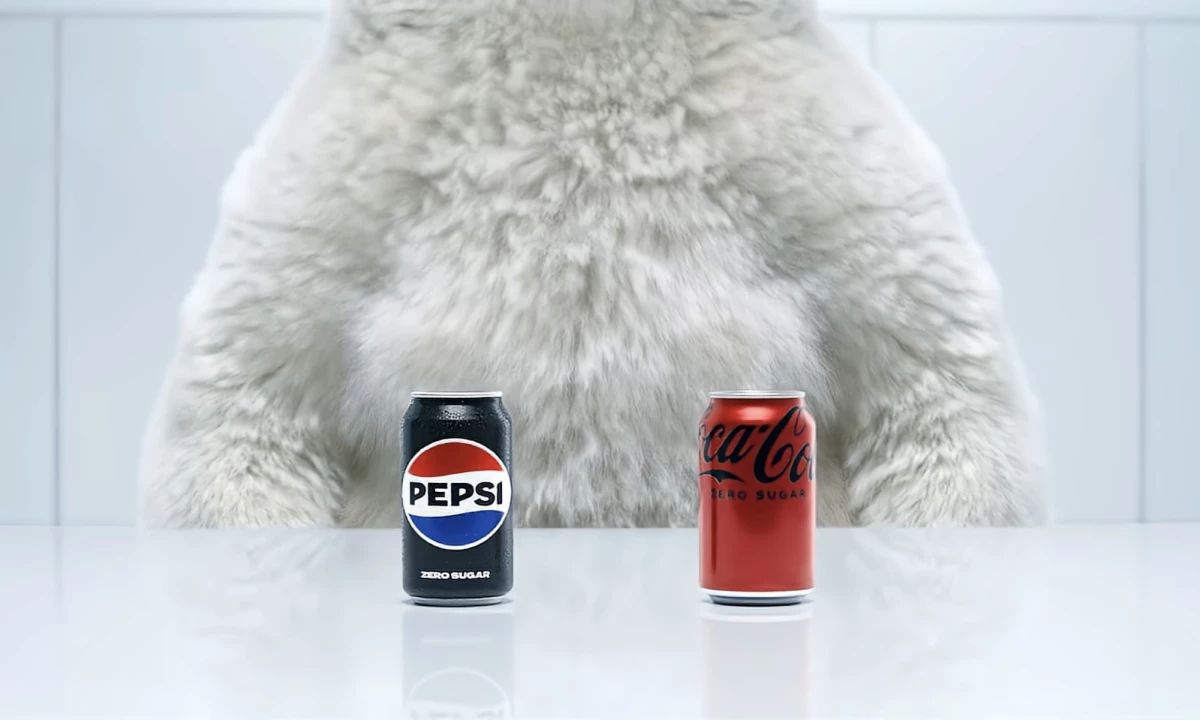
- The 15-second teaserfeatures a blindfolded polar bear, Coca-Cola's mascot since 1922, taking the Pepsi Challenge.
- The BBDO-created spot aired during the NFL Conference Championships, building on 2024's taste test data.
- Pepsi Zero Sugar posted 30% monthly sales gains in 2025 while the category grew 12%, making taste test claims commercially relevant.

Campaign Snapshot
Pepsi hasn't been subtle about which brand it's targeting in its ads over the decades.
The same goes for its 15-second Super Bowl teaser aired during the NFL Conference Championships.
It shows a blindfolded polar bear, Coca-Cola's iconic mascot, preparing to take the Pepsi Challenge.
Created by BBDO alongside Pepsi's in-house team, "The Choice" revives the 1975 blind taste test that strips away branding to let customers choose their favorite flavor.
The setup comes with clues such as paw prints in the snow and thunderous footsteps through the soda giant's offices, with the blindfolded bear finally stepping into frame.
The teaser is then followed by the actual taste test, with the polar bear in utter disbelief at his choice, which is Pepsi, of course.
It hilariously ends with the Arctic animal lying down on a therapist's couch.
The teaser is short and simple, yet catchy and unmistakably a dig against its biggest rival, turning Coca-Cola's decades of brand iconography into a direct challenge.
The Provocation Is Backed by Data
The company brought back its Pepsi Challenge last year, pitting zero-sugar colas against each other and documenting results on Instagram with business-school precision.
Pepsi Zero Sugar won the test, with an average of 65% of participants in 34 U.S. cities choosing it over competitors.
Even in Atlanta, Coke's hometown, Pepsi came out ahead with 58% preference.
The brand presented results with clearly labeled data, letting numbers do the credibility work.
Pepsi has also connected taste tests to business momentum.
While the zero-sugar category grew 12% monthly in 2025, Pepsi Zero Sugar posted 30% monthly gains.
When you're stealing a competitor's mascot, you need the numbers to prove you deserve it.
Pepsi's polar bear provocation offers three valuable lessons for brands looking to target competitors in their campaigns:
- Only challenge rivals when credibility is established. Competitive references land best when a brand can sustain scrutiny beyond the initial moment.
- Design symbols that communicate instantly. Clear visual cues carry more weight than explanation in short-form formats.
- Align provocation with internal confidence. Competitive messaging resonates more when a brand is operating from a position of momentum.
This shows how confrontation can function as a strategic signal, drawing attention while reinforcing belief in the brand’s current standing.
Our Take: Is Using a Rival's Mascot a Good Idea?
I think Pepsi's polar bear play is really witty and attention-grabbing.
Putting Coke's 102-year-old mascot in a blindfold is also more effective because its taste test results support the claim.
The 65% preference and 30% monthly sales gains make this feel like an actual display of progress shown in a way that people would love.
In other news, Dr Pepper recently turned a fan-made TikTok jingle into its CFP Championship spot, showing how brands can earn attention by elevating creator moments.
Brands building competitive campaigns need partners who understand when provocation strengthens positioning.
Take a look at the top creative agencies in our directory.