
AI in Hollywood Filmmaking: Key Findings
- OpenAI is producing "Critterz" in nine months (vs. Hollywood’s three years), showing how brands can adopt AI pipelines to speed up campaign and content production.
- The animated film costs under $30 million (vs. $100+ million), demonstrating how agencies can apply similar methods to stretch budgets and still produce high-quality assets.
- The team hopes to debut it at Cannes in 2026, and businesses can use audience reaction as a guide for when and how to introduce their own AI-driven content.
Quick listen: OpenAI bets on "Critterz," an AI-generated animated film aiming for Cannes 2026, produced in 9 months for under $30M.
OpenAI wants to prove it can take an AI-driven movie idea all the way to Cannes.
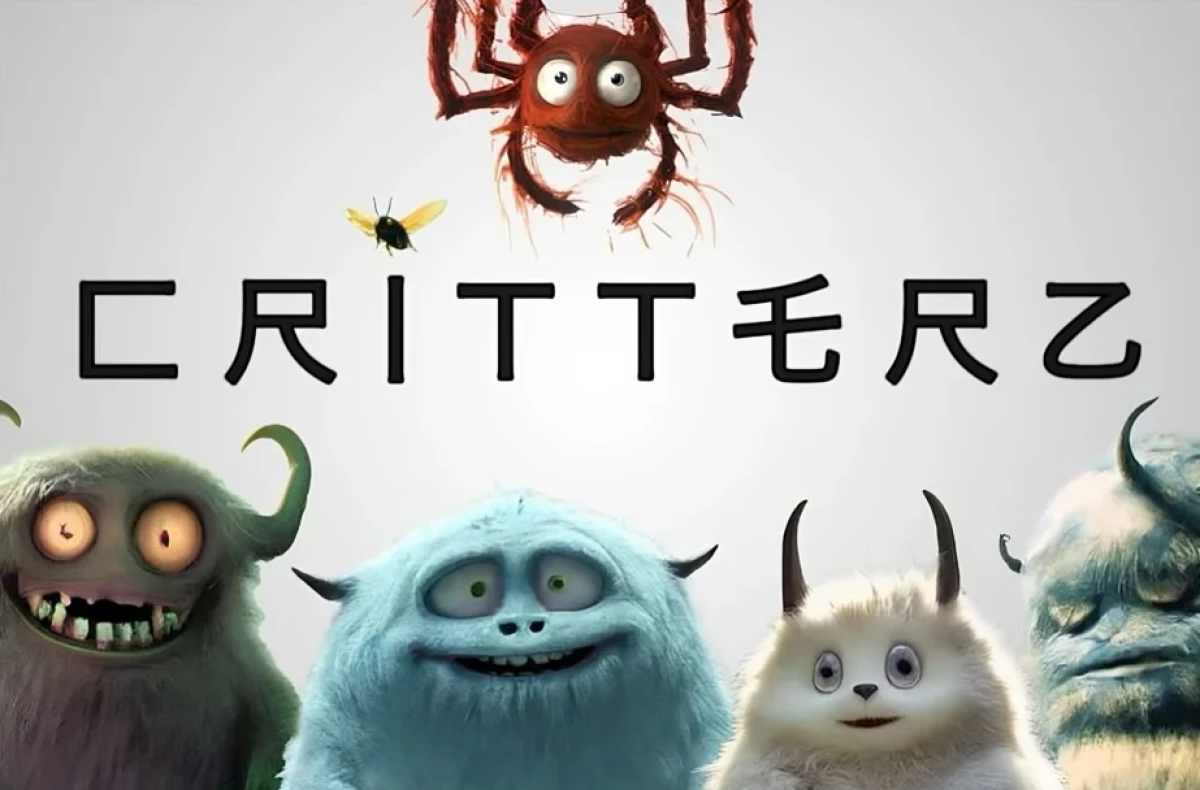
The company is backing "Critterz," an animated tale about forest creatures who set out on a journey after a stranger disrupts their home.
The project is being produced with London-based Vertigo Films and Los Angeles studio Native Foreign.
The idea began with Chad Nelson, now part of OpenAI’s creative team, who started sketching the characters several years ago.
He began creating the characters three years ago while experimenting with the company’s early image generation tools.
According to the Wall Street Journal, artists are sketching characters and environments that are then fed into OpenAI’s tools, while human actors will provide the voices.
For Nelson, this is less about proving what the tech can do in theory and more about showing it on the big screen.
“OpenAI can say what its tools do all day long, but it’s much more impactful if someone does it,” he told the WSJ.
If successful, the project could shift how creative industries measure generative AI's real utility with the emotional impact it delivers to audiences.
Like I said the other day, OpenAI is getting into everything (like Hollywood) -> OpenAI is providing its tools and computing resources for an AI-made animated feature film called Critterz, which is set to hit theaters globally in 2026
— Glenn Gabe (@glenngabe) September 8, 2025
"OpenAI is betting that if “Critterz” is… pic.twitter.com/BdiSqnbgsG
What makes this effort catch attention is how it's being produced. A typical Hollywood animated movie takes about three years and a $100-million-plus budget.
But the "Critterz" team is working on only a nine-month schedule and keeping costs under $30 million.
The speed and scale signal how generative AI could upend traditional production economics, experts say:
“The Critterz project highlights how OpenAI’s rapidly evolving capabilities are moving from experimentation into enterprise-grade execution. The ability to compress timelines and costs at this scale shows that agentic AI can do more than automate tasks.
It has the potential to coordinate entire workflows across complex platforms. For enterprises, this means rethinking platforms as dynamic ecosystems where AI agents drive speed, efficiency, and creative problem solving,” said Matija Šiško, business development manager at Infinum.
And this shift isn’t just anecdotal, because individuals and businesses are increasingly integrating AI in their content.
Zebracat projected that the AI-generated video market will grow at a 35% annual rate, reaching $14.8 billion by 2030.
The forecast also shows that 7 in 10 marketing teams will use AI-generated videos in their content strategies within the next four years.
These stats reflect how quickly the industry is mobilizing behind these tools.
And it could actually open the door for smaller studios, agencies, and brands to embark on projects once seen as out of budget.
Cannes as the Test Stage
The goal is to screen "Critterz" at the Cannes Film Festival in May 2026.
It’s a bold choice, putting a film driven by artificial intelligence in front of one of cinema’s most tradition-rich audiences.
James Richardson, co-founder of Vertigo Films, acknowledged how ambitious the project is.
“I have never been in this position in my life where we are starting a movie and I have no idea what’s about to happen.
It’s a very ambitious massive experiment,” he told the WSJ.
The script was co-written with contributors from the team behind "Paddington in Peru."
View this post on Instagram
The film is financed by Federation Studios, Vertigo’s parent company in Paris, which has also set up a profit-sharing model for the 30 people working on the project.
The companies behind "Critterz" have not secured a distributor, and its box office future is unclear in a market where audiences are still cautious about AI use in films.
Still, the experiment carries weight, as it could show businesses how AI can cut costs and timelines while keeping the human elements that make stories resonate.
Our Take: Can Cannes Crown AI Production?
I see Critterz as more than an experiment but a test of whether audiences are willing to accept AI as part of the filmmaking process.
The savings in time and money are impossible for Hollywood to ignore, but the risk is a movie that draws no commercial value, or worse, widespread backlash.
That Critterz short was... fine, mostly thanks to the writing. The visuals? Painfully obvious it was AI. I'd love to see a great AI-animated film with real creative minds behind it. But tech just isn't there yet. I mean using Sora? Yikes.
— Andy (@InfiniteAndy) September 8, 2025
Yes, you can crank out a film in 9… https://t.co/3Bj3NygNPf
Cannes audiences are known for being discerning, which makes this a daring place to premiere.
In my view, OpenAI is betting that if Critterz earns applause there, it can succeed anywhere.
And if it connects with audiences, the impact could extend far beyond one film, boosting confidence in AI-driven creativity across industries.
View this post on Instagram
There are signals of growing acceptance for this kind of content.
An AI-generated spec ad for Liquid Death recently went viral, garnering praise for its on-point brand tone.
Meanwhile, Kalshi's $2,000 AI commercial that aired during the NBA Finals showed how production savings can free up budget for media placement.
Whether it’s a short film or a Cannes submission, these AI agencies build pipelines that merge cost control with creative ambition.