
Swarovski x Nike Air Jordan 1: Key Findings
- Nike and Swarovski have launched a limited edition women's Air Jordan 1 High OG covered in silver crystals and priced at $1,005 on Nike.com.
- The drop includes a charm bracelet and three dust bags, positioning the release as a collectible set rather than a standard sneaker purchase.
- The partnership builds on previous Nike and Swarovski collaborations, including the Air Max 97 and Air Force 1, which sold out almost immediately upon release.
Some sneaker drops are built around performance. This one is built around scarcity.
Nike and Swarovski launched their latest limited edition Air Jordan 1 High OG sneakers on Nike.com on March 21st.
The partnership is a reunion that has already demonstrated its ability to move quickly.
The last time Nike and Swarovski teamed up, the sneakers sold out almost right away, and this latest edition was released with many of the same indicators that it would not be around for long.
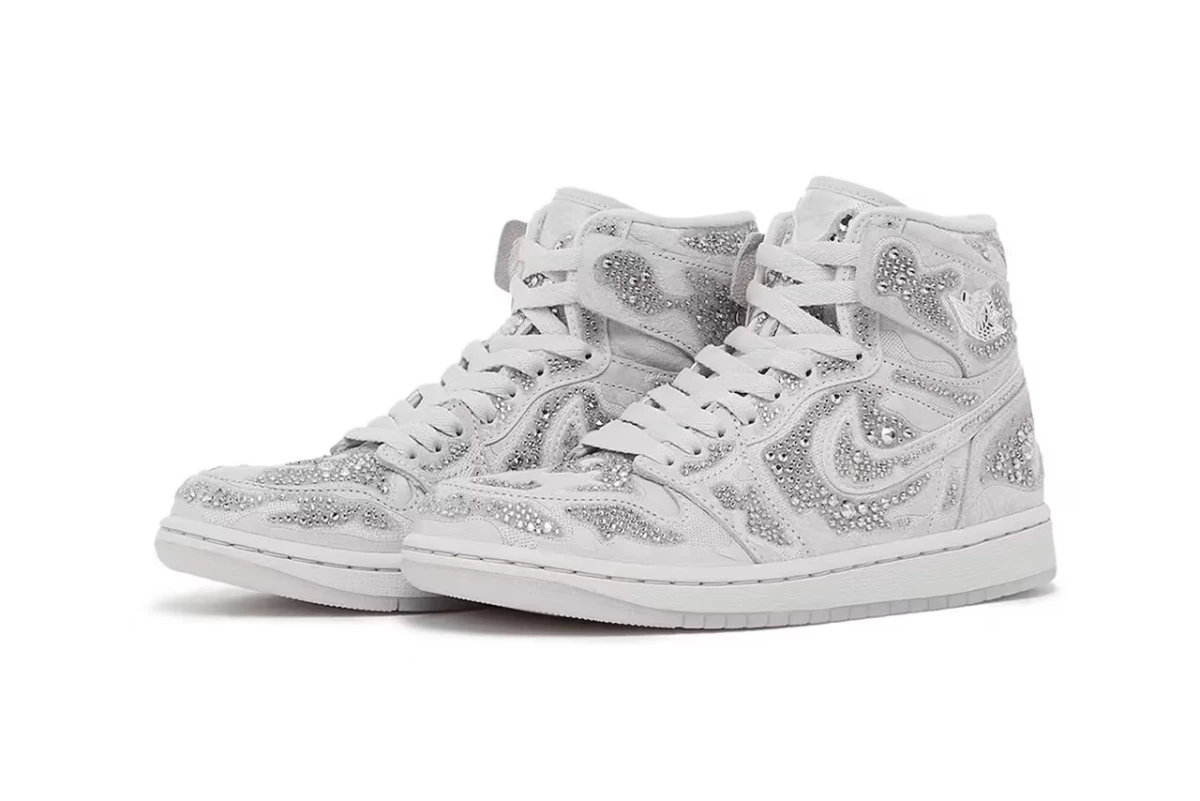
The shoe itself is a women’s Air Jordan 1 High OG in Vast Grey, covered in clusters of silver Swarovski crystals and sold at $1,005.
That alone explains part of the attention.
Crystal Detail Turns the Sneaker Into a Collectible
Nike and Swarovski are not taking this launch for granted.
The shoe is one of Nike’s most popular models, and by taking it to a slightly more collectible market where fashion, accessories, and sneakers intersect, they are giving it a level of exclusivity and uniqueness.
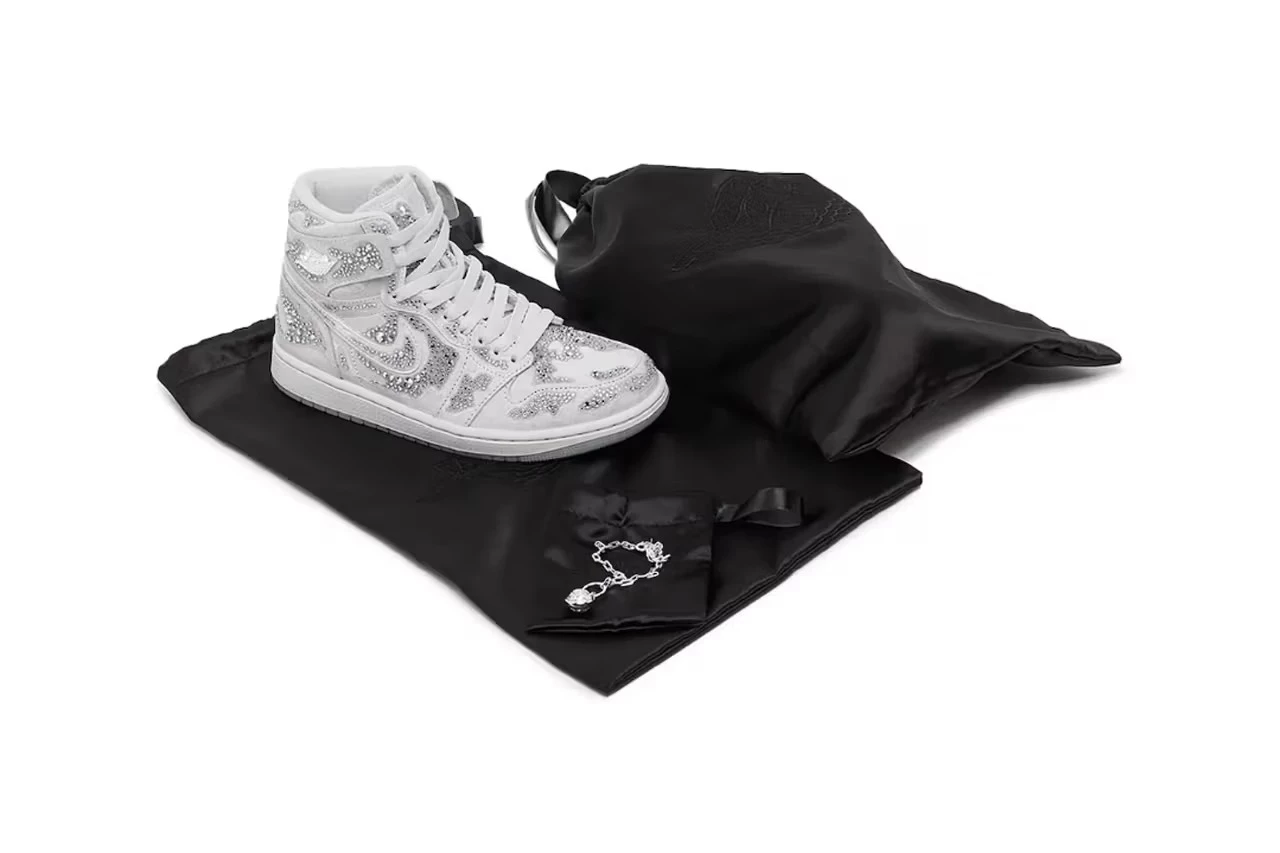
To go with the shoes, a consumer also gets a charm bracelet and three dust bags, one for each shoe and one for the bracelet.
Those extras matter.
They help frame the release less as a purchase and more as an object set, something closer to a luxury drop than a typical sneaker release.
This is also not a new relationship.
The two brands have worked together for years on flashier versions of Nike staples, including the Air Max 97, Air Force 1, Pegasus Premium, and Air Jordan 1 Low.
That history gives the new release some built-in momentum, especially among buyers who already associate the pairing with quick sellouts and resale traffic.
Scarcity Does Part of the Marketing
Scarcity is doing a lot of the heavy lifting here.
The release is limited, the price is high, and the previous drop sold out fast. Resale platforms were already positioned as the next stop once stock disappeared.
All of that creates a familiar loop where the product becomes desirable partly because access feels narrow from the start.
That does not mean the design is secondary. The crystal treatment is the hook people see first.
But scarcity sharpens the urgency around it, especially when the base silhouette is already one of the most recognizable shoes in Nike’s archive.
It also helps that this sits inside a wider pattern for Swarovski.
The brand has been expanding its collaboration model through Swarovski Creators Lab, with recent releases spanning sportswear, streetwear, and accessories.
Nike fits naturally into that line of thinking, but the Air Jordan name raises the cultural value of the release further.
- Limited drops create built-in urgency. They give audiences a reason to pay attention before the product is even gone.
- Extra accessories can elevate perceived value. They make the item feel more complete and more collectible.
- Familiar silhouettes lower the barrier to experimentation. People are more willing to accept a bold treatment when the base product is already iconic.
The scarcity angle is not hidden here. It is part of the appeal.
Our Take: Is the Product the Ad?
Yes, and it's one of the cleaner executions of that idea we've seen.
The shoe carries enough visual impact to generate conversation on its own, and the limited-run framing gives that attention somewhere to go.
Nike and Swarovski do not need a campaign story when the release itself already behaves like an event.
We believe controlled availability can do more than any long explanation when the visual asset is strong enough.
The product becomes the message, the launch becomes the content, and the sellout becomes the proof.
We believe that for brands working with strong visual assets, controlled availability can sometimes do more than a long explanation ever could.
That is what makes scarcity marketing effective at this level.
When Starbucks dropped its Bearista Cup, we saw the same thing: a $30 collectible sold out in hours and listed for over $1,000 on resale. A strong visual object, limited availability, and a secondary market that does the rest of the marketing.
The risk is over-reliance. Scarcity without substance eventually trains audiences to wait for resale rather than buy into the brand.
Some of the most effective product marketing still starts by making access feel just out of reach.
Explore top fashion marketing agencies in our directory.