
7UP is changing the flavor it helped make famous.
Keurig Dr Pepper is reformulating the nearly century-old brand for the first time in more than 15 years.
The company put a lime-forward recipe at the center of the new identity and the "Flip the Sip" campaign
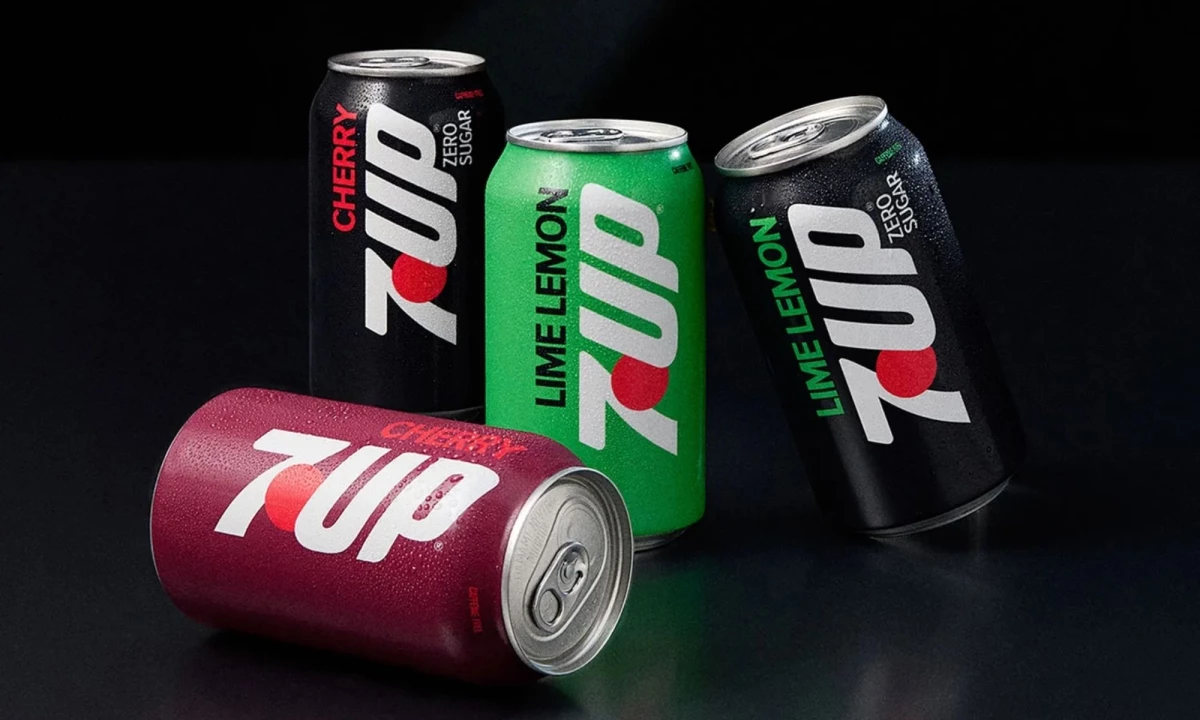
The reformulation affects 7UP Regular, 7UP Zero Sugar, Cherry 7UP, and Cherry 7UP Zero Sugar.
The new packaging gives "Lime" top billing over "Lemon," alongside a vertical logo and a stripped-down layout.
"7UP has an incredible legacy, but by giving lime the spotlight, we're rewriting the rules of the lemon lime category," Drew Panayiotou, KDP's chief marketing and innovation officer, said in a press release.
"We are transforming a beloved heritage brand into a modern disruptor, delivering a sharper visual identity, a more refreshing taste experience, and a distinct position that attracts new users and deepens brand loyalty."
New cans reach shelves nationwide starting in mid-August as existing stock sells through.
7UP launched in 1929 and created the lemon-lime category, yet it now sits a distant second to Sprite in the U.S.
Keurig Dr Pepper is testing whether almost 100 years of category credibility can give consumers a fresh reason to choose 7UP.
Lime Leads Across All Four Core Variants
According to the company's release, the Original Uncola is returning to its roots with "a renewed focus on differentiation."
7UP makes lime the leading citrus note, reversing the familiar "lemon-lime" order that has defined the category for nearly a century.
Circana data cited in the release puts the U.S. lemon-lime category at $5 billion in annual sales.
So even a small share gain justifies the cost of a reformulation.
Keurig Dr Pepper spent that budget on in-house preference testing before committing to the new profile.
Blind testers picked the new version and described it as crisper and more refreshing.
The sweeteners remain unchanged, keeping the core product familiar while changing the flavor cue the brand wants consumers to notice.
The recipe change moves 7UP's product differentiation into taste, where brand recognition alone has not kept it close to Sprite.
The Red Dot Survives a 10-Concept Cut
The packaging carries the same distinction argument as the recipe.
The new can strips down to a solid green field, a vertical 7UP logo, and black "Lime Lemon" lettering.
The red dot now peeks out from behind the U and crosses over the 7, and the wordmark spells UP in all caps.
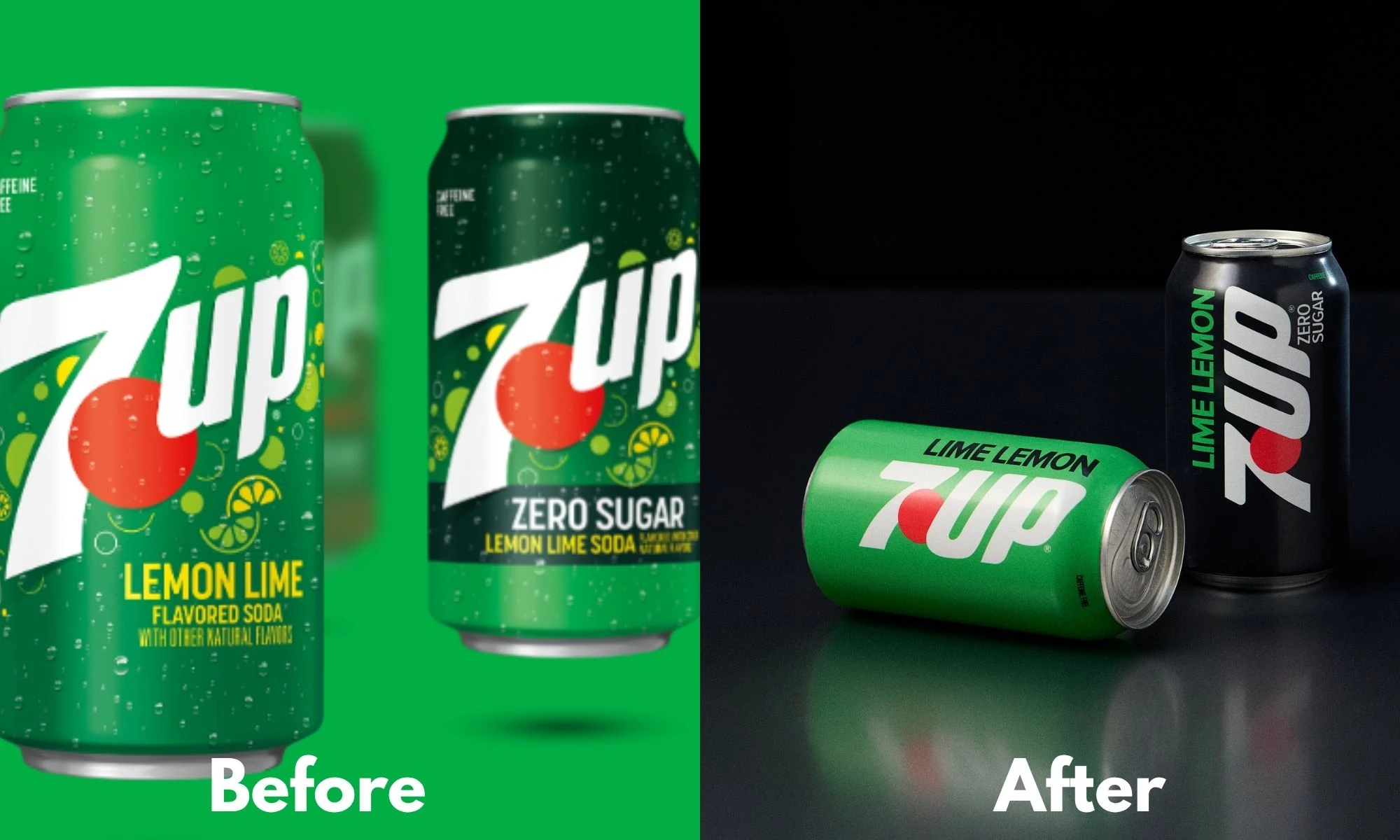
Keurig Dr Pepper found that the vertical placement sharply increased how quickly shoppers could locate the brand.
And the red dot acts as the strongest identifier.
An in-house team developed 10 packaging concepts with Chief Design Officer in Residence James Somerville and agency Deutsch LA before landing on this one.
Somerville's team kept 7UP's most recognizable assets while making the new flavor hierarchy impossible to miss.
Sprite ran its own global refresh in March 2026, moving its wordmark vertically on cans and bringing back the Lymon symbol.
Both lemon-lime leaders reached for vertical logos within five months, pointing to shelf visibility as the current driver of packaging design.
Shoppers can see the difference for themselves once the cans hit stores.
The Flavor Trend Runs Into a Sprite Problem
Keurig Dr Pepper commissioned the 2026 State of Beverages Trend Report, which gives 7UP a clear consumer rationale for the change.
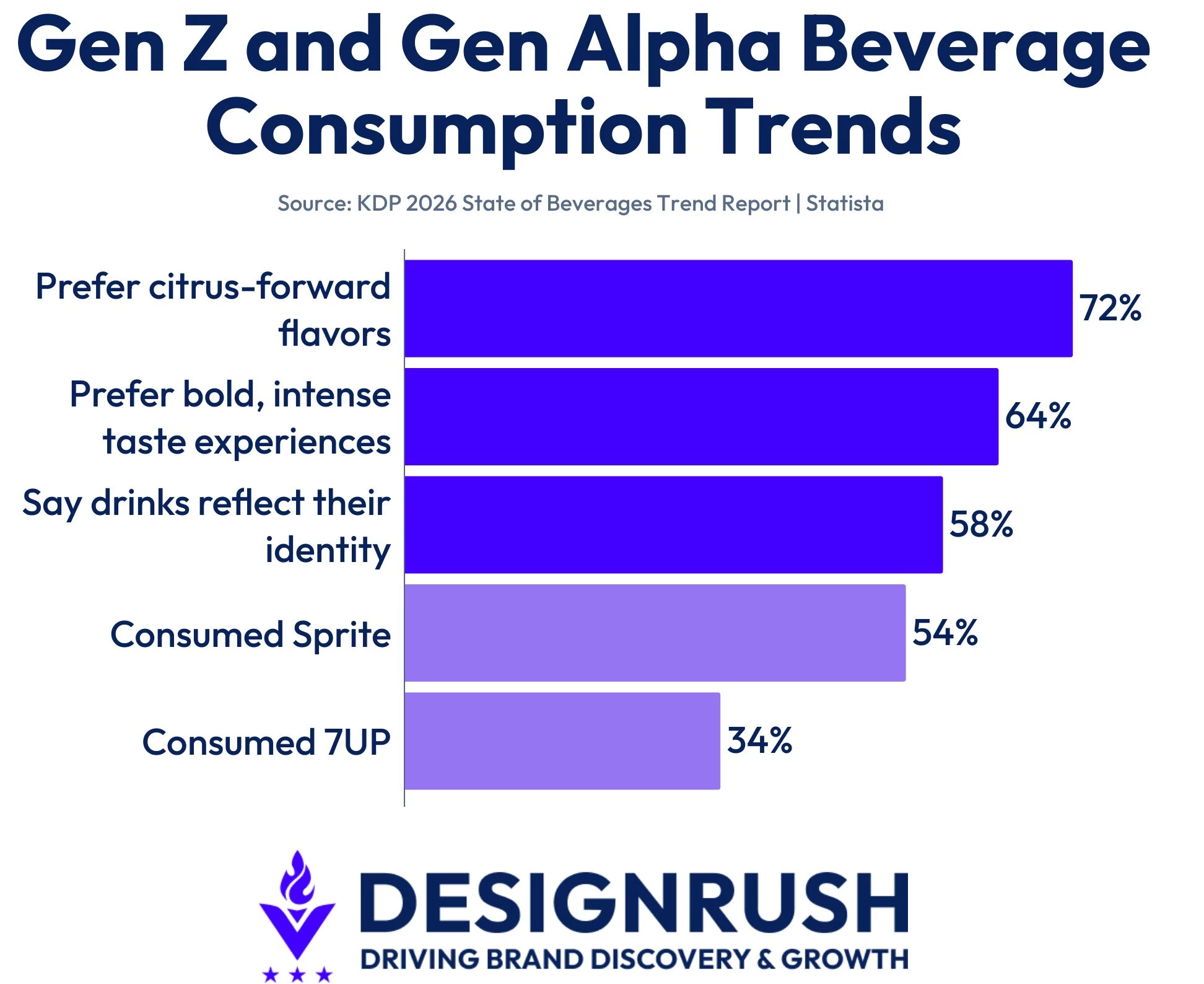
According to the report, 72% of Gen Alpha and Gen Z gravitate toward citrus-forward flavors, and another 64% prefer intense flavor profiles.
The numbers give the brand a consumer signal for pushing lime forward.
Meanwhile, Statista's 2025 survey of Gen Z Americans found that 54% had consumed Sprite in the past 12 months, compared with 34% for 7UP.
The 20-percentage-point gap highlights the challenge that 7UP faces in competing with Sprite for younger drinkers.
The numbers point to three implications for brands competing in mature beverage categories:
- Familiarity is not brand leadership. Heritage brands should identify the single product attribute that can create renewed distinction.
- Trend data needs a product decision attached. Marketers should convert consumer preference research into a change that customers can taste or see.
- Big category gaps demand an ownable cue. Challenger brands should pick one sensory signal they can defend against a dominant rival.
Whether 7UP can turn Lime Lemon into the clearest reason to pick the product up is the test the campaign has set for itself.
Our Take: Can Lime Make 7UP a True Competitor Again?
Lime Lemon is the rare brand element that survives the press cycle, because it changes what the product tastes like and what the label says.
And we think that it makes 7UP a real competitor on distinctiveness, though not yet on volume.
Sprite spent March 2026 tightening its own external visual identity without touching the liquid inside.
Coca-Cola treated Sprite's problem as attention, while Keurig Dr Pepper treated 7UP's as sameness.
The risk is that longtime 7UP drinkers notice the change and read it as a loss, which would cost the brand familiarity without buying it Gen Z.
The test comes at the shelf, where Sprite has been the default pick for decades.
If shoppers stop reaching automatically and start reading the can, 7UP will have bought itself a durable challenger position.
Need to make a legacy brand more distinctive?
Explore these top branding agencies that can connect brand heritage with a sharper market position.