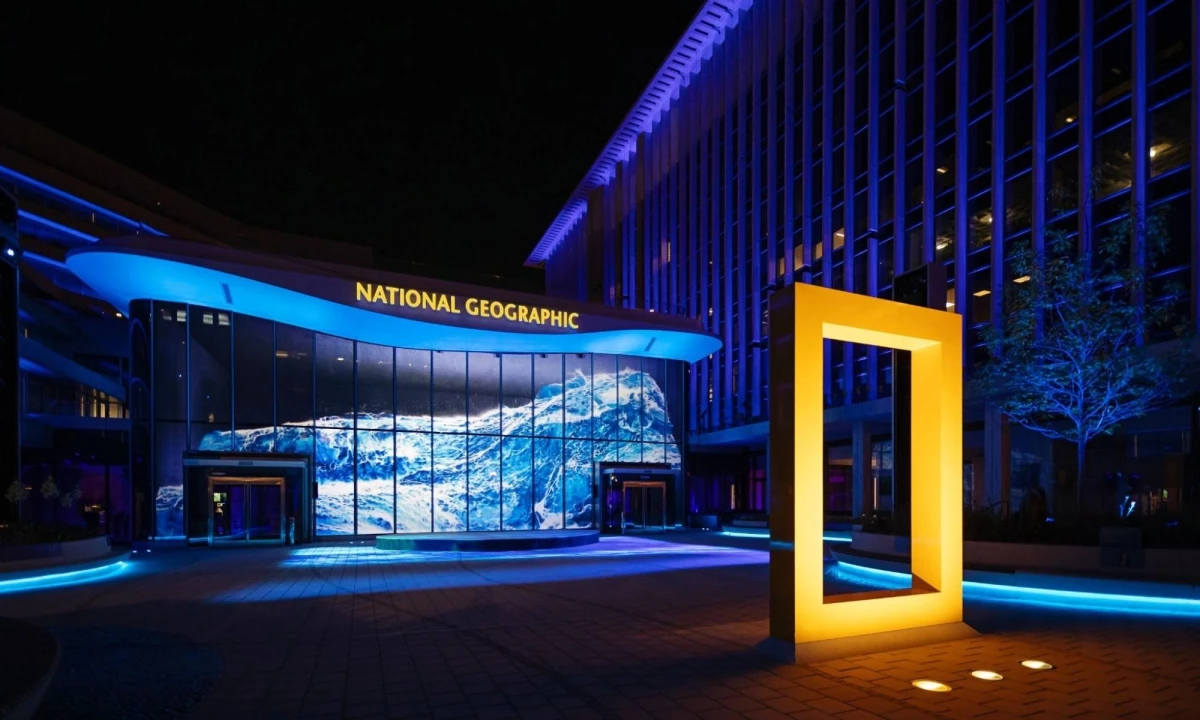

The National Geographic Museum of Exploration opened in Washington, D.C., with three immersive experiences.
Created with Moment Factory, the museum forms part of the National Geographic Society's largest campus expansion in nearly 130 years.
Following a multi-year collaboration, the entertainment studio developed a nighttime projection show, an interactive education hub, and a touring exhibition.
All of these experiences bring National Geographic's archives, research, and conservation work into large-scale digital environments.
Each one supports the nonprofit's educational mission and gets visitors to engage with science by taking part through actual participation.
National Geographic Society Chief Campus and Experiences Officer Emily Dunham praised the work in a press release:
"Moment Factory has continually shown the utmost respect and care for our history and mission, while finding creative new ways to bring the work of our Explorers to life."
The result, she added, is a set of experiences that leave guests in awe of the planet and the people protecting it.
Museums increasingly compete on experience, which makes immersive technology central to getting visitors through the door.
Three Experiences, One Mission
Moment Factory approached each installation with a different creative objective while maintaining a consistent educational purpose.
"Wonders of Our World: Ocean" transforms the museum courtyard into a 360-degree projection environment.
It is brought to life through large-format visuals, dynamic lighting, spatial audio, and an orchestral score.
Authentic footage captured by explorers is enhanced with custom visual effects while preserving the integrity of the original imagery.
Inside the museum, "Geoverse" features a 270-degree projection wall, an interactive floor, and spatial audio for two educational programs.
The space incorporates bilingual closed captions and American Sign Language video guides following user testing with children.
The museum's exhibition gallery premieres "Photo Ark: Animals of Earth."
It presents over 1,000 wildlife portraits across immersive environments designed to encourage conservation awareness before traveling globally.
The project illustrates how cultural institutions can make archival content repeatable visitor experiences that deepen engagement.
Photo Ark even tours globally, so the material Nat Geo already owns keeps earning, showing how a smart content strategy finds fresh value in old assets.
Immersive Museums Gain Ground
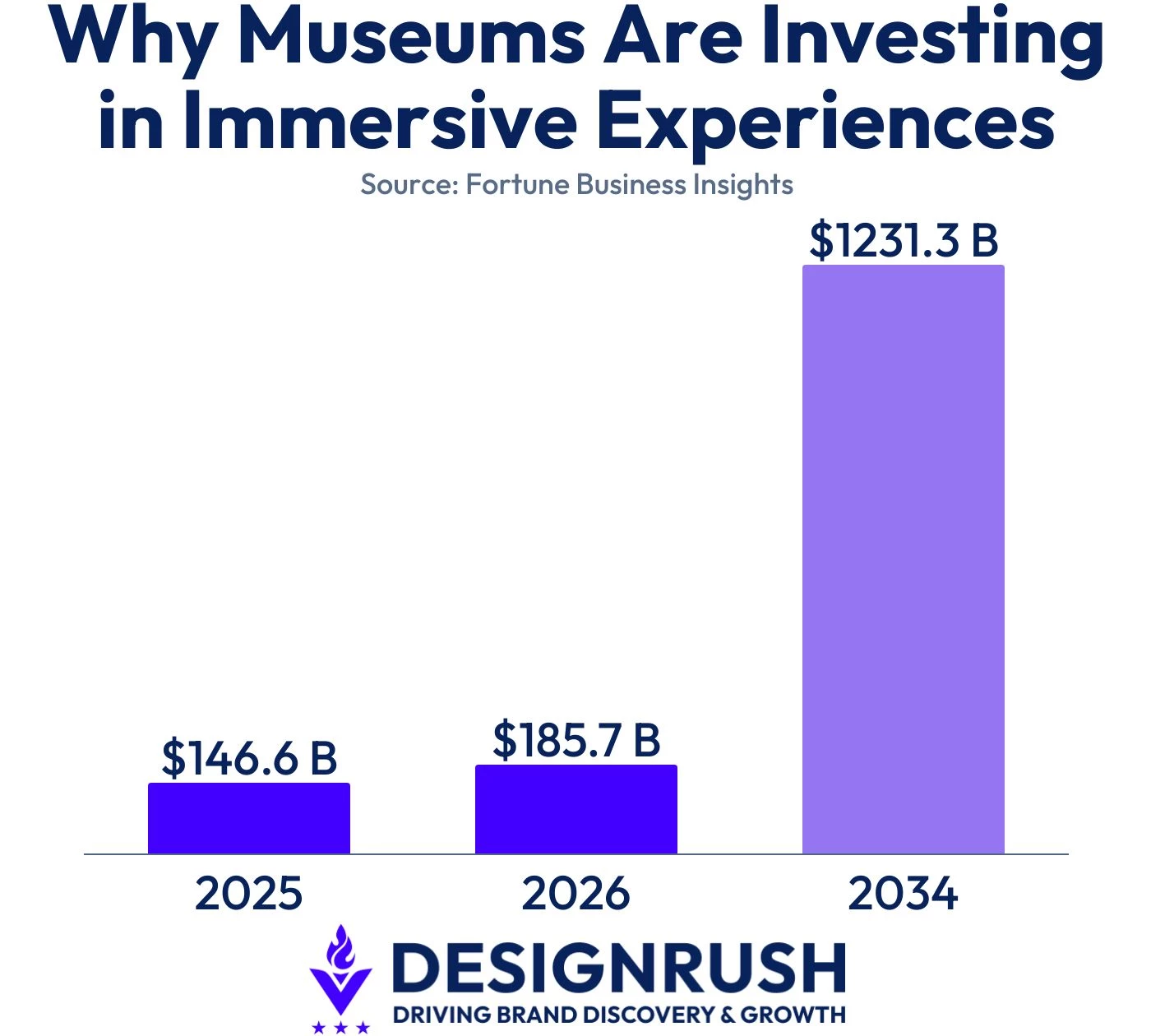
The global immersive entertainment market is projected to reach $1.2 trillion by 2034, up from $146.4 billion in 2025.
This growth reflects sustained demand for location-based experiences across museums, attractions, and cultural institutions.
A meta-analysis also found that students in active-learning environments were 1.5 times less likely to fail.
The findings support why museums are incorporating participatory experiences that encourage exploration over mere observation.
Brands and cultural institutions can apply the same principles to strengthen visitor engagement.
- Educational experiences work via participation. Organizations should incorporate interactive elements that encourage discovery to improve retention.
- Existing archives have untapped commercial value. Institutions should reinterpret collections across formats to extend the lifespan of content.
- Accessibility strengthens audience reach. Teams should design campaigns with inclusive tech from the beginning to make experiences relevant.
Combining tech, education, and accessibility into physical spaces creates valuable experiences for both adults and children.
Our Take: Can Immersive Design Make Conservation More Personal?
One of the museum's strongest decisions is its emphasis on scientific accuracy alongside visual immersion.
Features like accessibility testing, bilingual captions, and ASL guides demonstrate that experience design extends into thoughtful audience inclusion.
We should also recognize that immersive environments require continual investment to remain relevant.
Without refreshed programming or evolving content, repeat visitation could decline after initial curiosity fades.
The next competitive advantage may come from treating the tech as a platform that evolves alongside conservation efforts and public education.
Finding the right creative partner can help institutions translate education into memorable physical experiences.
Explore these top experiential marketing agencies to create attractions that encourage longer visits and stronger audience participation.