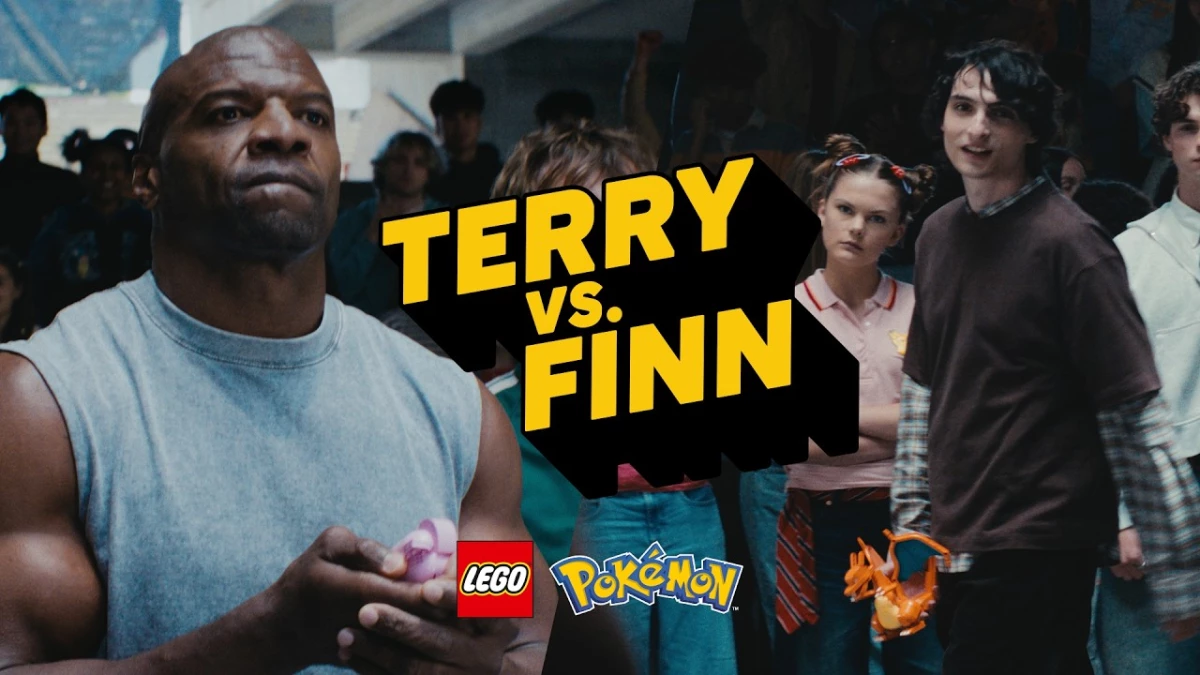

Terry Crews just picked Jigglypuff for a fight, and he sounds completely serious about it.
The LEGO Group cast Crews and Finn Wolfhard as dueling Pokémon Trainers.
The pair used their own socials to reveal an unlikely matchup ahead of the new LEGO Pokémon SMART Play line.
Wolfhard went with Charizard, the franchise's signature powerhouse, while Crews picked a Pokémon nobody drafts for a serious battle.
The two picks sit on opposite sides of LEGO's product line.
Charizard arrives in a $119.99 set with the SMART Brick already inside, and Jigglypuff costs only $14.99, staying silent until a buyer owns one.
"Terry is an amazing actor, but he won't be acting surprised when my LEGO Charizard and I beat them," Wolfhard said, needling his co-star ahead of the showdown.
Crews answered just as fast:
"Beat us? Trust me, if there is one person on this planet who knows something about training – it's me! Anyway, it's not all train, train, train."
The full battle premiered on LEGO's socials after weeks of build-up that read like real celebrity beef.
Both sets were already sitting on shelves by the time anyone watched the punchline.
12 Sets, Two Product Tiers
LEGO staged the rivalry to set up a real product launch.
The toy brand released 12 new Pokémon SMART Play sets on August 1, including both picks from the fight.
The Charizard vs. Jolteon Ultimate Battle runs $119.99 for 751 pieces and ships with two SMART Bricks, a charger, and four SMART Tags.
Jigglypuff Concert runs $14.99 for 88 pieces and ships with a SMART Tag alone.
The sets run on more than 20 patented pieces of technology that make the builds react through light, sound, motion, and sensing, all without a screen.
Only the All-in-One sets carry the SMART Brick, so the cheaper builds do nothing until a buyer picks up one of the two starter kits.
Select LEGO stores in launch markets are also hosting live demos so fans can see the sensing tech before they buy.
The push continues until August 28 to 30 at PokémonXP, staged alongside the 2026 Pokémon World Championships in San Francisco.
Guests move through a Bonding Zone and a Training Zone before a final in-person battle challenge.
The event will also have a Trophy Make & Take activity, photo spots with life-size brick-built Pokémon, and an exclusive SMART Tag reward.
This latest arc gives fans a scripted story to follow online in August, then a physical space to finish it in person weeks later.
The price gap turns the casting into a product ladder, where the cheap set is the entry point, and the expensive one is the requirement.
LEGO gets promotional marketing where the joke and the upsell run on the same track.
A Fake Feud With Nothing to Prove
LEGO can stage a fake rivalry because Pokémon has almost nothing left to prove.
Pokémon turns 30 this year, and The Pokémon Company has ranked among License Global's top 10 licensors on the strength of its merchandise alone.
LEGO doesn't need to explain who Pikachu or Charizard is. It only needs a reason for a fan to open a specific box on a specific day.
It has run this kind of timed stunt before.
Weeks earlier, LEGO hid 333 brick-built vinyl records in record stores worldwide for its Olivia Rodrigo set, timed to her album release.
The SMART Play push follows the same logic, folding into Pokémon's 30th anniversary window so the launch reads as part of an event fans are tuned into.
Three things make this unexpected rivalry work:
- Contrasting talents can serve specific narratives: Pairing a star with an unexpected pick creates tension worth watching.
- Split one campaign across two audience segments: Give each spokesperson a different entry point so the content pulls in both die-hard fans and casual viewers.
- Let the release date arrive mid-story: Put the product on sale before the payoff content goes live, so anyone following the story already has somewhere to act on it.
LEGO used two famous names dueling over toy creatures to make a screen-free tech launch feel like appointment viewing.
Our Take: What Makes This Strategy Worth Copying?
The smart part of this play is how much it sounds like two actual fans arguing, not two actors reading lines.
The campaign reads like something real Pokémon players post.
Crews defending an underdog Pokémon reads as pure comedy, and it also describes what his set does without Wolfhard's.
The distance between the two picks is $105, and LEGO is counting on it looking like a natural second purchase.
We think that the authenticity is what lets LEGO get away with pairing two names whose fanbases don't obviously overlap.
A comedian with a family-friendly following and a "Stranger Things" lead with a younger, online-native audience don't make sense on paper.
But now that we see it, it feels natural in a Pokémon battle.
Casting the mismatch meant the campaign could pull from both fanbases at once without either one feeling like an afterthought.
Looking to turn cultural IP and fandom into product ecosystems?
Find top experiential marketing agencies specializing in experiential and product storytelling to compare execution models across industries.