
Minecraft World Theme Park: Key Findings
- Merlin Entertainments and Mojang Studios are building a $70 million Minecraft theme park set to open in 2027.
- Minecraft World will feature a roller coaster, interactive adventures, and themed retail and dining, with popular Minecraft creators helping with the build.
- The announcement follows "A Minecraft Movie" grossing nearly $1 billion at the box office in 2025, adding a theme park to the massive IP ecosystem.
Minecraft, the best-selling video game of all time, is getting its own theme park.
Behind its development is Merlin Entertainments, which operates several theme parks, and Mojang Studios, the developer behind the game.
The two parties confirmed the $70 million project will open in 2027 at the Chessington World of Adventures Resort, about 35 minutes from central London.
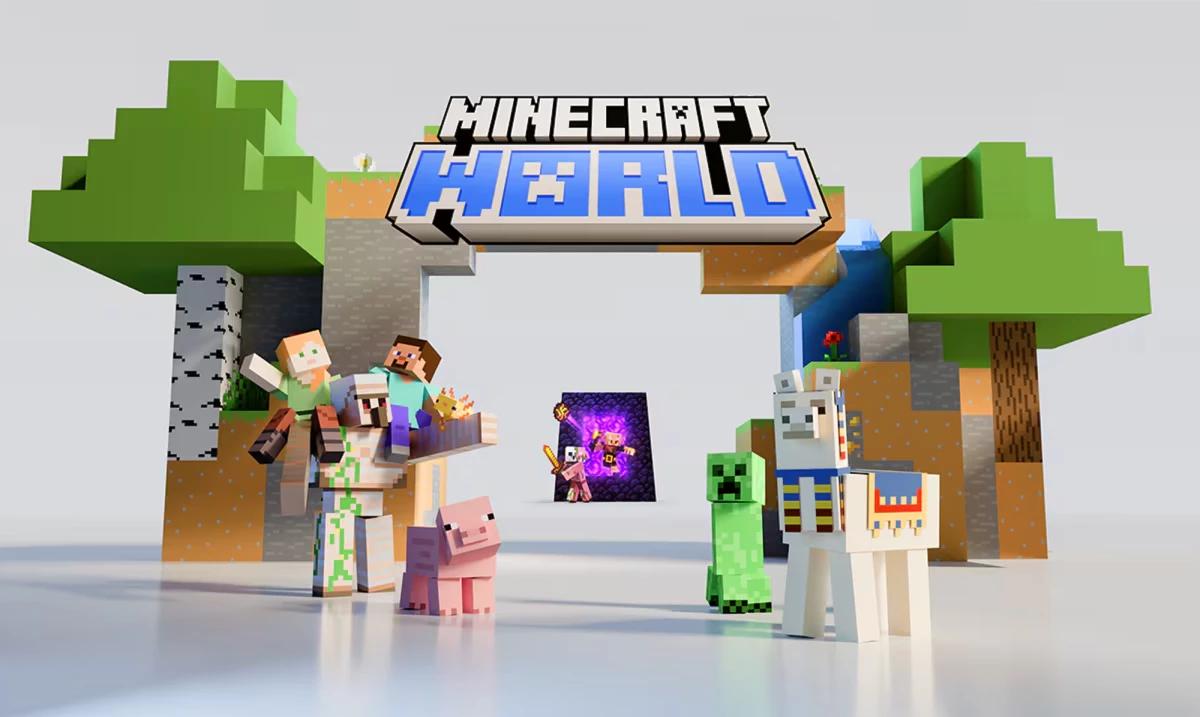
Minecraft World will include a roller coaster, interactive adventures, block-built playscapes, and themed retail and dining areas.
A selection of prominent Minecraft content creators, including Grian, Aimsey, DanTDM, and LDShadowLady, have been brought in to consult on the build.
The announcement was made at Minecraft Live, with concept images showing landscapes and creatures drawn directly from the game, including Creepers, zombies, and pigs.
The move is a textbook example of how video game IP, when nurtured across decades and multiple formats, can become a physical retail and experiential marketing strategy in its own right.
From Screen to Site
Minecraft launched on PC in 2011 and has since sold more than 300 million copies, making it the best-selling video game ever.
Its reach on YouTube alone has generated over one trillion views, reflecting a fanbase that has been building creative loyalty to the IP for well over a decade.
Last year, A Minecraft Movie grossed nearly $1 billion at the box office, showing how the game's audience has extended into mainstream family entertainment.
The theme park deal with Merlin has been in development for around eight years, according to Merlin's Angela Jobson, suggesting the commercial groundwork was laid before the film accelerated public interest.
Kayleen Walters, Head of Mojang Studios, was also clear about what's driving it.
"We know people want more of Minecraft. They want to be immersed in it in different ways," she said in an interview with the BBC.
"You're going to smell and taste and feel and touch and just be surrounded by all things Minecraft."
The team also built parts of the park inside the game itself and workshopped designs directly with the Minecraft community.
This level of community relations is carefully considered groundwork and is likely to give the park much more credibility with its dedicated fanbase.
The IP Expansion Strategy
Minecraft World is the latest in a growing line of creator and video game IPs moving into physical entertainment.
Super Nintendo World opened at Universal Studios Japan in 2021 and has since expanded to the U.S.
MrBeast also opened his first physical theme park in Riyadh late last year, showing that audience-first brands are finding their own routes into the experience economy.
Each of these activations follows the same underlying logic, where the IP already has the audience and the physical experience gives that audience somewhere to go.
Minecraft has generated consistent revenue for over a decade, pulling in an estimated $415 million in 2020 and $380 million in 2021 at the height of pandemic-era gaming.
Revenue has since normalized to around $220 million in 2025, but monthly active players have continued to climb, reaching over 200 million globally.
For brands, an audience of this magnitude is a foundation that justifies the kind of multi-format investment Mojang is now making.
The Minecraft World announcement carries clear signals for anyone thinking about IP, experience marketing, and long-term brand building:
- Community involvement strengthens IP authenticity: Building the park in-game and consulting fans early gives the project credibility before it opens.
- Creator partnerships extend announcement reach: Four of YouTube's biggest Minecraft creators touring the site generates organic content no press release can replicate.
- Long-term IP investment compounds across formats: A decade of consistent investment took Minecraft from game to film to theme park.
The park opens in 2027, and if the film's performance is any guide, it's unlikely that demand will be the problem.
Our Take: Is Physical the Next Frontier for Gaming IP?
We think it is, and Minecraft is probably the strongest case study the industry has right now.
Three hundred million copies sold and a trillion YouTube views are incredible numbers.
However, what they really represent is a generational audience that has grown up with this IP and is now old enough to bring their own children to a theme park built around it.
That multigenerational pull is what separates Minecraft from most gaming IPs, and it's the reason Merlin committed $70 million to a single attraction.
The creator involvement is smart too, as it keeps the announcement inside the Minecraft community's own media ecosystem, where trust is high.
In other news, Sony Pictures just confirmed a Labubu feature film directed by Paul King, which is another example of collectible IP making the jump into mainstream entertainment formats.
Brands looking to develop gaming or entertainment IP into physical experiences need agencies that understand fan communities and long-term franchise strategy.
Check out the top experiential marketing agencies in our directory.