
Minecraft is about to let fans sleep in the Overworld and ride a minecart out of the Nether.
The people writing the check for that trip are the parents who have watched from the couch for a decade.
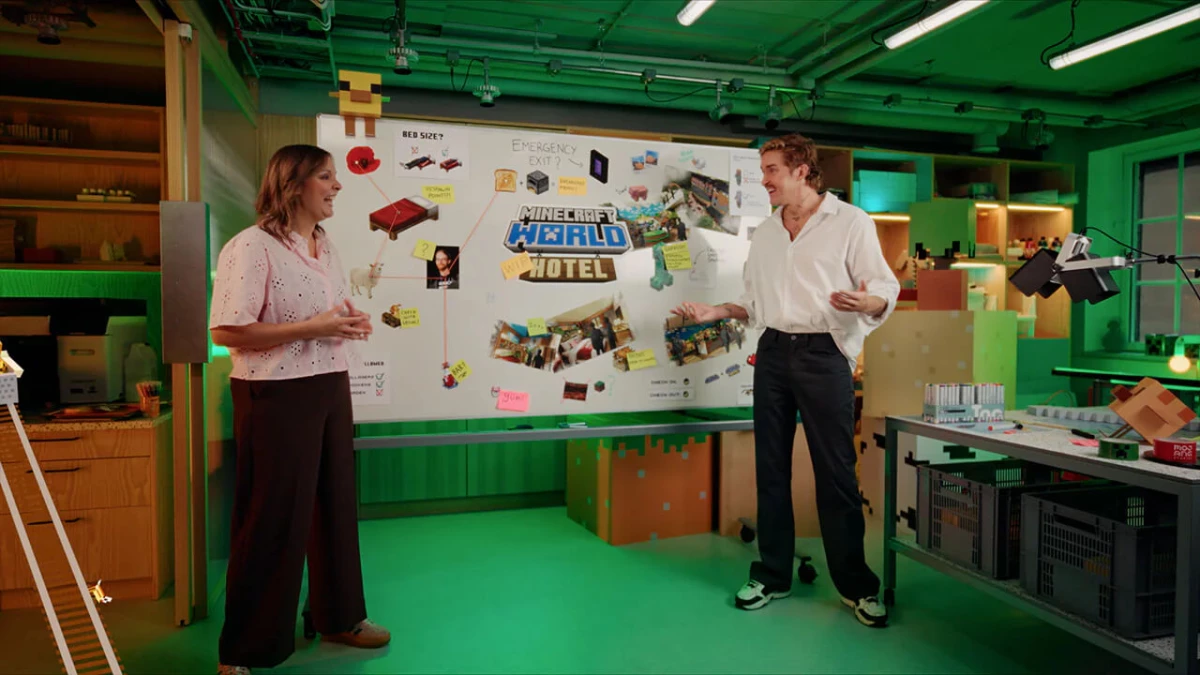
Mojang Studios and Merlin Entertainments revealed the very first hotel and coaster for Minecraft World.
It's the game's themed land at Chessington World of Adventures Resort in southwest London.
Announced during the September 26 edition of Minecraft Live, both attractions are set to open in 2027, with an exact date still to be revealed.
Merlin Entertainments Creative Producer Daisy Mercedes fronted the update with Filip Keatley Thoms, Mojang's creative lead for Minecraft Parks and Experiences.
The coaster is named "Escape the Nether," while the hotel is billed as the world's first Minecraft hotel.
Merlin first announced the land at the March 21 edition of Minecraft Live as a £50 million project, roughly $67 million.
Creators including Grian, Aimsey, DanTDM, and LDShadowLady consulted on the build, and the team constructed parts of the park inside the game.
This groundwork followed "A Minecraft Movie," which grossed nearly $1 billion at the box office in 2025.
The film proved that Minecraft could sell tickets to parents who have never played the game.
Chessington tests whether these same parents will book a room for their kids, a much harder ask and a bigger win for co-branding at this scale.
Checking In to the Overworld
Escape the Nether starts, like the game, in a minecart.
Riders join Steve and Alex on a run through the fiery dimension, face hostile mobs, and get launched back to the Overworld.
The ride runs through dark mines indoors, then bursts out of the building through a Nether portal into the Overworld area.
The hotel holds the theme from arrival.
Merlin is fitting 69 rooms across four floors, split into 20 premium and 49 standard.
Check-in looks like the Overworld, with blocky trees and animals, while the lifts are styled as Nether Portals, and the hallways resemble mine tunnels.
Rooms, which the hotel calls respawn points, use Minecraft's blocks, items, mobs, textures, and colors.
The Deep Sea Diner draws on the game's ocean biomes. The bar takes its look from the Woodland Mansion and serves drinks styled as potions.
The wider land adds areas inspired by lush caves, mineshafts, and plains, plus mob meet-and-greets, play areas, and themed shops.
The same Live show confirmed the Sift, Minecraft's first new dimension in over 14 years, for 2027.
Minecraft Dungeons II launched September 29 and lets players walk the Sift ahead of everyone else.
All in all, the park reads as experiential marketing at franchise scale, with every room, ride, and drink serving as a branded touchpoint fans can share.
The Overnight Stay Play
Pop culture properties are starting to create physical footprints across the board, too.
Pop Mart opened Pop Bakery at Resorts World Sentosa in Singapore on July 30, giving Labubu fans a place to spend time with the characters.
Merlin is working at a different scale, because a bakery sells an afternoon while a hotel sells a weekend.
And the audience behind this spend is large.
Xbox CEO Asha Sharma used the same broadcast to confirm Minecraft has sold more than 425 million copies.
Around 212 million people play monthly, and 300,000 of them are trying the game for the first time on any given day.
Minecraft World's hotel points to three moves any brand with a loyal following can copy:
- Label real-world touchpoints with your product's own vocabulary: Lifts styled as Nether Portals and rooms called respawn points let fans recognize the game at every step of a stay.
- Sell the night, not the ticket: A hotel, restaurant, and bar stretch a single visit across dinner, bedtime, and breakfast.
- Announce on a stage you own: Revealing the hotel during Minecraft Live put the news in front of the players most likely to travel for it.
Physical spaces convert loyal fans when every detail matches what they already know from their screens.
Our Take: Why Does a Game Need a Hotel?
Plenty of Minecraft players have a parent who has watched them play for years and still can't explain what the game is.
We think a hotel fixes this in one night.
A parent sleeping in a room made of the same blocks their kid has stacked a thousand times finally gets the appeal from the inside.
This approach gives the hotel a direct line to the person holding the wallet.
The lobby, the bar, and the breakfast table are built for the grown-ups, who get a reason to care about a game they've only ever watched from the couch.
Any brand with a young, devoted audience runs into the same gap between who loves the product and who approves the spend.
A physical space is one of the few places that gap closes.
Minecraft has had 17 years to win the kids, and the hotel is where it finally invites the adults in.
Brands looking to develop gaming or entertainment IP into physical experiences need agencies that understand fan communities and long-term franchise strategy.
Check out the top experiential marketing agencies in our directory.