
Goodwill's retail success created an unexpected branding challenge.
The organization has become so recognizable as a retailer that some shoppers don't realize it's a nonprofit.
Young & Laramore addresses the gap with "The Stuff Your Stuff Can Do" campaign.
"In some ways, I think it's an unintended consequence of Goodwill's success," Trevor Williams, principal and executive creative director at Young & Laramore, told DesignRush.
"They've built an incredibly recognizable retail brand, but for many people, especially younger generations, that's where their understanding of Goodwill begins and ends."
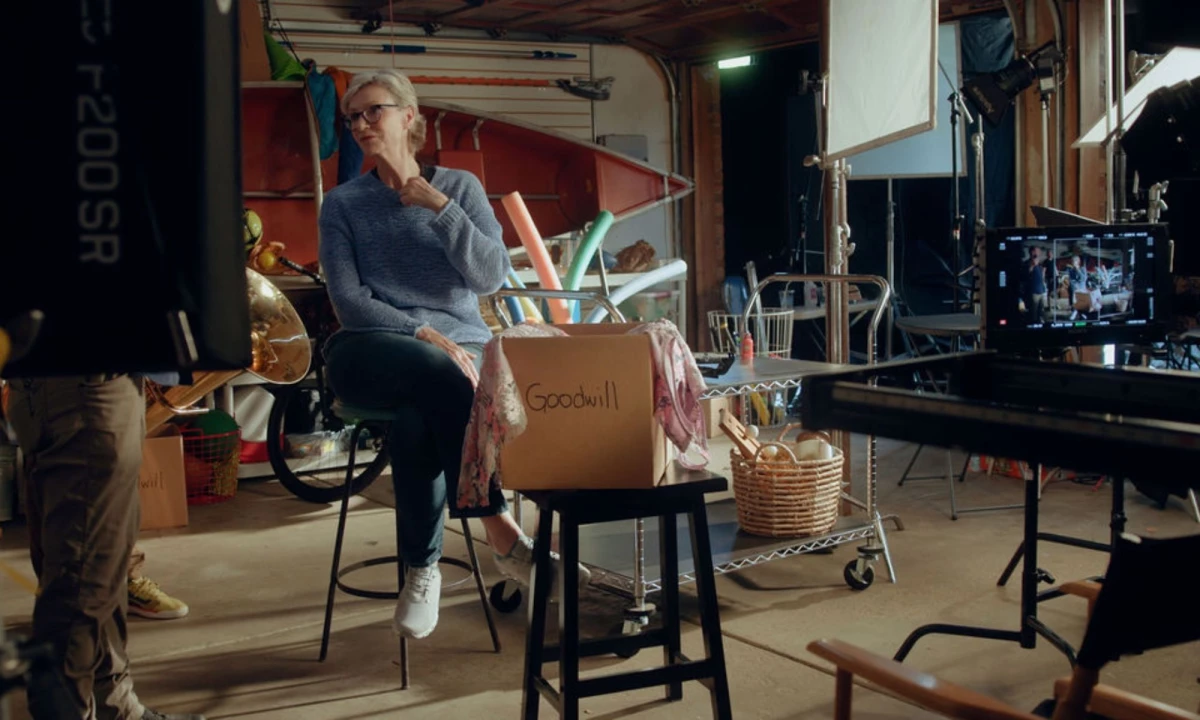
Emmy winner Jane Lynch directs three musical spots showing how donated household items fund the NPO's programs.
The awareness campaign revisits a brief the Indianapolis agency tackled in 2024.
It also arrives as Goodwill expands under Goodwill Legacy Group, a parent network formed in March 2026.
After 30 years together, the agency and client are revisiting a brand challenge that's ironically rooted in the success of their earlier work.
Glee's Lynch Sets Goodwill's Nonprofit Work to Music
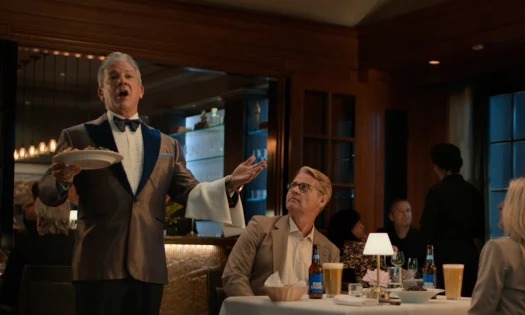
"The Stuff Your Stuff Can Do" uses musical comedy to explain what happens after someone donates unwanted household items.
Each film follows an enthusiastic Goodwill employee who interrupts potential donors with a song about an item's potential community impact.
The "Tuba Stuff" spot connects donations to healthcare.
"Basement Stuff" focuses on housing, while "Kid's Stuff" highlights employment.
The creative also gives unexpected household objects starring roles.
A porch goose helps someone finish school, while a beanbag chair helps another person find a job.
Some featured objects came from actual Goodwill items purchased by the creative team and their families.
Lynch's role encompassed directing, performance development, choreography, and theatrical tone.
The films move from ordinary situations into heightened musical sequences.
The Glee alum also recruited longtime collaborator Tony Guerrero to compose the original music.
Guerrero worked with Lynch for more than a decade, including on her touring cabaret show, "See Jane Sing."
STORY produced the campaign, which will run across central and southern Indiana and central Illinois.
Williams added that the creative team wanted to make Goodwill's mission entertaining and uplifting.
"The opportunity isn't to introduce them to Goodwill. It's to introduce them to everything Goodwill makes possible," Williams told DesignRush.
He said the premise was that unwanted possessions could help someone else access new opportunities.
"The things you're done with can help someone else get started," Williams said.
The campaign targets female donors ages 18-55, with particular focus on women ages 24-35.
Goodwill identifies this group as a major source of donations and an audience with a significant perception gap.
Y&L Rewrites Goodwill's Brief After 30 Years
When Young & Laramore began working with Goodwill in 1996, the assignment was to change how consumers perceived the organization.
"Thirty years ago, our first job was to help revitalize the Goodwill brand and change the way people thought about it, shifting the view from a dusty charity to a legitimate discount retailer," said Tom Denari, president and CEO of Young & Laramore.
The full-service agency helped Goodwill compete with mainstream retailers such as Target and Walmart.
Its early advertising strategy focused on giving consumers reasons to shop at Goodwill.
The partnership produced roughly 70 advertising concepts, according to Kent Kramer, president and CEO of Goodwill Legacy Group.
The total approaches 100 when alternate versions and endings are included.
Several campaigns became part of Goodwill's local identity. These include "Goodwill Guy," "Little Black Dress," "Penny," and "Fashion Zombies."
In "Little Black Dress," the Goodwill Guy teased viewers about which local store would get a prized donated dress.
This success eventually created another brand problem.
Kramer described this progression as a natural change in the organization's marketing needs.
"Thirty years ago, we were trying to change the perception of Goodwill from a 'dusty' charity full of used clothing into a legitimate discount retailer."
"Eventually, our success as a retailer became so strong that some people didn't realize we were a nonprofit," he added.
The agency addressed this challenge in April 2024 with "How Good Is Made."
The campaign used donated jeans, a kitchen table, and a lamp to explain how resale proceeds support education, health, and employment.
Goodwill's donor research found that people would be more likely to donate, or donate more often, if they understood the impact of their contributions.
The latest campaign revisits the same communications challenge with a different creative approach.
4 Numbers Back Goodwill's Donor Pitch
The latest campaign also arrives during a period of organizational consolidation for Goodwill.
In June 2025, Goodwill of Central Illinois and Goodwill of Central & Southern Indiana announced plans to merge.
Goodwill of Central & Southern Indiana also agreed to merge with Indianapolis nonprofit Horizon House in July 2025.
The changes brought together organizations working across employment, education, housing, and healthcare.
Goodwill Legacy Group formed in March 2026 as a parent network connecting operations in Indiana, central Illinois, and Puerto Rico.
The new structure gives the organization a shared brand identity while preserving its regional operations and community relationships.
Young & Laramore isn't the only agency involved in the organization's brand work.
Williams Randall developed the Goodwill Legacy Group launch landing page.
The project introduced the parent organization's structure, explained its relationship with the regional operations, and presented its community impact.
Y&L continues its longstanding creative relationship with the organization, while Williams Randall handled a separate digital branding assignment.
4 Measures of Goodwill
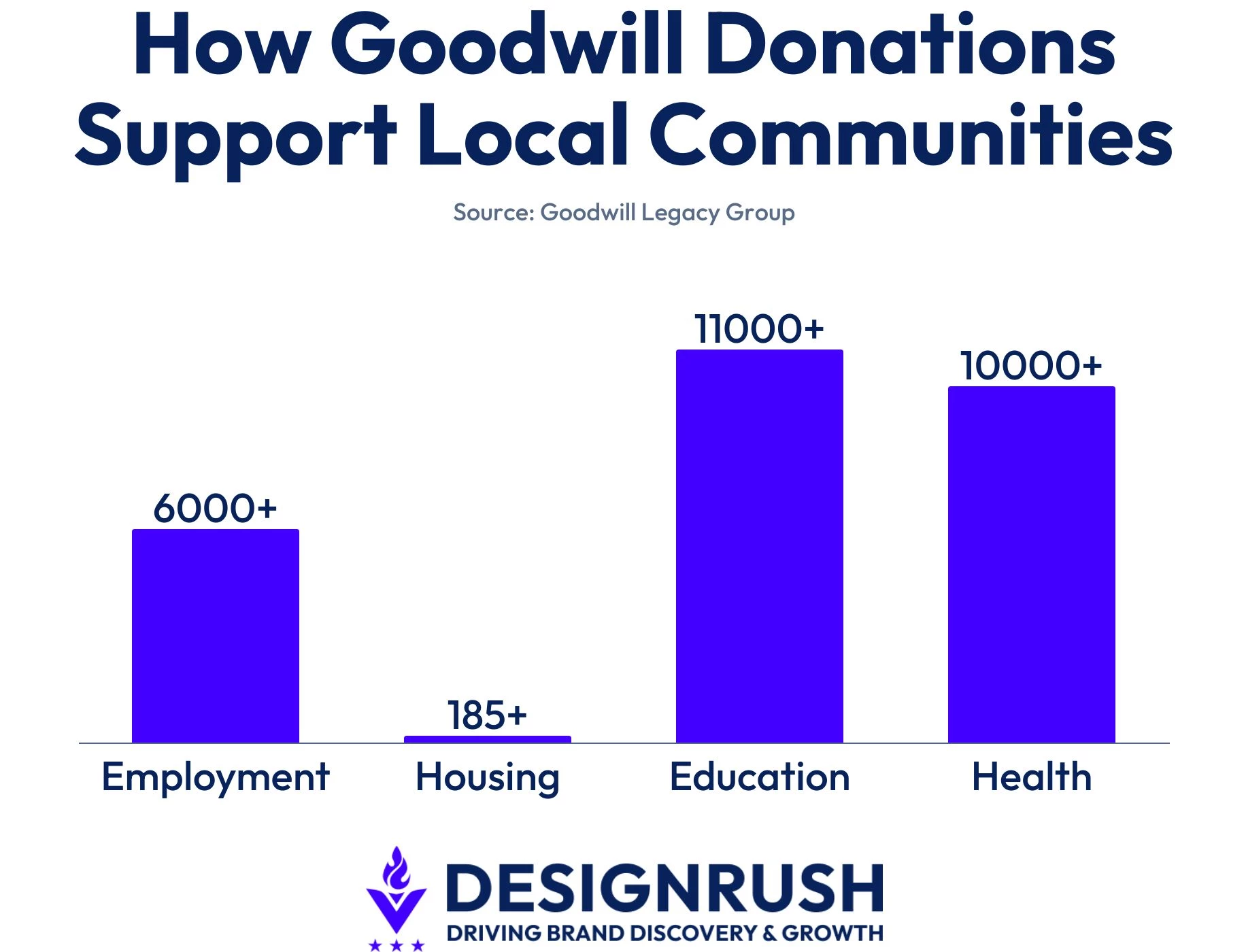
Goodwill Legacy Group reports several figures that put the campaign's community-services message into context.
The NPO directly employs more than 6,000 people across its retail locations, demonstrating the employment footprint behind its community mission.
More than 11,000 people earned high school diplomas through The Excel Center, highlighting the reach of its education services.
Its Nurse-Family Partnership also served more than 10,000 families, giving the campaign a measurable community impact.
Also, its affordable housing programs enhanced more than 185 lives in 2025, particularly relevant following the Horizon House merger.
These figures give the organization concrete proof points to support its donor messaging.
Brands managing nonprofit brand positioning and agencies protecting long-term client relationships can take three lessons from Goodwill's marketing history:
Track What Consumers Associate With You
Brands should periodically test what consumers actually associate with them, especially when their business model or public role changes.
Y&L once paired Goodwill with Indianapolis fashion magazine PATTERN to reach young women its research showed were skipping the stores, per GDUSA.
Let the Brief Follow the Business
Agencies should revisit a client's original positioning goals as its business grows and new marketing challenges emerge.
Goodwill's growing workforce later produced a separate recruiting brief for Williams Randall, which reports cutting the client's cost per application by 48%.
Make the Mission Entertaining
Brands communicating complex social or community objectives should find creative formats that make the intended outcome easy to understand.
For instance, Metro Trains Melbourne reported a 21% drop in train-related accidents in the first year after launching its 2012 safety song "Dumb Ways to Die."
Goodwill's latest campaign demonstrates how long-term agency relationships can help brands maintain recognition while addressing gaps.
Our Take: Can Retail Success Obscure a Brand's Mission?
Goodwill's experience shows how strong retail positioning can leave consumers with an incomplete understanding of an organization.
We'd call a buried mission nearly unavoidable for a nonprofit whose agency spent three decades selling it as a store.
This retail recognition still matters as Goodwill keeps expanding its stores, but now, the nonprofit's mission needs its own marketing investment.
Donors must understand how their contributions support programs before they can appreciate the full value of giving.
Goodwill now needs its advertising to connect retail, donations, and community impact without weakening the retail recognition built over three decades.
The campaign works if a 28-year-old donor walks away knowing her old beanbag chair can help someone find a job.
DAVID Bogota draws the same line for Corona, connecting the beer's beach image to its ocean cleanup work in the documentary "Earth Is Calling."
Agencies that know a client's history can tell when an old positioning starts hiding the work the brand actually does.
Explore these top creative agencies with experience in brand strategy, advertising, and integrated campaigns.