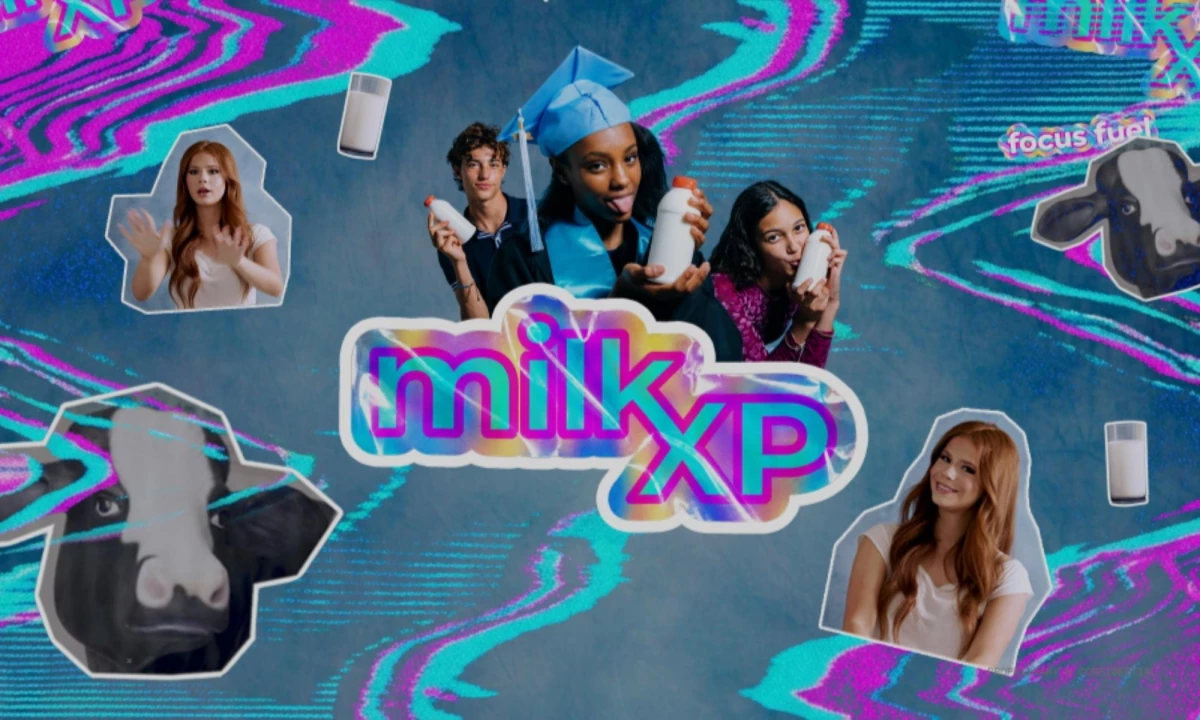

MilkPEP is teaching teens about financial literacy by having one of its creators teach an educator how to make a milk ad.
The new milkXP YouTube series pairs creators with educators to connect school subjects with real-world goals.
Kai Cenat fronts the 30-second promo video, naming milk's nutrients and telling teens to tune in.
AOR GALE developed the program with MilkPEP, and the creators include:
- Harper Zilmer
- Ben Azelart
- Lexi Rivera
- Angelo Bahu
- SeanDoesMagic
- Markell Washington
The first semester focuses on financial literacy, and the debut episode uses the product to carry the lesson.
Zilmer teaches Dr. Gregory Barton how to make a milk ad promoting its nutrients and their role in helping teens focus.
"We know how incredibly hard it is to cut through the noise and truly connect with teens today," Josh Braithwaite, managing deirector of creative at GALE, told DesignRush.
"We found that teens feel more engaged with learning when it feels relevant to their futures and goals, and decided to create something far bigger than your traditional ad to bridge that relevance gap."
This approach gives milkXP a sharper proposition than branded educational content, since the ad campaign becomes part of what students are learning.
Chaos First, Then the Money Lesson
Kai Cenat's promo gives milkXP a clear sense of its intended viewing experience.
He opens with an intentionally chaotic hook before quickly explaining that milk is pairing major creators and teachers to explore financial literacy.
"Dip it in the milk. Take my socks off. Rub my toes, while watching some TV," he says.
The video then jumps into a money-focused reaction before Kai rattles off milk's nutrients, including vitamin D, B12, zinc, calcium, and protein.
Cenat closes the ad by telling viewers to drink milk when they are not "locked in" and urging them to tune in.
This structure puts the creator's personality first, then threads the educational premise and product benefits through the same short piece.
The approach gives milkXP a format that feels native to creator content while keeping MilkPEP's product message in the conversation.
MilkXP presents each episode as a collaboration between a creator and an educator.
Each pair explores topics that teens want to understand through familiar online storytelling.
The class of 2026 includes 10 students, and the audience is introduced to them in a video reminiscent of a teen-drama theme song from the early 2000s.
MilkPEP also gives the format an educational structure.
Each episode follows the Milk Flow State Framework, a digital content scorecard developed with digital wellness expert Dr. Michael Rich.
"The internet can be an incredible place to explore new ideas, but a strong digital experience should not simply hold a teen's attention."
"It should help them direct that attention toward a meaningful goal," Rich added in a press release.
Barton created the foundational curriculum and reviews episodes for educational value, clarity, and curriculum alignment.
The creator roster gives the format a large built-in audience, with MilkPEP naming six creators across the fall series.
Creators provide the entertainment language, educators provide the lesson, and milk stays inside both.
55% of Teens Say School Feels Irrelevant
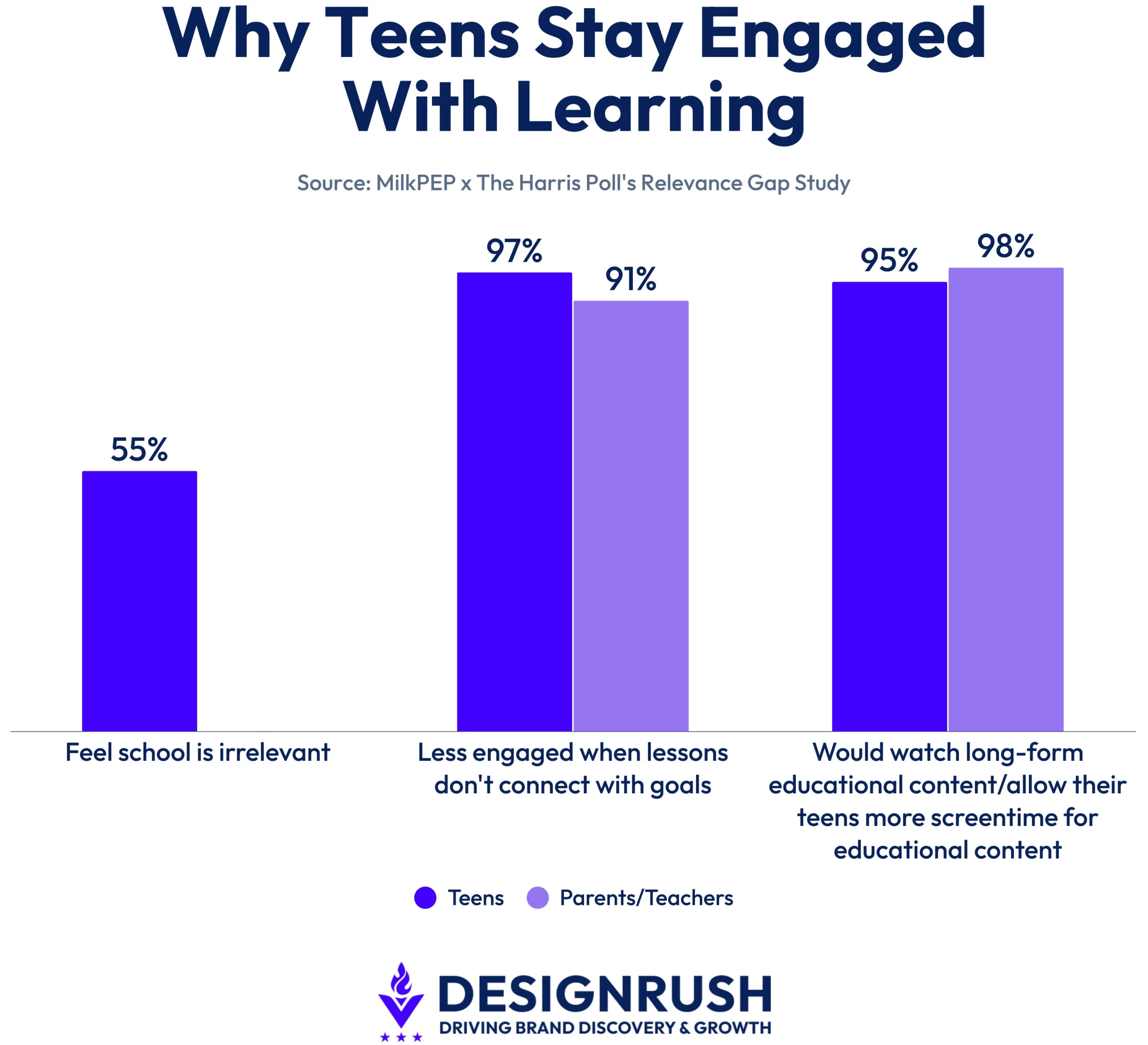
The milkXP strategy comes from MilkPEP's Relevance Gap Study with The Harris Poll, fielded among 800 U.S. teens, 800 parents, and 400 teachers in August.
More than half of teens say what they learn in school does not feel relevant to future success.
Teachers see the same thing, with 91% saying students disengage when a lesson has no link to their goals.
Teens also say they would watch long-form educational YouTube content, and parents would allow the extra screen time for it.
These numbers give brands a reason to treat educational content as a creator format worth funding.
The data suggests brands can earn attention when useful content answers a question audiences already care about.
- Relevance creates an entry point. Marketers should connect educational content to goals that audiences already recognize to increase participation.
- Creators can give lessons cultural context. Teams should pair subject experts with creators who already communicate naturally with the target audiences.
- Product placement needs a useful role. Brands should give products a defined place in the lesson to make commercial messages feel connected.
When branded content teaches a useful skill, the product can become part of the lesson without sitting outside the story.
Our Take: Can Milk Be the Curriculum?
MilkPEP wrote the first lesson so the product is both the subject and the sponsor of the exercise.
We think that milk can hold a curriculum, but only for as long as the teaching survives the sponsorship.
MilkPEP controls the context around its own nutrient claims here. A teen learning how to sell milk is also being sold milk.
The brand has reached for recognizable characters before, the same instinct behind SpringWell's claymation droplet Walter.
Both campaigns show how character-led storytelling can give functional product claims a more memorable format.
The company will know in the next milkXP episodes whether teens come back for the lesson or just for the creator.
Creator-led campaigns need more than a recognizable face.
Brands can explore these top influencer marketing agencies that pair creators with strategy, content, and audience-first storytelling.