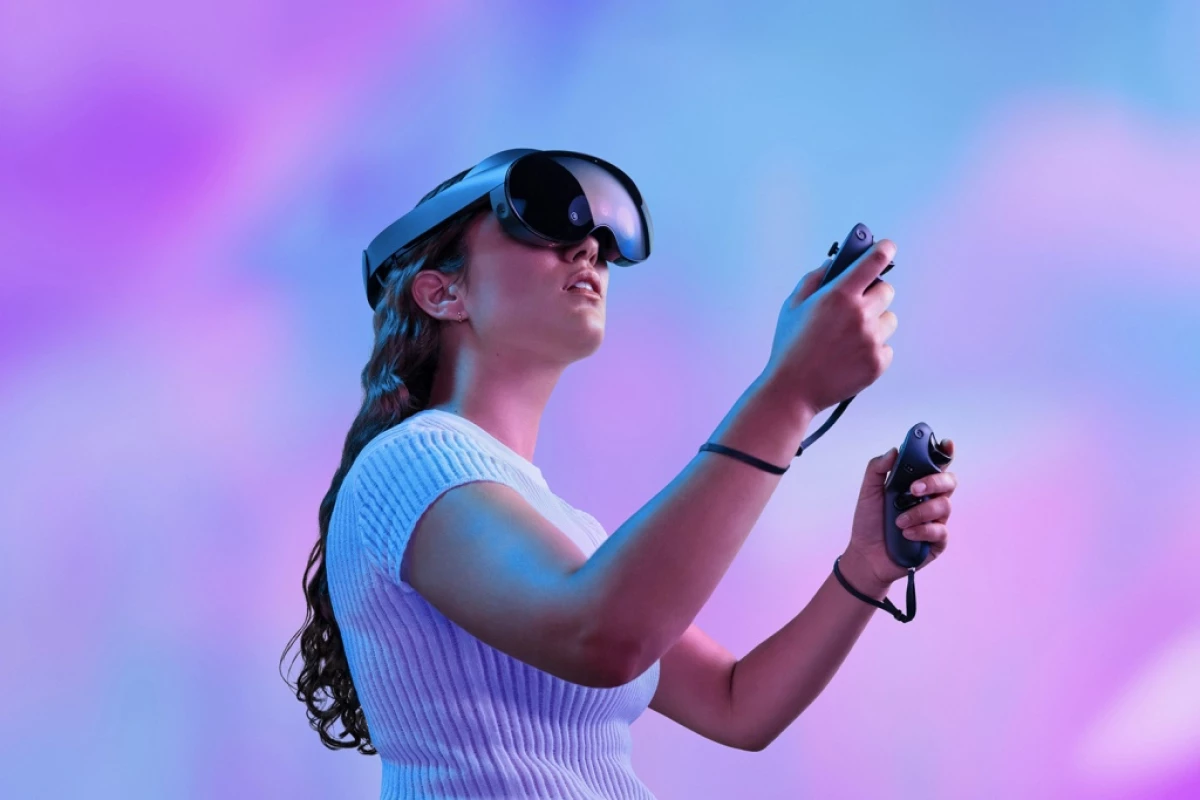

Reality Labs Layoffs: Key Findings
- The job cuts are a sign of a capital reset as Meta trims roughly 10% of its VR-focused workforce after over $70 billion in cumulative losses.
- AI now commands the balance sheet, with Meta lifting its 2025 capex guidance to as high as $72 billion to focus on infrastructure and talent acquisition.
- Developers now face a narrower VR roadmap as Meta shifts Horizon Worlds toward mobile-first, Roblox-style experiences rather than premium headset content.
Meta is now pulling back on virtual reality.
Four years after rebranding itself around the metaverse, this move underscores a sharper financial and platform-driven strategy.
The company has begun laying off about 1,500 employees tied to Reality Labs, affecting roughly 10% of the division responsible for Quest headsets and Horizon Worlds.
Several internal VR studios are also shutting down, and at least one acquired app is being placed into maintenance mode.
The cuts come as Meta accelerates spending on artificial intelligence, an area Mark Zuckerberg has increasingly positioned as the company’s next core growth engine.
In its latest earnings update, Meta raised its 2025 capital expenditure outlook to $72 billion from $70 billion and warned that spending growth would accelerate again in 2026.
This trajectory reflects a tighter focus on AI investments that can show near-term revenue impact and scale efficiently across Meta’s products.
Investor Patience Thins at Reality Labs
Reality Labs has tested Wall Street’s tolerance for long-horizon bets for several years.
Since late 2020, the division has accumulated more than $70 billion in losses, including a $4.4 billion operating loss.
These figures continue to frame how investors evaluate Meta’s appetite for sustained spending in experimental hardware and content.
The latest restructuring includes the closure of multiple first-party VR studios and reduced investment in premium, headset-first titles.
Internally, leadership has described the move as a reallocation of resources, but the scale of the cuts signals a narrower scope for the division going forward.
For developers and brand partners, this resets expectations across the VR market.
Long development timelines and open-ended funding assumptions are giving way to tighter alignment with platform priorities, cost controls, and clearer paths to return.
Meta’s earlier willingness to absorb large losses functioned as a buffer for experimental creators.
This margin for risk now appears more limited, with Reality Labs operating under closer scrutiny as capital priorities concentrate elsewhere.
AI Becomes Meta’s Primary Bet
Meta continues to concentrate capital around AI, backing its focus with large infrastructure spend and high-profile talent moves.
This includes a $14.3 billion deal connected to bringing Scale AI founder Alexandr Wang into a central leadership role.
The company is positioning AI as its fastest path to durable product relevance, with another flagship model expected later this year as competition with OpenAI and Google intensifies.
This emphasis now carries through Meta’s hardware strategy.
AI-powered wearables, particularly the smart glasses developed with Ray-Ban, show clearer consumer traction than earlier immersive hardware efforts.
Ray-Ban executives have indicated production targets for the glasses could be met ahead of schedule, reinforcing expectations of near-term commercial demand.
AI wearables extend Meta’s presence in consumer hardware through familiar behavior and everyday use.
They also integrate more naturally with advertising systems, data flows, and platform-scale economics.
These priorities are recalibrating how Meta allocates resources and defines where future growth is most credible.
Horizon Worlds is Meta’s social virtual platform within Reality Labs, and it reflects how the company is adapting its metaverse ambitions to these constraints.
It was originally positioned as the flagship software layer of Meta’s metaverse strategy, designed to host social spaces, creator-built experiences, and virtual events through Meta Quest headsets.
As Meta’s capital priorities have shifted, Horizon Worlds now functions as a flexible platform asset within Meta’s product portfolio.
Its move toward mobile access ties it directly to the tech giant's core strengths in social engagement, creator ecosystems, and scalable distribution across Facebook, Instagram, and Messenger.
This repositioning keeps the platform aligned with Meta’s identity as a social company, even as the underlying hardware and investment focus change.
For developers and brand teams, several implications stand out here:
- VR-first investments face higher scrutiny as Meta prioritizes lower-cost, higher-reach formats tied to mobile and AI.
- Platform transparency matters more since limited usage data around Horizon Worlds has already frustrated third-party creators.
- AI alignment is becoming table stakes for partnerships that expect long-term platform support and funding.
Meta is still courting developers, including through a $50 million creator fund, but the strategic direction favors scale and repeat engagement over technical experimentation.
Our Take: What Is Meta Optimizing For Now?
I see this as a recalibration driven by financial clarity and product discipline rather than a loss of conviction.
Meta’s recent earnings have made its priorities explicit, with capital concentrated on areas that combine scale, monetization, and everyday utility.
This logic was clear in Q3 2025, where AI investment was framed as both a platform accelerant and a brand growth driver tied directly to reach and revenue.
The focus sits on surfaces that fit existing user behavior and extend naturally across Meta’s products.
This approach reshapes expectations for partners building on the platform.
Demand signals, distribution readiness, and speed now weigh as heavily as creative ambition.
And this tightens the window for experimentation and raises the premium on execution that aligns with where Meta sees durable growth.
AI-first platforms reward products that work immediately. Find Top Product Design Agencies equipped to build for that reality.