
LinkedIn's Brand Campaign Expansion: Key Findings
- LinkedIn expands "The Network That Works For You" with new spots targeting marketers and sellers, running in the U.S. and U.K.
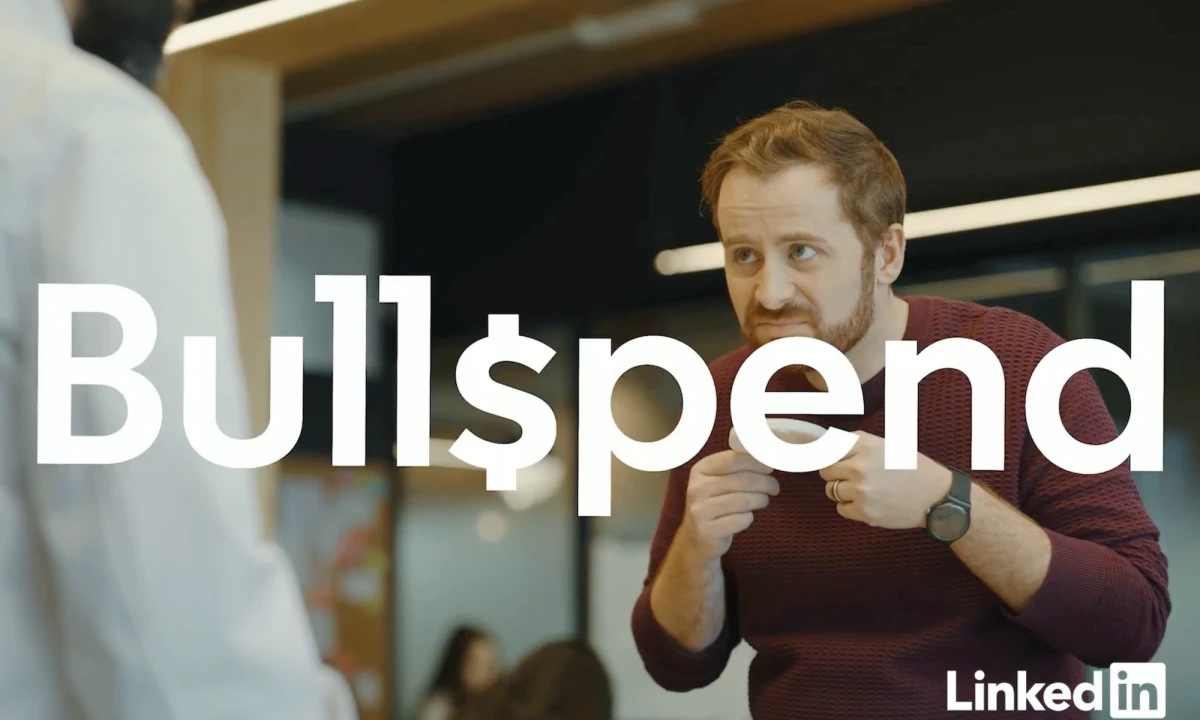
- The marketer spot calls out "bullspend," challenging vanity metrics like impressions and clicks in favor of measurable business outcomes.
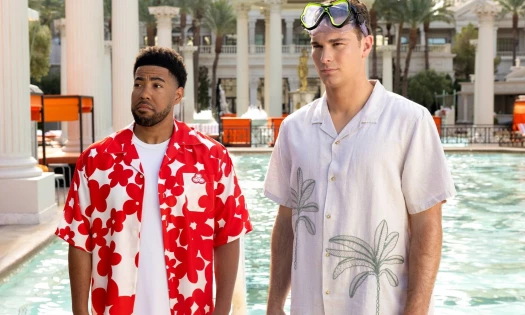
- The seller ad uses pickleball and mistimed celebrations to show how Sales Navigator helps sellers build the right relationships.
LinkedIn's latest creatives are aimed directly at marketers and sellers, for all the right reasons.
The spots are part of its latest brand platform, "The Network That Works For You", and were developed by creative agency R/GA.
They use the same comedic approach as the original launch, this time zeroing in on the specific pressures and absurd moments that come with working in sales and marketing.
Campaigns are running in the U.S. and U.K. across TV, digital video, CTV, organic and paid social, audio, display, paid search, and out-of-home.
The expansion indicates that LinkedIn is treating humor as a long-term brand voice, with a second campaign wave arriving within six weeks of the initial launch.
For agencies and B2B marketers watching how major platforms build brand equity, the approach is worth tracking closely.
Two Groups, One Platform Argument
The first creative tackles what LinkedIn calls "bullspend," calling out a common industry habit of prioritizing vanity metrics over real business impact.
The spot uses useless furniture as a visual stand-in for ad spend that looks credible on paper, but produces nothing measurable.
The seller creative takes a different tone, dropping Sales Navigator into awkward real-world scenarios.
This includes trying to impress a client during a pickleball game and celebrating a win at entirely the wrong moment.
Both spots share the same structural logic as the February launch, where LinkedIn acknowledges what it cannot fix and then makes a specific claim about what it can.
Heather Hopkins Freeland, Chief Brand Officer at LinkedIn, said the new work continues to reflect that professional life has many layers, including moments that are imperfect or stressful.
The Strategic Logic of Audience-Specific Creative
LinkedIn's decision to split creative by audience reflects how B2B platforms are approaching brand campaigns with more precision.
The February launch targeted job seekers and small businesses, while this round goes after marketers and sellers.
These are two demographics with distinct enough pressures to warrant their own creative.
Andrew Monu, VP of LinkedIn Marketing Solutions, connects the marketer spot directly to the pressure of proving ROI.
"Marketers today are under constant pressure to prove how their work drives real business impact — not just impressions or awareness," he explained.
"This creative taps into that reality with humor, using the idea of useless furniture as a stand-in for ad spend that looks fine on paper but doesn't actually deliver."
Catherine Flynn, VP of LinkedIn Sales Solutions, added that the seller work was built to feel true to the reality of selling and show how Sales Navigator helps sellers stay focused on the right accounts.
For B2B brands, the campaign demonstrates that acknowledging people's frustrations directly is a credible foundation for making product claims.
The LinkedIn campaign offers a few principles worth applying to B2B brand work:
- Admit what your product can't do: Acknowledging limitations gives people a reason to trust the claims you make.
- Split creative by audience when pain points diverge: Marketers and sellers have different pressures, and audience-specific executions make the humor land with more precision.
- Commit to a brand voice across campaign waves: Running the same comedic platform across multiple audience segments builds recognition with each new execution.
Running the same platform across multiple audience segments is what gives a B2B brand campaign long-term commercial value.
Our Take: Does LinkedIn's Humor Platform Have Staying Power?
We think it does, and the audience-specific expansion makes the platform argument more convincing with each new wave.
The "bullspend" creative in particular is good because it names something marketers privately think about all the time, which is whether their budget is actually working.
The risk with humor-led B2B campaigns is that they can become memorable without being persuasive, but LinkedIn is threading that by keeping the product claim specific in each spot.
If it continues to target the right audiences throughout 2026, we think it could build one of the more coherent long-term brand platforms in the B2B space.
B2B brands investing in creative campaigns need agencies that understand how to balance entertainment with platform-specific conversion goals.
Take a look at the top B2B branding agencies in our directory.