
Böcker’s Agility Marketing: Key Findings
- A fast, witty Instagram post met the Louvre heist incident, transforming news coverage into brand attention within hours.
- Tone and timing did the heavy lifting, with the post riffing on the lift’s specs and the heist narrative without glorifying the crime.
- Reach spiked to roughly 1.7 million views from a 15 - 20k baseline, showing how quickly creative reflex can multiply social exposure.
McCanniness isn’t what you expect from a freight-lift maker.
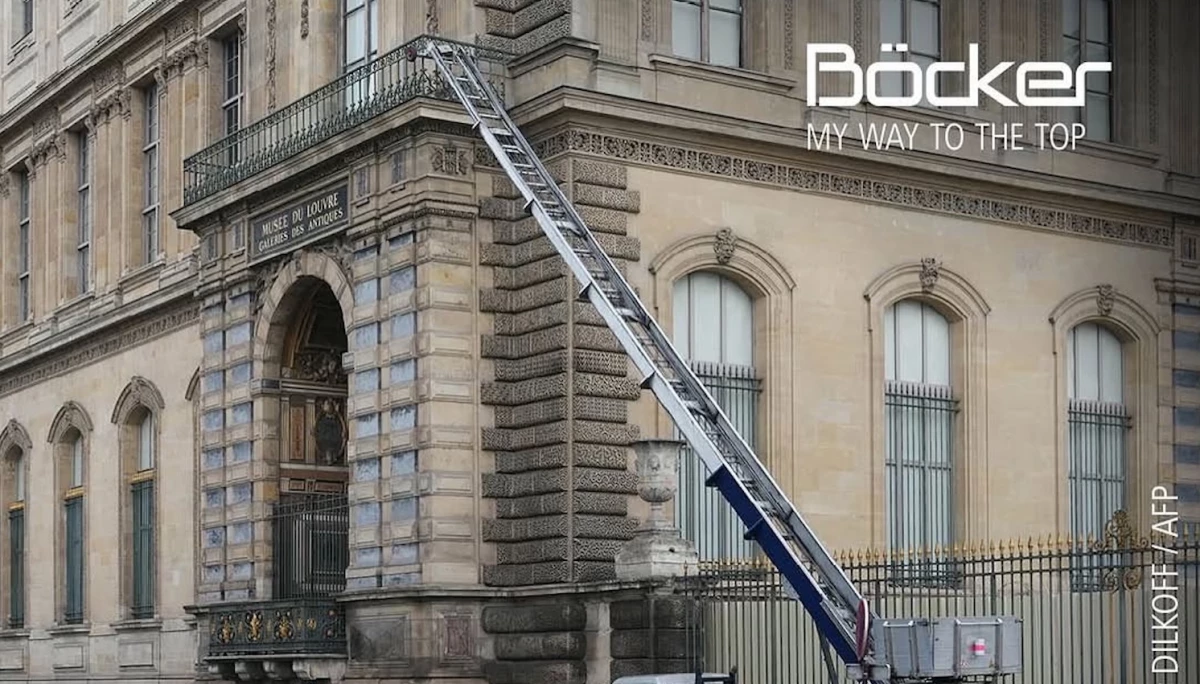
Thieves used a Böcker Agilo furniture elevator to access a balcony at the Louvre and steal crown jewels valued at over $100 million.
Eight historic pieces were taken from the Apollo Gallery in minutes, including jewels tied to French royalty.
CCTV footage shows the furniture lift at the balcony and a rapid escape, and museum leaders later acknowledged weak and aging camera coverage around the perimeter.
The German company didn't fail to recognize its product in news images and moved quickly.
“It became clear to us, oh my goodness, this is a reprehensible act and they’ve misused our device to do it,” Böcker Marketing Chief Julia Scharwatz, the wife of CEO Alexander Böcker, told The Guardian.
“But after it was apparent that no one had been hurt, we started making a few jokes and putting our heads together on slogans we found funny.”
Böcker then posted a tongue-in-cheek ad on Instagram featuring the now-familiar shot of its ladder reaching the museum façade.
The caption played off real specs in a witty manner.
“When you need to move fast” is followed by the Agilo’s capacity of “up to 400 kg at 42 m/min” and its “whisper-quiet” motor.
Reaction was immediate, and comments praised the "best reactive marketing," and the post spread far beyond Böcker’s usual audience.
Scharwatz shared that the company's typical Instagram reach is just around 15,000 to 20,000, but this Louvre Heist post hit about 1.7 million.
The post currently has 51,400 likes and nearly 1,200 comments, with Böcker even sharing an English version by popular demand.
Coverage from major outlets followed, cementing the activation as a case study in speed and tone.
This surge in engagement significantly boosted brand awareness, introducing Böcker to new global audiences well beyond its usual industrial market.
Agility in Action
Böcker’s quick thinking avoided a potential PR nightmare and instead turned it into one of the most talked-about brand moments of the week.
The team acted within hours of the Louvre heist coverage spreading, keeping the response simple, factual, and well-timed.
The post's restraint mattered as much as their speed.
Humor in marketing can easily misfire when tied to a crime, but this one worked because it stayed self-aware and grounded in the product.
Böcker’s response offers practical lessons on how to act fast without losing control of the message.
- Respond before the story hardens. Early reactions let brands define their own place in a breaking narrative.
- Stick to what you know. Basing creative on real product strengths keeps humor from crossing into bad taste.
- Expand success while it’s relevant. When engagement spikes, scale the story across other owned platforms while the audience is still paying attention.
Agility marketing isn’t really about being first for the sake of it.
It’s more about reading the room, reacting with clarity, and trusting instinct over perfection.
Our Take: Can Timing Beat Budget?
Yes, I believe it can.
Böcker’s reactive ad shows that fast thinking and tone awareness can sometimes deliver more visibility than a paid campaign.
Acting within hours gave the company ownership of the story before anyone else defined it.
This is the real edge of agility marketing: knowing when to step in, how to read the cultural temperature, and when to stop talking once the point has landed.
In other news, check out how Astronomer similarly capitalized on the viral kiss cam moment to spread brand awareness.
After the affair of its CEO and HR head went viral during a Coldplay concert, Astronomer faced an unexpected wave of attention.
The company quickly turned the moment around by bringing in Gwyneth Paltrow as a “temporary spokesperson” in a playful video that reframed the story and spotlighted its tech solutions.
Real-time storytelling defines modern marketing. These top partners create campaigns that move at the pace of culture.