
Cybersecurity Builds Trust: Key Points
- IBM says data breaches now cost businesses an average of $4.4 million, but doesn’t account downstream costs to brand credibility.
- 53% of consumers will only purchase from companies that have a reputation for protecting customer data.
- Digital trust compounds like interest, making security a growth strategy rather than just risk management.
Yes, AI has made business faster and smarter. But it’s also made it riskier.
While it streamlines operations, it also empowers attackers to breach systems faster than ever before.
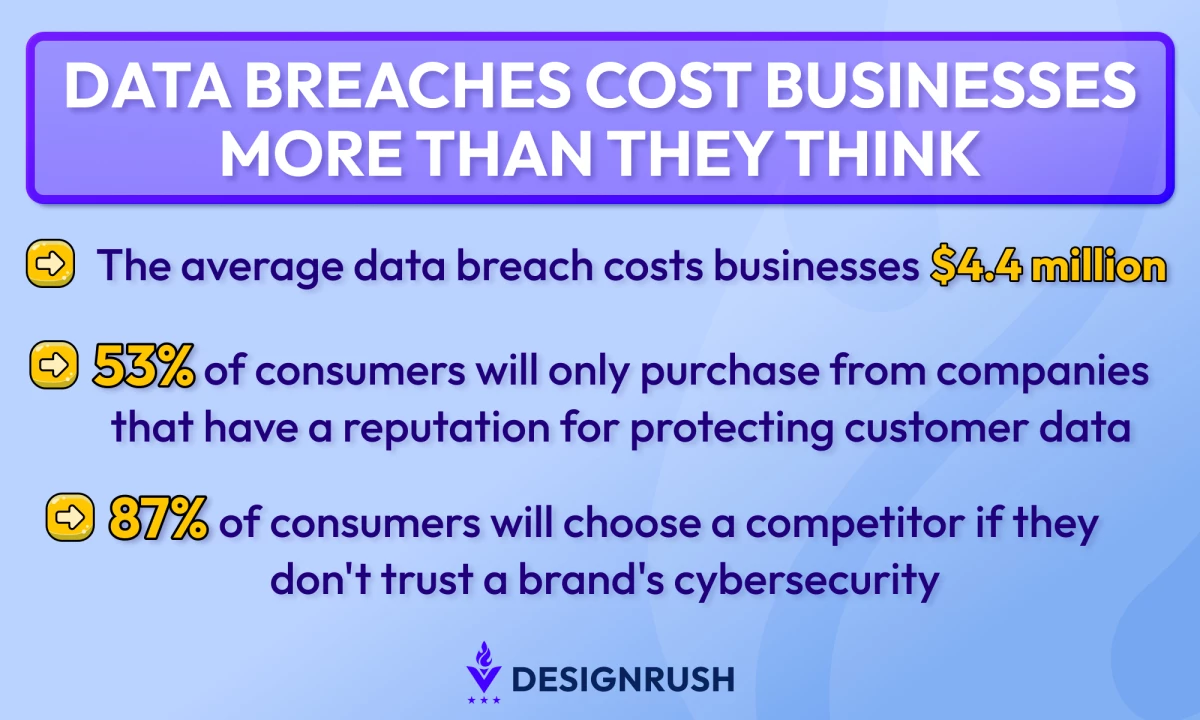
According to IBM’s 2025 report, the average cost of a data breach is now $4.4 million, a number that’s transforming digital trust from an IT issue into a business imperative.
Meanwhile, Statista projects global cybercrime to cost businesses around $15.63 trillion by 2029.
The numbers are difficult to ignore, but they only capture the immediate aftermath of a data breach or AI-powered cyberattack.
The aftereffects of a breach affect businesses well past the initial attack, and are often harder to quantify in raw dollars. These aftereffects often manifest as:
- Reputational damage
- Operational disruption
- Customer churn
- Investor doubt
- Regulatory scrutiny
It’s for these reasons that leading digital product development companies, like Infinum, have made cybersecurity a central topic in discussions with clients.
“What’s changed is not the threat itself, but its role in business strategy. A decade ago, cybersecurity was an insurance policy. Today, it is part of how companies win or lose markets,” said Vedran Furlan, cybersecurity engineer at Infinum.
In other words, successful brands and agencies are now treating security as a foundation rather than an extra feature.
Digital Trust Is the New Currency of Business
Markets reward trust just as much as they reward innovation, and McKinsey research proves it.
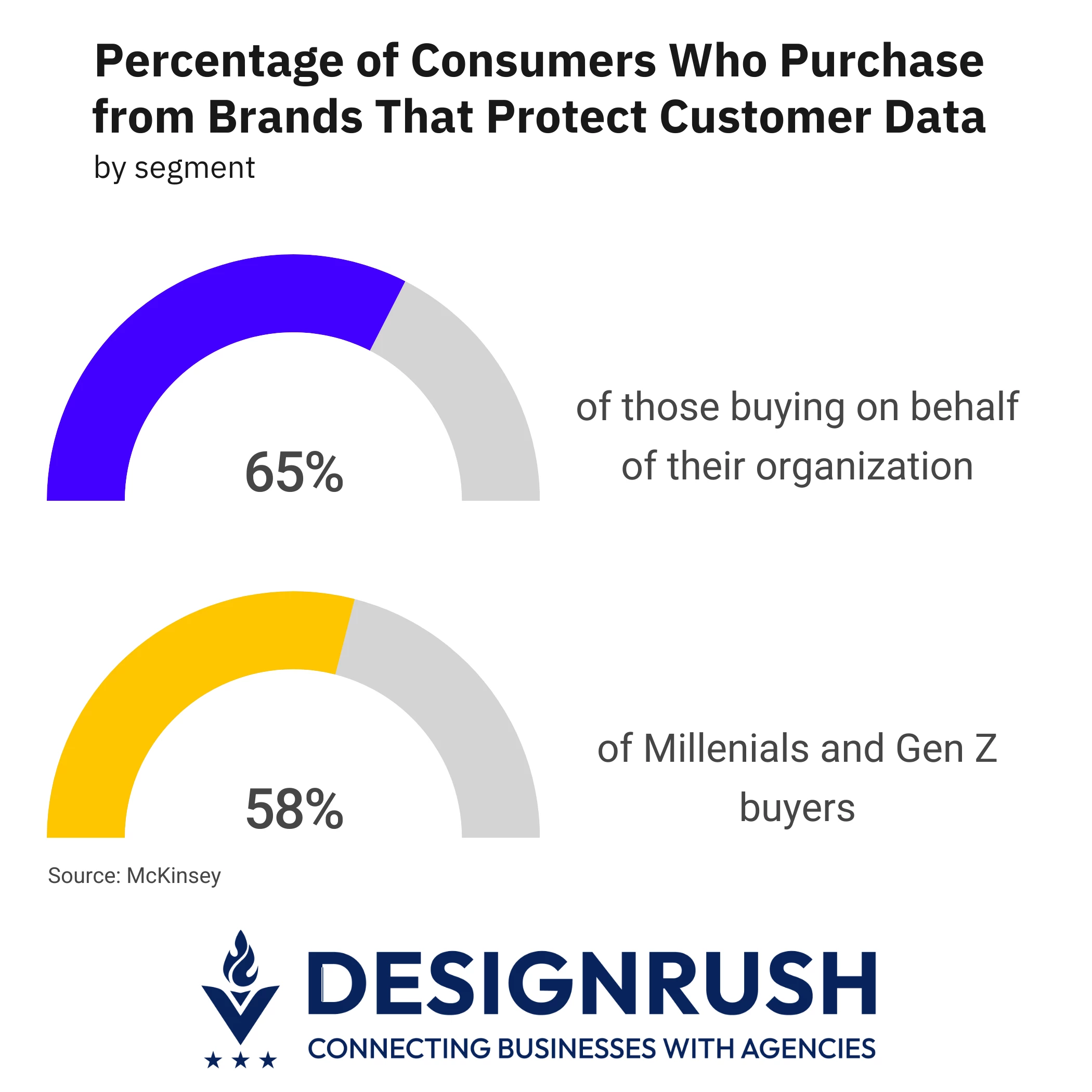
The firm found that 53% of global consumers will only buy from companies with a reputation for protecting customer data.
That number climbs to 65% among B2B buyers and 58% among Millennials and Gen Z, showing just how closely digital trust is tied to modern purchasing decisions.
And what happens if that trust isn’t there?
According to a PwC survey, 87% of consumers will take their business to a competitor if they don’t trust a company to protect their data.
Trust has clearly become a measurable driver of business success. But it’s not a one-time achievement.
It must be earned continuously with every interaction, transaction, and piece of shared data.
That’s why smart companies are shifting cybersecurity and digital trust from their IT departments right into the heart of their growth strategies.
Build Digital Trust with These Strategies
Meeting today’s expectations requires more than adding another firewall or patching a vulnerability, since these are both band-aid solutions.
Since trust is built the same way as building a brick wall, layer by layer, businesses must approach it with the same level of care and foresight.
After all, a misaligned layer can easily lead to premature cracks.
That said, experts like Infinum suggest implementing these strategies if you want to move from a reactive defense to true resilience:
1. Start with regular risk assessments
Most teams are caught off guard by cyberattacks and left scratching their heads trying to locate the vulnerability responsible.
But it doesn’t have to be that way.
In cybersecurity, knowledge is power, and regular risk assessments can uncover weak points before a cybercriminal can. This allows teams to proactively plug the holes.
2. Integrate security into every stage of development
Any software developed, whether in-house or through an agency partner, should follow a Secure Software Development Lifecycle.
Likewise, projects must embrace a DevSecOps mindset to ensure that proper security measures aren’t treated like an afterthought at the end of the development cycle.
Moral of the story? Security shouldn’t be something you tack on at the end; it needs to be part of the process from day one.
3. Create a security-first culture in the workplace
Despite the rise of AI-powered cyberattacks, it’s the everyday oversights from individuals in your organization that often leave the door open for hackers:
- Phishing emails
- One password for all accounts
- Misplaced devices
This is why businesses should embed a security-first mindset into their company culture.
These can come in the form of regular cybersecurity seminars or even conducting phishing simulation tests.
4. Communicate security as part of the customer experience
Transparency is the name of the game when trying to build trust.
That said, businesses should clearly communicate their security and privacy efforts as part of the overall customer experience.
Clearly communicating data practices, displaying security certification badges, and implementing intuitive privacy controls all signal that a business cares.
These actions give customers confidence long before they need to ask.
Anchor Strategy in Security and Trust
With issues like cybersecurity and data privacy making headlines in recent years, customer trust is now an asset that’s worth defending as fiercely as any IP.
When businesses treat trust as part of the value they deliver to their customers, they tend to see compounding returns: customers buy more, investors hesitate less, and growth becomes a natural byproduct.
You don’t win markets by being the brand customers almost trust. You win by earning loyalty, reducing risk, and leading with security.