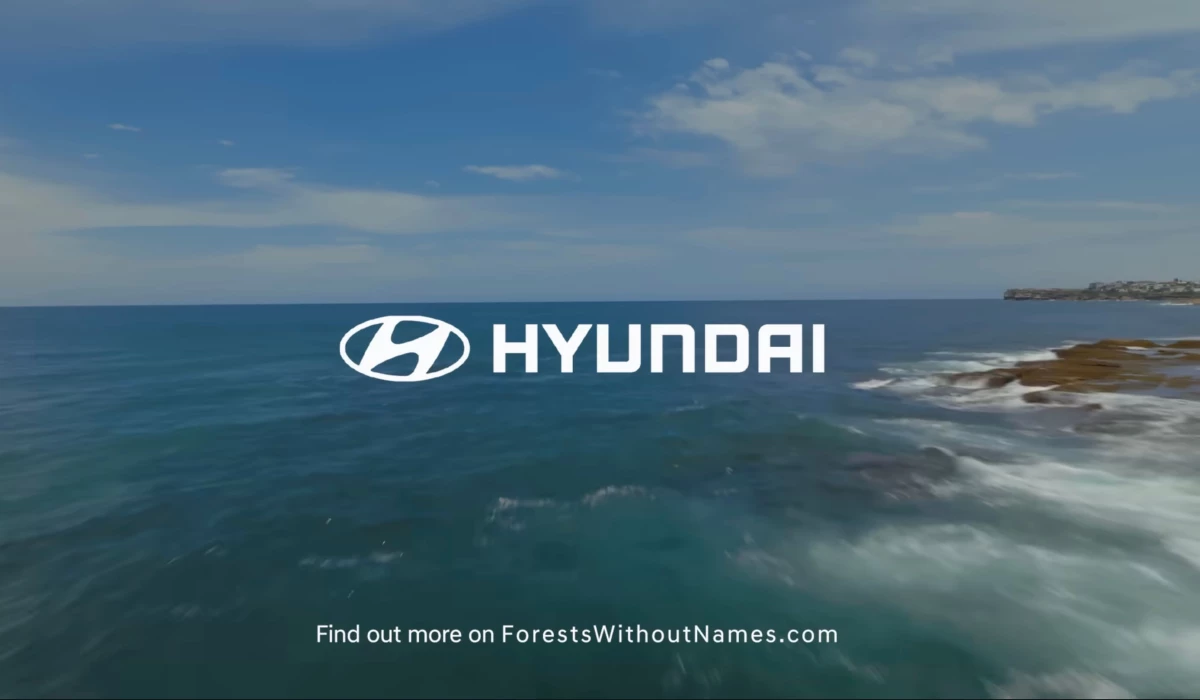

Hyundai's 'Forests Without Names' Campaign: Key Findings
- The automaker launched a global Earth Month push naming sea forests across Korea, Argentina, and Australia with public participation.
- The effort includes a Sea Forest Map and a planned Data Hub integrating verified ecosystem information with digital mapping platforms.
- It builds on ongoing marine restoration and cleanup efforts, combining conservation projects with awareness-driven naming and documentation.
Hyundai Motor Company is asking the public to help name the ocean’s overlooked ecosystems.
Launched during Earth Month, the "Forests Without Names" initiative assigns identities to sea forests across Korea, Argentina, and Australia.
Created with BBDO NY, the goal is to draw attention to their crucial role in supporting marine biodiversity and climate resilience.
The effort builds on Hyundai’s environmental work and sees naming as a way to increase visibility and long-term protection for underwater ecosystems.
Head of Future Business & Sustainability Group Hyunchul Jeon sees the campaign as a reflection of Hyundai's continued focus on environmental responsibility.
"We are pleased to shed light on sea forests and highlight their ecological value and the importance of protecting our marine environments," he said in a press release.
He added that the initiative is designed to "spark curiosity about what has long gone unnoticed."
Sea forests, formed by dense marine algae like kelp and seaweed, function similarly to terrestrial forests by providing habitats, filtering pollutants, and supporting biodiversity.
Scientific and policy interest in sea forests' climate role has grown in recent years.
This includes discussions at the IPCC that have explored how seaweed ecosystems could factor into future carbon accounting frameworks.
Efforts like Hyundai's also contribute to long-term brand equity, positioning it as a company invested in environmental impact outside its core products.
Mapping the Problem
Hyundai's latest campaign was born to address the structural gap that many sea forests lack formal names, limiting public awareness and conservation focus.
And by introducing naming, the automaker aims to create a clearer identity for these ecosystems and make them easier to document, discuss, and protect.
As part of the rollout, Hyundai is integrating named locations into a dedicated Sea Forest Map hosted on its campaign website.
The platform, which the company plans to grow into a "Sea Forest Data Hub," will compile verified information such as location, ecosystem characteristics, and restoration activity.
The data will be made accessible to the public and eventually integrated with mapping services like Kakao Map and other global platforms.
Public participation is also one of the campaign's strong points.
Names for sea forests in Korea and Argentina were finalized through partnerships with government agencies and local organizations.
In Korea, one restored site has been named "Ullim," while in Argentina, a name derived from a local indigenous language has been adopted.
However, Australia’s sea forest name is yet to be determined through public voting via Hyundai’s digital channels and campaign site.
The process in each region encourages collaboration with local communities, NGOs, and environmental bodies to ensure both cultural impact and scientific grounding.
This approach goes beyond naming and taps into Hyundai's ongoing marine conservation work.
Hyundai has been restoring sea forests off Ulsan since 2024 in partnership with Korean government agencies, alongside marine waste cleanup efforts across multiple countries.
It's a push that aligns with its brand values and role in the global automotive industry.
The Sea Forest Naming Strategy
Hyundai’s campaign shows how environmental initiatives can evolve from awareness efforts into participatory ecosystems that invite public involvement.
- Lead with emotional storytelling. Assigning names to overlooked assets makes them easier to connect with and remember.
- Link campaign to real-world action. Combining digital tools with physical initiatives strengthens credibility and impact.
- Build participation into the system. Voting and mapping give people a clear role, helping the campaign grow through real involvement.
Long-term impact will depend on whether this participation becomes routine, giving the initiative continued visibility and engagement.
Our Take: Can Naming Drive Real Environmental Value?
Many sustainability campaigns stop at education, but this one tries to move people into participating.
One might think it's just a name, but naming these bodies of water changes how we relate to them.
It’s harder to ignore a place that feels identifiable, even if it sits beneath the surface.
The mapping, the data hub, and the voting mechanism all give the campaign continuity. And this matters because environmental narratives tend to fade over time.
If Hyundai keeps feeding this system with updated data and visible outcomes, the naming effort becomes more than symbolic.
Meanwhile, competitor Lexus just launched a campaign that focuses on the craft and details of its latest RZ SUV.
Automotive brands need partners who understand how to build campaigns for diverse audiences. Find these top automotive branding agencies in our directory.