
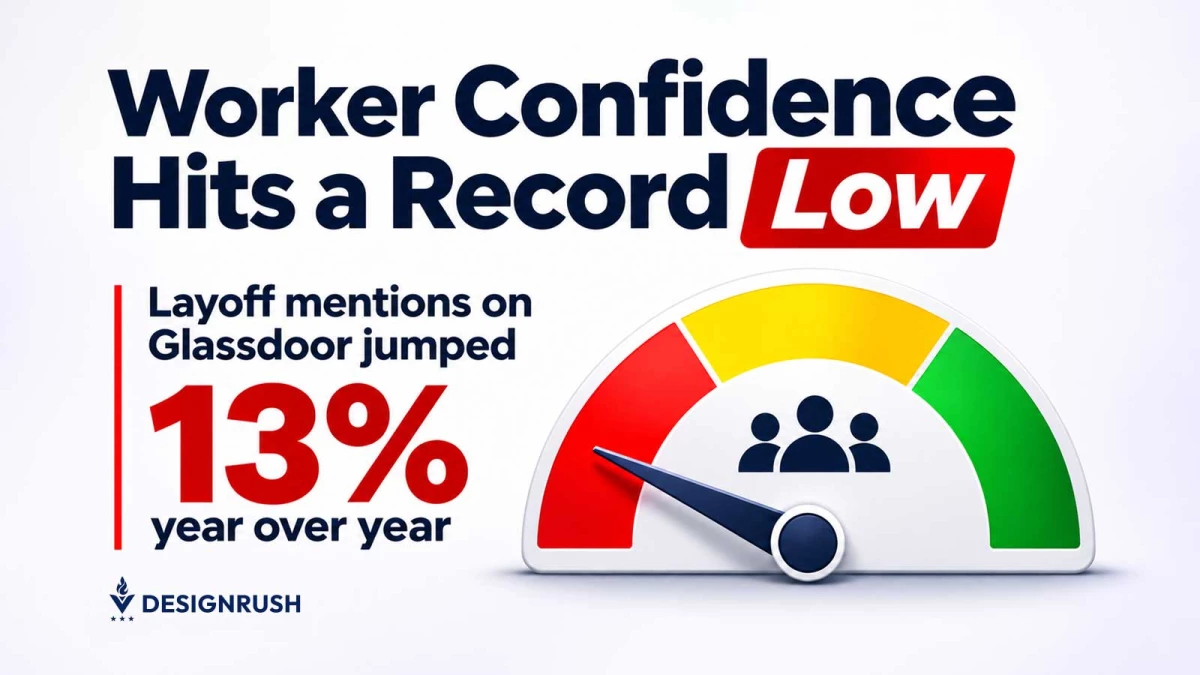

Layoff mentions in Glassdoor reviews rose 13% year over year in September as U.S. employee confidence hit a record low, according to Glassdoor’s Employee Confidence Index.
After Glassdoor revised its September data, 43.5% of U.S. employees reported a positive six-month outlook for their employer.
Those concerns are sitting on the same company profiles candidates use to research potential employers.
Erase.com handles disputes over Glassdoor reviews, where employers often have to decide whether a post can be challenged under platform rules or should be answered publicly.
The company’s Marketing and Brand Manager, Victoria Marshall, says that the platform rule should be one of the first things an employer checks.
"Some of the harshest reviews are still legitimate," she says.
"If the person is describing a real experience and the post stays within Glassdoor’s rules, the company has to decide how it will answer it."
When Employers Can Challenge a Glassdoor Review
Honest negative opinions from real current or former employees don’t qualify for removal simply because they are critical.
However, reviews tied to a documentable policy violation can be challenged through Glassdoor’s process.
"Feeling misrepresented doesn’t give the employer much to work with," Marshall says.
"A useful dispute starts with the exact policy issue and something the company can document."
Some disputes are easier to document than others.
An employer may be able to disprove a factual claim or show that the reviewer never worked there. Privacy and other policy violations can also give the company grounds to challenge a post.
What Employers Can Do When a Glassdoor Review Stays Up
Even if the review stays up, the company still controls what it says next.
Marshall says the reply should deal with the concern itself and stay professional. Anything that needs a private conversation can move offline.
And it isn’t only the reviewer who will read it, particularly as candidates looking into the company may see the response as well.
"If part of the review is wrong, the company should correct it. If something has changed since, they should say so," Marshall says.
"The response should also acknowledge the concern without arguing with the reviewer."
Repeated Glassdoor Complaints Can Signal Employer Brand Risk
AI is now part of the anxiety showing up in employee reviews, with AI mentions on Glassdoor jumping 164% year over year in September.
And while one complaint may be isolated, if the same issue keeps appearing, the employer has something larger to examine.
Marshall recommends continuing to monitor review activity after an individual issue has been addressed.
"When the same concern keeps showing up, HR, communications, and employer brand teams need to compare it with what the company is telling candidates," she adds.
"That’s a reputation issue even if every review stays within the rules."
For agencies managing employer reputation, recurring complaints can also change the job from responding to one review to addressing a message candidates are seeing repeatedly.
What Employers Should Document Before Flagging a Glassdoor Review
Before challenging a review, Marshall says that employers should preserve enough information to show what they challenged and what happened afterward:
Capture the review as it appeared
Keep the URL, date, screenshots, and relevant language before submitting a flag or escalation.
Record the policy basis
Identify the specific guideline involved and keep the evidence supporting the challenge.
Log the outcome
Track whether the review was removed, remained public, required follow-up, or led to a company response.
"When the same complaint keeps resurfacing, the company has a pattern on its hands," Marshall says.
"Leadership needs to deal with the cause before that pattern starts defining the company’s reputation."