
G-SHOCK is selling its Pink Ribbon idea with different donation rules across markets this year.
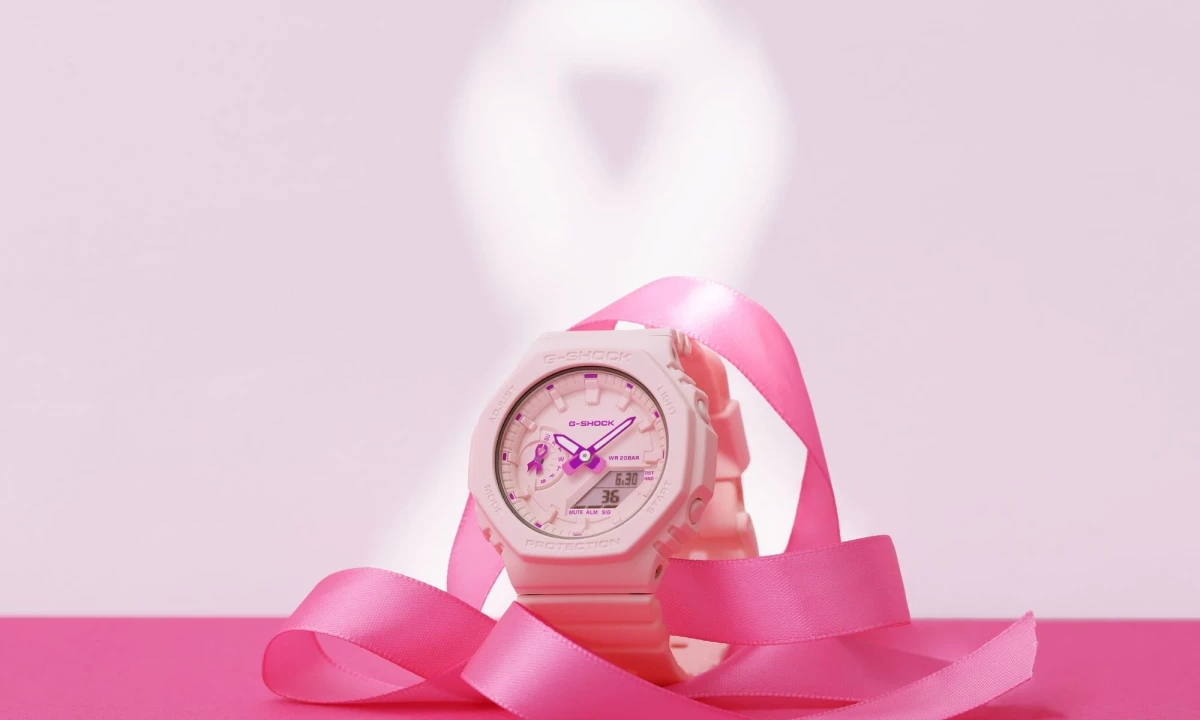
Casio America launched the GMAS2100PR on October 1 for Breast Cancer Awareness Month.
The company committed $25,000 to the Breast Cancer Research Foundation (BCRF), regardless of how many watches sell.
Its global 2026 Pink Ribbon page shows a different structure in Japan, where 5% of proceeds from the watch go to J.POSH.
Casio Taiwan directs a portion of product sales to the Taiwan Breast Cancer Foundation.
Colombia, likewise, gives 5% of sales from participating pink models to the AMESE Foundation.
Casio America is pitching the fixed donation as a match for the brand's durability promise.
This promotional strategy gives the company different ways to frame the same product as cause marketing across regions.
"Every G-SHOCK is built to keep going, and that is what breast cancer research needs from all of us," Shermeen Greenmun, VP of Timepiece at Casio, said in a statement.
"The GMAS2100PR is a way for people to wear that commitment every day.
"[O]ur $25,000 donation to BCRF goes directly toward accelerating the science that changes what tomorrow looks like."
Buyers in Japan, Taiwan, and Colombia can trace their purchase to a donation amount.
The donation terms change at every border, so the fine print does as much work here as the product design.
G-SHOCK Gives Pink Ribbon Different Rules
The U.S. GMAS2100PR keeps the compact GMA-S2100 design.
It adds a soft pink resin case and band, magenta details, a pink ribbon on the dial, and comes in special packaging.
The watch also has G-SHOCK's Carbon Core Guard structure, 200-meter water resistance, world time, and a roughly three-year battery life.
Casio's U.S. release is priced at $110 and lists availability through G-SHOCK's website, the Soho store, and select retailers.
Europe adds another structure around the same GMA-S2100PR design.
Casio Europe is supporting French nonprofit Odyssea and its breast cancer awareness work, including activations around its Paris and La Réunion races.
Casio is treating the donation mechanic as part of the product spec, set market by market in the same way that price and packaging are.
G-SHOCK's 2026 model also returns to the GMA-S2100 platform used for the Pink Ribbon program's 2023 launch.
Reusing the platform gives the annual program a recognizable silhouette.
The watch reads as Pink Ribbon on sight, which does more for recall than any single year's donation figure.
BCRF's $75M Adds to $1B Lifetime Investment
BCRF supports more than 280 researchers in 18 countries and invested more than $75 million in scientific grants for 2026-27.
Its new Global Research Initiative on Breast Cancer in Younger Women includes a $15 million, multi-year investment from The Estée Lauder Companies Charitable Foundation.
It is the foundation's largest investment in the field to date.
BCRF has funded more than $1 billion in breast cancer research since 1993.
It has supported work across prevention, diagnosis, treatment, and survivorship.
Naming the research that a donation feeds is what gives cause marketing its credibility, and it costs a brand nothing beyond a sentence of copy.
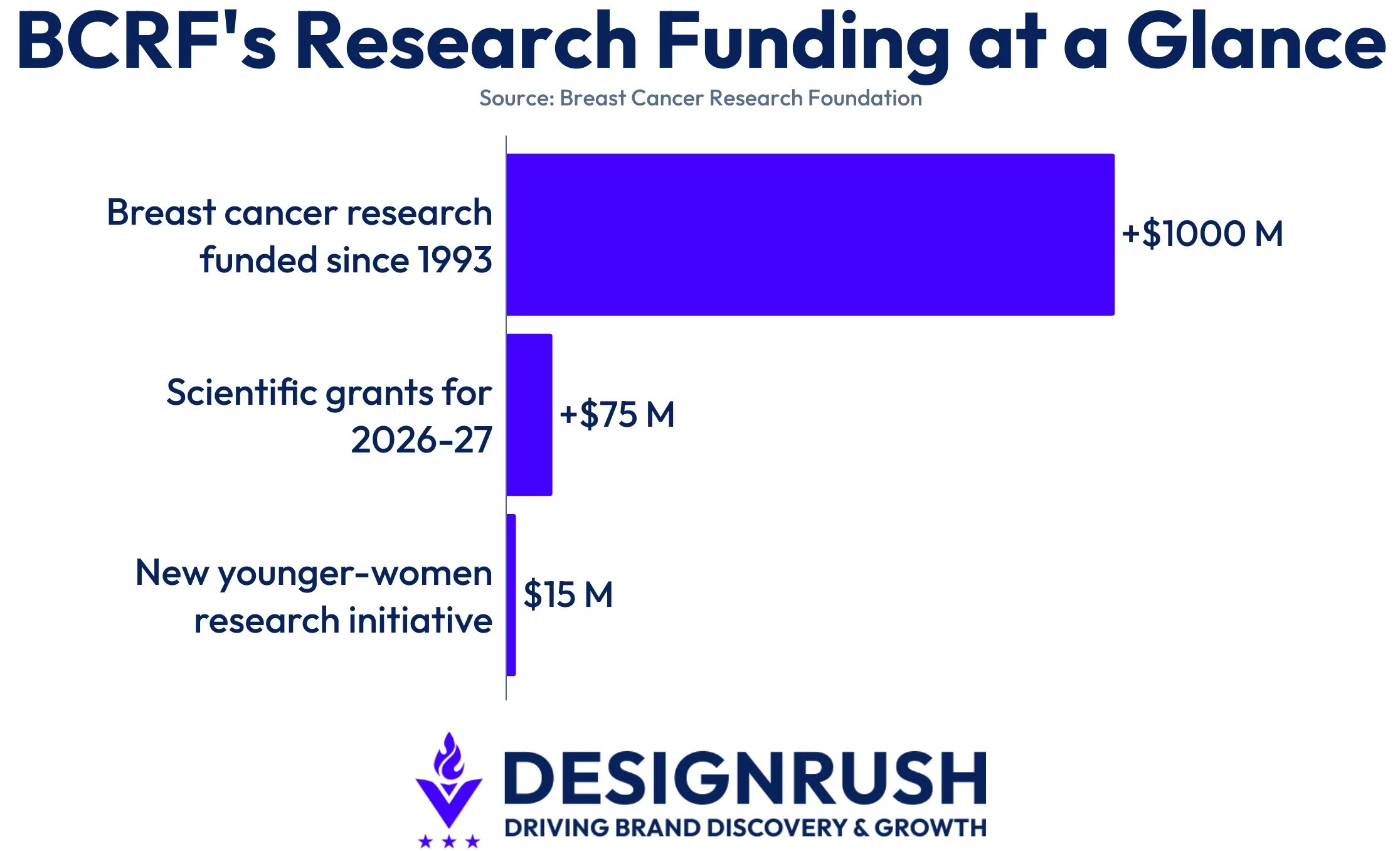
The funding data points to three ways to make cause campaigns more credible and easier for shoppers to act on:
- Give cause marketing a specific funding story. Brands should link donations to defined needs to make support tangible.
- Match donation mechanics to campaign goals. Marketers should choose donation models that encourage the desired action and clearly state the terms.
- Show where one contribution fits. Brands should show how campaign donations contribute to larger causes.
The strongest advocacies make the funding structure easy to understand and give consumers enough context to see where their support goes.
Our Take: Should Pink Ribbon Giving Vary by Market?
A donation that moves with sales puts the shopper inside the transaction, which is the whole appeal of buying a cause product.
We think that the split is fine, as long as Casio states which rule applies in the market where the watch sells.
The gap shows up at checkout, where a U.S. buyer sees the same pink packaging and assumes their $110 moved a number somewhere.
Toms retired its one-for-one model in 2021 after research showed younger shoppers wanted giving tracked to specific causes.
Japan, Taiwan, and Colombia already run the model that Toms spent years arriving at, where a purchase moves a visible number.
Casio America is the one market left explaining itself, and the fix is a line of copy on a box it already redesigned for the cause.
Meanwhile, Hyundai took a more participation-led route, using a Strava challenge to turn activity into a $2 million donation for pediatric cancer research.
Ready to turn a cause into a campaign people can act on?
Explore these top experiential marketing agencies to find a partner for your next activation.