
Creative Operations: Key Findings
- Scaling design requires both systems and consistency, not just talent.
- Relationships open doors, but reliable delivery sustains growth.
- Treat design as an operational system to support revenue-critical campaigns.
Design-led businesses deliver 32% more revenue and 56% higher shareholder returns than their peers, according to a McKinsey report.
But scaling design is rarely simple.
As companies grow, so do the creative requests — and with them, the headaches of hiring, managing workflows, and keeping quality consistent under pressure.
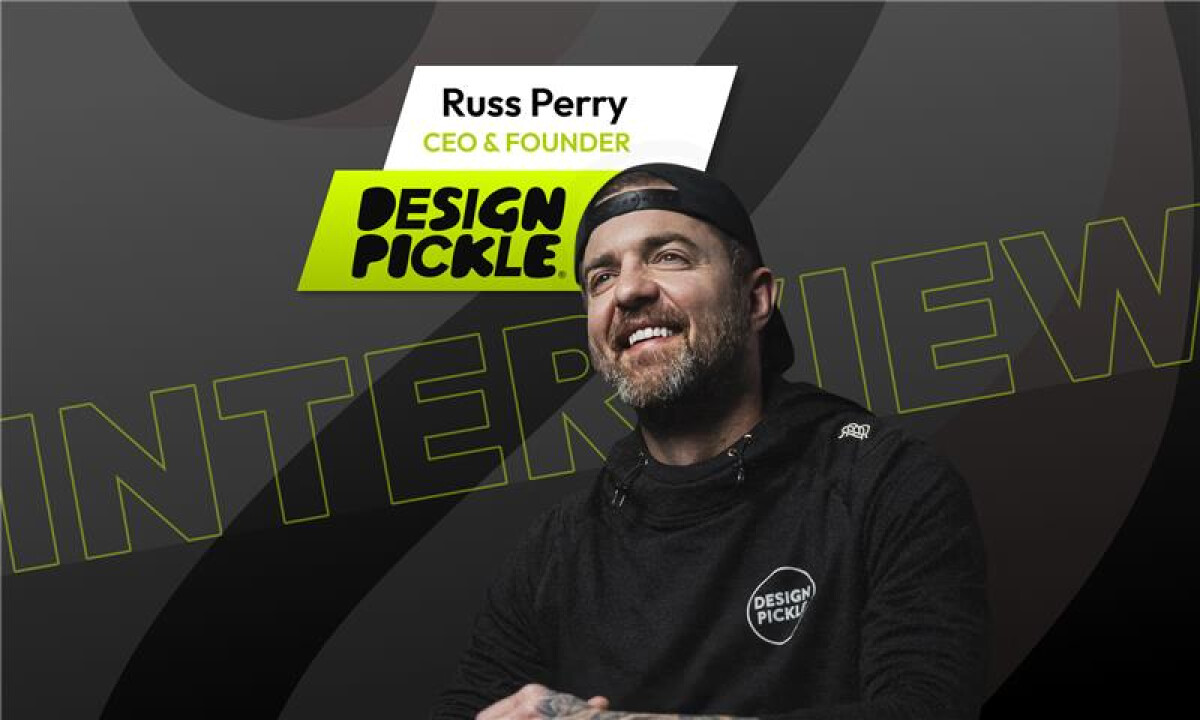
In an interview with DesignRush, Russ Perry, founder and CEO of Design Pickle, shared how his team is tackling that challenge.
Since 2015, they’ve been building ways to make creative output easier to scale, combining global creative talent with a platform called Jar to keep the process organized, fast, and reliable.

Who is Russ Perry?
Russ Perry is the CEO & Founder of Design Pickle, a creative subscription service turned creative operations platform. He launched the company in 2015 with the belief that every business deserves great design without the friction of traditional agencies. Today, Design Pickle blends human creativity with its proprietary platform, Jar, to deliver scalable design solutions for SMBs and enterprises alike.
Focus on the Experience
Many companies seek out extra design support because of volume, but what keeps them engaged is the way the work is delivered.
“[Clients] stay because they realize the experience is massively different than anything they’ve done before,” Perry says.
That experience, he explains, rests on three factors:
- Scalability without constant hiring. Capacity can grow or shrink with demand.
- Consistency under shifting deadlines.Systems ensure quality doesn’t slip when priorities change.
- A single place for requests and approvals. Tools reduce back-and-forth and keep work moving.
Even onboarding reflects that simplicity.
“Clients sign up like software, and within a week their team is ready to go,” Perry notes.
Build Relationships, But Deliver Consistently
For Perry, relationships have often opened the first door. He recalls how one of Design Pickle’s earliest and largest clients, Branded Bills, began:
“I went to high school with their cofounders,” he says.
But it wasn’t the personal connection that kept the partnership going.
“Every time they grew, it was a simple addition to their account to increase daily output,” Perry explains.
The takeaway: relationships help you start, but consistency is what keeps clients long-term.
Create Systems That Eliminate Friction
Perry emphasizes that creative work often gets bogged down as teams grow.
“What most people don’t realize is how inefficiently the creative process becomes across teams, tools, and timelines,” he says. “Jar sits in between it all, and keeps creativity flowing.”
View this post on Instagram
For teams working at scale, features like dashboards, permissions, and review tools are ways to keep projects organized and accessible.
The goal, Perry adds, is straightforward:
“One tool, one system, everyone using it.”
Treat Design as an Operational System
As Perry sees it, design can’t be separated from operations when growth is on the line.
“When you work with clients where every campaign is revenue-critical, you stop thinking about ‘design’ as just creative output - it becomes a core operational system. And that’s exactly how we run it,” he says.
That view has influenced how his team approaches talent, technology, and quality:
- Talent. Designers are selected for both creativity and reliability under pressure.
- Technology. Tools are built to reduce unnecessary steps and keep projects moving.
- Quality. Metrics extend beyond deadlines to accuracy, revisions, and brand alignment.
What Scaling Really Looks Like FAQs
What do clients value when they invest in creative support?
Scalability, consistency, and a process that doesn’t create more friction than it solves.
How do you win and keep large accounts?
Relationships can start the conversation, but long-term trust is built on reliable delivery and the ability to grow in step with clients’ needs.
What helps creative teams manage high-volume demands?
A system that sits across requests, workflows, and approvals, removing bottlenecks and keeping projects moving without overwhelming people.
What principles shape sustainable pricing models?
Simplicity and transparency. Clients respond best when costs are clear, flexible, and easy to align with their goals.
How does working with larger organizations change a team?
It forces higher standards in hiring, sharper tools to reduce inefficiencies, and a focus on balancing speed with quality at scale.