
Fintech Fraud and Identity-First Architecture: Key Findings
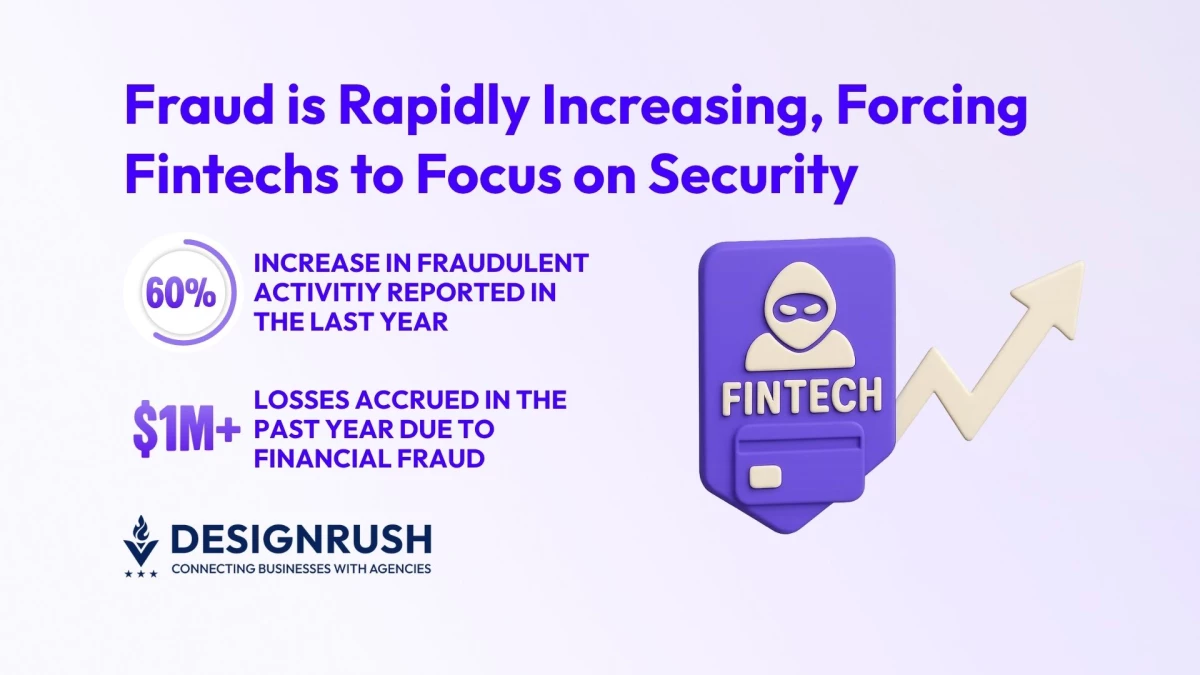
- 60% of fintechs reported rising fraud, with enterprise banks nearing 70%, a sign that there’s an urgent need for earlier-risk modeling in product roadmaps.
- One in three financial institutions lost over $1 million to fraud, highlighting the importance of budgeting security as core infrastructure.
- Identity-focused tools showed the strongest fraud reduction impact, pushing teams to prioritize unified identity architecture before scaling features.
Fraud is rising faster than fintechs can keep up.
Alloy’s 2025 State of Fraud Report shows that 60% of financial institutions saw fraud increase over the past year, with enterprise banks hit the hardest at almost 70% reporting fraud growth.
The data is more than just a warning sign, revealing the hidden cost of fintech’s long-running preference for fast launches, sleek UX, and MVP-first thinking.
Organized crime rings are now responsible for most fraud attempts, according to the survey’s nearly 500 fraud and risk leaders.
This trend reframes fraud from scattered, opportunistic activity into a coordinated industry that systematically probes weak onboarding flows and underfunded compliance programs.
The financial impact is accelerating, too.
Nearly one in three organizations lost more than $1 million to fraud in the past year.
These losses exclude indirect damage such as customer churn, downstream recovery costs, and reputational decline.
As fraud becomes more automated and more industrialized, reactive controls are no longer enough.
99% of institutions already use AI or machine learning in some capacity to detect fraud, and 93% say AI will significantly transform their defenses.
The adoption curve is steep, but the implementation gap remains wide.
AI is only as strong as the identity data and verification logic beneath it.
This is why identity-first infrastructure is taking center stage.
More than 34% of respondents said identity risk solutions had the greatest measurable impact on reducing fraud, and 64% plan to invest in identity solutions in the next 12 months.
As product teams pursue speed, identity verification and anomaly detection have become the most reliable early lines of defense.
Building a Security-Ready Fintech Product
1. Start with Centralized Identity Data
According to Alloy’s findings, identity-focused tools drive the clearest reduction in fraud exposure.
Centralizing identity, device, and behavioral signals helps teams spot anomalies early and avoid manual review overload.
Shakuro, a design and development agency, notes that startups often overlook this foundation stage in the rush to ship.
"Too many startups think security slows them down, but building identity checks into the foundation actually makes scaling smoother,” shared Aleksey Gureiev, Technical Lead at Shakuro.
“It prevents headaches later and keeps customers safe from day one."
2. Use Adaptive Verification at Every High-Risk Step
Adaptive verification uses document checks, device intelligence, and behavioral assessments that adjust based on perceived risk.
Because organized fraud rings repeatedly test weak onboarding flows, risk-based verification closes gaps without adding friction to legitimate users.
"Dynamic, risk-based verification helps fintechs stop fraud in its tracks while keeping the experience smooth for real users,” Gureiev added.
3. Deploy Real-Time Anomaly Detection
Real-time interdiction remains underused even though Alloy’s data shows it significantly reduces fraudulent account openings.
Machine learning models that monitor velocity, device repetition, suspicious session patterns, and high-risk geolocation improve accuracy as the dataset expands.
Shakuro emphasizes that these systems work best when tied to clear risk policies defined at the architecture level, not added after scale.
"Real-time monitoring and adaptive verification let fintechs spot fraud as it happens, so they can grow with confidence,” said Gureiev.
“When security is built into every step of the user journey, it stops being a headache and becomes part of the product."
"That way, you protect customers and your brand without slowing down innovation."
Why Marketers Must Lead With Security to Build Trust
Most fintechs treat security as a compliance cost.
However, it should be seen more as a product story.
With fraud rising and users becoming more risk-aware, a strong identity infrastructure is now a key differentiator.
When marketers communicate security clearly, it’s a display of credibility and long-term stability.
For agencies, the opportunity lies in guiding fintechs toward security-first design choices that support growth rather than slow it down.
When security is part of the product narrative, trust compounds — and brands stand on firmer ground.