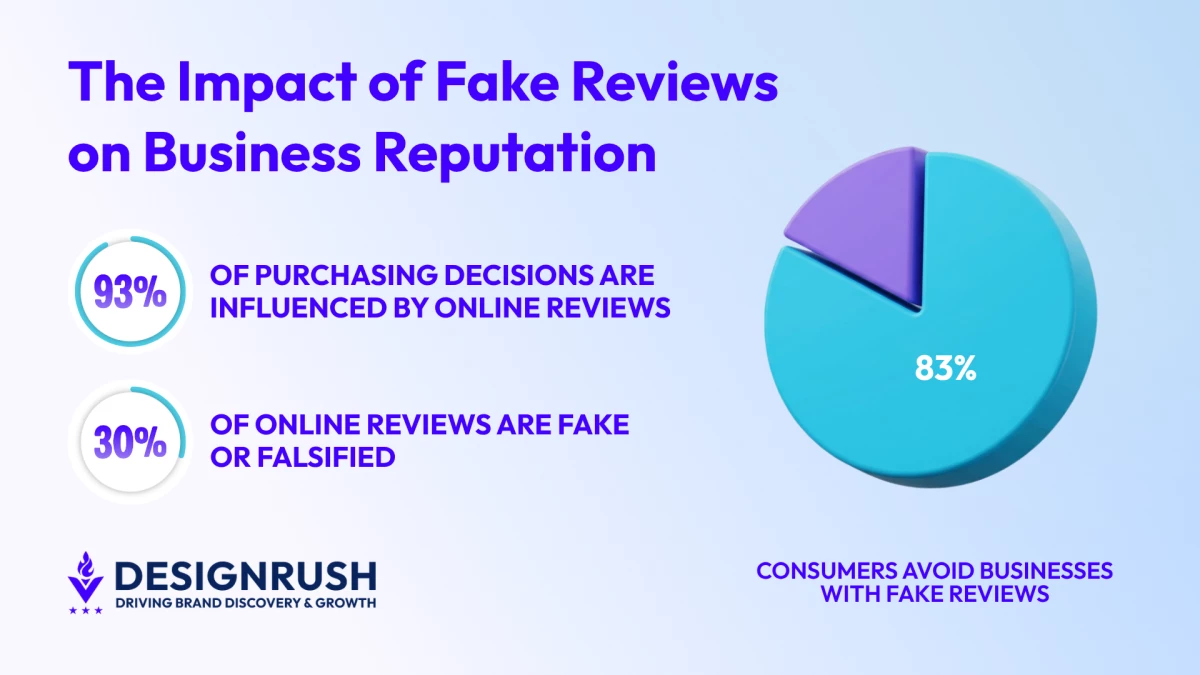

As many as 83% of consumers avoid businesses after discovering fake or compensated reviews, according to new research from Capital One Shopping.
For Erase.com, a company that helps businesses address damaging online content and reputation issues, this figure reflects how much weight consumers place on reviews they believe are genuine.
But as the company’s Marketing and Brand Manager, Victoria Marshall, explains, the real issue goes beyond the fact that fake reviews exist.
It’s that most consumers cannot reliably tell the difference between genuine experiences and fabricated ones.
"Unless it's blatantly obvious, like an incorrect business name or an address from a country the business doesn’t even operate in, a fabricated review reads exactly as a genuine one does,” she says.
“And because shoppers can't separate the two, a fake negative does the same damage as a real one."
Why Fake Reviews Influence Consumer Buying Decisions
Capital One Shopping suggests that online reviews influence 93% of purchasing decisions, with most consumers reading around 10 reviews before deciding whether a business is worth their trust.
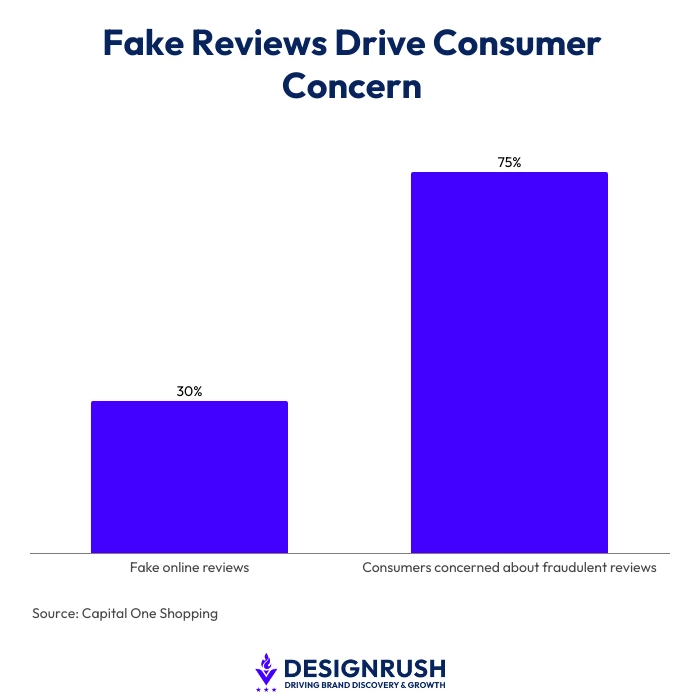
But with 30% of online reviews being fake, according to a separate Capital One Shopping study, it's no wonder why 75% of consumers are concerned about fraudulent reviews.
"What people underestimate is how little it takes to matter,” Marshall adds.
"A single fake review that drops you from 4.6 to 4.5 ranking may sound trivial, but if that 0.1 puts you behind a competitor, you can slide in local search results and recommendation engines."
The Biggest Reputation Risks Businesses Face Online
Fake reviews are only one source of reputational damage.
Many businesses are confused with companies of a similar name and often inherit complaints that have nothing to do with them.
Similarly, others face review extortion from customers who demand refunds or discounts in exchange for removing negative feedback.
Some risks, however, come from outside the business altogether.
Legitimate reviews can disappear during moderation sweeps, while AI-generated summaries can pull inaccurate information from review platforms and repeat it elsewhere.
So what starts as a single review can spread far beyond the original platform.
"One of the biggest risks is that inaccurate information doesn't stay in one place for long," Marshall says.
“AI-generated summaries scrape whatever's most visible and repeat it as fact. So a misleading review doesn't just live on one platform anymore and becomes part of the story machines tell about you everywhere."
Why Review Management Matters More Than Ever
A single review has very different consequences depending on how many genuine reviews surround it.
Businesses with a deep backlog of authentic customer feedback can absorb unfair reviews more easily than businesses with only a handful of ratings.
When comparing similar businesses, customers often pay as much attention to the number of reviews as they do to the rating itself.
"If you've got 40 genuine five-star reviews, one fake one-star can drop your rating from 5.0 to about 4.9. And while that's irritating, it's survivable,” Marshall adds.
“But if you've only got eight reviews, that same one-star can take you from a perfect 5.0 down to roughly 4.6."
How Businesses Can Protect Their Online Reputation
Reviews matter more than most businesses think, especially given Capital One Shopping says that 85% of consumers avoid products that haven’t been reviewed.
Review requests built into the purchase process, delivery process, and follow-up communications can help create a steady flow of feedback.
"The best protection is built before you ever get a bad review. The more real reviews you have, the less impact any single negative review is likely to have," Marshall says.
Likewise, public responses and policy-based review disputes can also strengthen that effort.
Marshall says that not every negative review needs to become a major issue.
“A lot of one-star reviews can be turned around if you actually engage and fix the problem. Sometimes resolving the issue is enough for a customer to update or remove the review altogether,” she adds.
She also recommends reporting reviews that clearly violate platform guidelines and providing evidence to support the dispute.
What the Fake Review Trend Means for Business Leaders
Capital One Shopping found that 76% of consumers trust reviews more when they include a mix of positive and negative feedback.
That figure points to a change in what consumers consider credible.
A flawless review profile is no longer the goal. Shoppers are looking for recent feedback, specific experiences, and signs that a business is actively engaging with customers.
Recent reviews and detailed customer experiences often carry more weight than a large volume of generic praise, as they help demonstrate that a business is actively serving customers and responding to their needs.
For business leaders, ratings tell only part of the story. Customer experiences and how easily people can find them now matter just as much.
"Don't fight fake with fake,” Marshall says.
“With the Federal Trade Commission (FTC) and the UK's CMA now treating fake reviews as a genuine legal and financial liability, buying a batch of five-stars isn't just a credibility risk anymore. It can create legal and financial consequences as well."
As consumers become more selective about what they trust online, businesses have less room to rely on perception alone.
And those facing the greatest risk may not be the ones with the worst reviews, but the ones with the least amount of evidence to prove them wrong.