
Fake Reviews: Key Findings
- Consumers still rely on reviews despite rising distrust, creating a risky gap where decisions are made using information they don’t fully believe.
- Coordinated fake review attacks can tank visibility within hours, as ratings shifts quickly impact search rankings and AI-generated summaries.
- Businesses must combine review removal with suppression strategies, meaning they should dispute fake content while boosting genuine reviews to dilute damage.
More than half of consumers now believe fake reviews are becoming more common, yet nearly all still rely on them when choosing where to spend their money.
Insights from SOCi’s 2025 Consumer Behavior Index found that 55% of consumers see fake reviews as a growing concern, while 91% use reviews to evaluate local businesses.
That tension is putting service businesses in a position they didn’t have to think about a few years ago.
For companies built on trust, even a small change in perception can have immediate consequences. And increasingly, that shift is happening before they even know something’s changed.
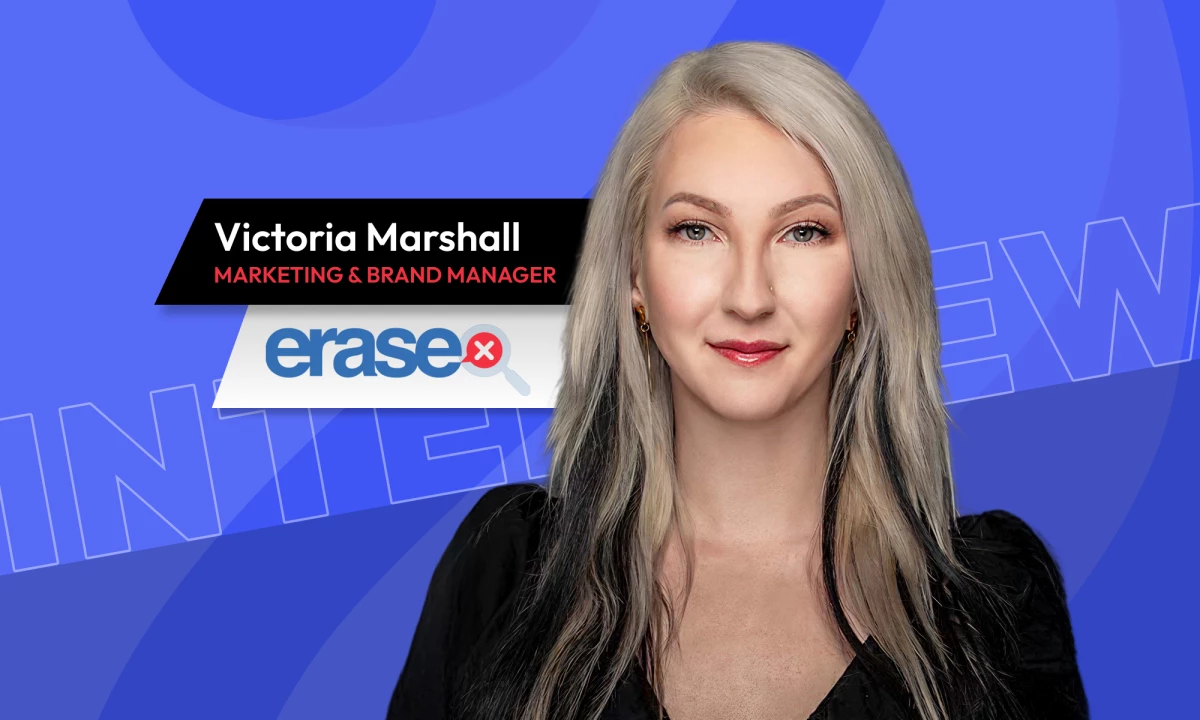
It’s a pattern that Victoria Marshall, Marketing & Brand Manager at Erase.com, has been tracking more closely as review manipulation becomes less obvious and more coordinated, particularly across industries where reputation directly drives revenue.

Who Is Victoria Marshall?
Victoria Marshall leads marketing and brand strategy at Erase.com, combining experience in content development, product marketing, and brand growth. She focuses on crafting clear and credible messaging that strengthens the company’s presence across digital channels. Victoria's work ensures that Erase.com’s value and identity are communicated effectively to clients and partners.
Why Service Businesses Are Easy Targets for Fake Reviews
Hiring a service provider has always involved a level of uncertainty. There’s no product to compare, no feature list to scan. Decisions are made on reputation.
That’s exactly what makes reviews so powerful, and so easy to exploit.
In this interview with DesignRush, Marshall explains how fake review attacks are evolving and why service businesses are feeling the impact first.
“Service businesses live and die by trust in a way product businesses don’t. When you're hiring a plumber, a lawyer, or a contractor, you're making a judgment call on someone you've never met,” Marshall says.
“Reviews fill that gap, which makes them both more influential and a bigger target. A single fake review campaign can wipe out months of earned trust overnight.”
That pressure is amplified by how people search. Ratings are often the first filter consumers use when deciding who to contact. Fall below a certain threshold, and a business doesn’t just look worse. It often disappears from consideration entirely.
How Coordinated Fake Review Attacks Hurt Businesses Fast
Negative feedback is part of doing business. What’s changing is how that feedback shows up.
“Isolated negative feedback is usually one unhappy customer with a specific complaint,” Marshall says.
“Coordinated attacks are systematic. You'll see a cluster of one-star reviews drop in a short window, often from accounts with no history, generic language, and no specific details about an actual service interaction.”
These patterns are designed to move quickly. The aim isn’t credibility. Its impact. And the tactics are evolving.
“The fake reviews we're seeing now are harder to flag on the surface,” Marshall says. “They're written in natural language, they reference plausible service scenarios, and they come from aged accounts with some prior activity.”
In some cases, businesses are approached after the fact with offers to remove or “fix” the reviews for a fee, adding another layer of pressure at a time when they’re already trying to limit the damage.
Consumers Still Rely on Reviews Even as Trust Falls
Consumers are aware there’s a problem. That hasn’t changed how they behave.
“It means that people know the system is compromised and they're still using it anyway, because there's no better alternative,” Marshall says. “Consumers are making purchasing decisions based on data they don't fully trust.”
That reliance is still strong, with BrightLocal adding that just 42% of consumers trust online reviews as much as personal recommendations.
Reviews remain one of the first filters in the decision-making process, even as confidence in them becomes more cautious.
How Fake Reviews Hurt Search Rankings and Customer Trust
The real issue often isn’t the review itself. It’s how quickly it starts working against a business.
“Most businesses are focused on running their operations, not monitoring their digital profiles,” Marshall says.
“A fake review gets posted, the algorithm registers the new rating, and it starts influencing search visibility and AI-generated summaries before anyone on the business side notices.”
That gap between posting and discovery is where the damage takes hold.
“Rating changes can surface quickly, sometimes within hours of indexing,” Marshall adds. “For AI-generated summaries, the effect can linger much longer, because those systems don’t always update in real time.”
This is where expectations haven’t caught up with reality. A few years ago, a delayed response might not have mattered. Now, even a short window can shift visibility and redirect potential customers elsewhere.
Research shows that businesses can lose up to 22% of potential customers after a negative item appears online. For service providers, that drop tends to show up quickly in fewer calls and enquiries.
Why Reporting Fake Reviews to Platforms Often Isn’t Enough
Most businesses assume the process is simple. Report the review, wait for it to be reviewed, and move on.
It rarely plays out that way.
“Platform moderation is reactive and inconsistent,” Marshall says. “You can flag a review, but there's no timeline, no case manager, and no guarantee of removal even if the review is obviously fabricated.”
Even well-intentioned responses fall short.
“The most common misconception is that responding to a fake review publicly is enough. It isn’t,” Marshall adds. “It doesn’t change the star rating, doesn’t remove the review, and doesn’t undo the algorithmic impact.”
In the meantime, the review continues to influence how a business is seen and how often it’s chosen.
The video below outlines why reporting Google reviews doesn’t work:
How to Remove Fake Reviews or Limit the Damage
Dealing with fake reviews tends to come down to two parallel efforts that work best together.
“Removal means the review is gone,” Marshall says. “Suppression, on the other hand, means building enough legitimate positive content and review volume that the negative material becomes a smaller part of the overall picture.”
Removal is the first step when a review clearly breaks platform rules. It can take time and persistence. Suppression helps manage the immediate impact by strengthening the overall profile.
For most SMBs, the practical answer is both running simultaneously. You pursue removal while also reducing the proportional weight of the negative content.
Most reputation tools focus on generating more positive reviews. The problem is, volume alone doesn’t address a manipulated signal.
Handling fake reviews requires understanding how platforms evaluate disputes, how patterns are identified, and how those signals influence search and AI-driven summaries, an area companies like Erase.com have built their approach around.
Why Agencies Need White-Label Help to Handle Fake Reviews
Agencies are often the first to notice when something is off.
“Agencies are often the first line of awareness,” Marshall says. “A marketing or SEO agency monitoring a client’s presence will usually catch a rating drop or a suspicious review cluster before the business owner does.”
The challenge is what happens next.
Most agencies aren’t set up to handle the dispute and removal process directly. They can flag the problem, but executing on it requires a different workflow.
That gap has real consequences. The issue is identified, but the resolution slows down.
White-label reputation programs are starting to address that limitation, giving agencies a way to manage monitoring, disputes, and escalation without building the infrastructure themselves.
Which Industries Are Hit Hardest by Fake Review Attacks
The trend isn’t isolated. It’s showing up consistently in sectors where trust carries the most weight.
“Across our client base, requests related to fake review removal and reputation repair for service businesses have increased meaningfully over the past two years,” Marshall says.
“The categories we see most often are home services, legal, financial services, and medical-adjacent businesses.”
These are all high-consideration decisions. When ratings drop, the impact isn’t gradual. It’s immediate.
For automotive businesses, a negative online reputation can do serious damage. Erase.com explains how to protect your business in the post below:
What to Do Right After a Fake Review Attack
When a suspicious review appears, timing matters.
“Document everything first,” Marshall says. “Screenshot the reviews with timestamps before doing anything else, because reviews can disappear and you want a record.”
From there, action needs to be deliberate.
“File disputes on the platform with as much supporting detail as possible, including evidence that the reviewer was never a customer,” Marshall adds. “At the same time, activate your existing customer base to leave genuine reviews.”
If the pattern suggests something more coordinated, escalation becomes necessary.
“If the attack is severe, that’s when it’s worth getting professional help, because the dispute process requires persistence and platforms respond differently depending on how requests are framed.”
Erase.com’s latest newsletter breaks down what matters now and what do do about it:
Why Service Businesses Need Proactive Review Management
Fake reviews aren’t an occasional disruption anymore. They’re becoming part of how competition plays out, especially in service industries where trust drives every decision.
Most businesses still treat reputation management as something to check in on when there’s time. That assumption no longer holds.
The companies that come out ahead will treat reputation as something they manage in real time, not something they measure after the fact. Because when trust changes overnight, waiting to react isn’t just risky. It’s expensive.